
Tangaek — Decoctions · Fruits
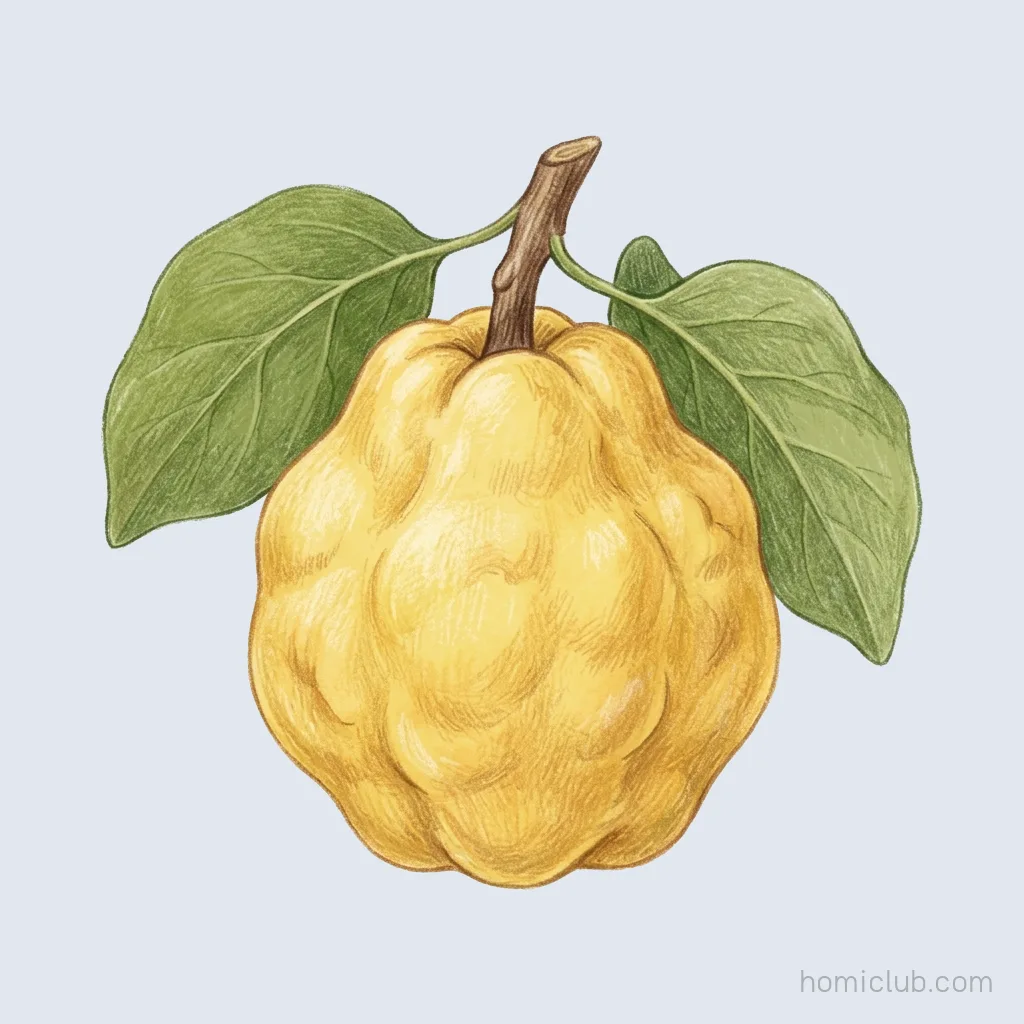
榠樝 Chinese Quince
 Related Crop · Chinese Quince →
Myeongsa is a fruit almost indistinguishable from quince and belongs to the same family as the mogwa in the crop guide. The Donguibogam separates the two at the stalk: a doubled, nipple-like calyx means quince, its absence means myeongsa. Its sharp fragrance earned it a place in clothes chests.
Original, read line by line 東醫寶鑑 · Tangaek — Decoctions vol. 2
-
性溫, 味酸. 消痰止渴, 可進酒.
Its nature is warm and its taste sour. It dissolves phlegm, stops thirst, and can move one to take wine.
HomiclubMyeongsa is a fruit closely resembling quince and belongs to the same family of trees. The two are hard to tell apart on the branch, which is why the old rule was to look at the calyx.
-
其形酷類木瓜而差小. 欲辨之, 看蔕間, 別有重蔕如乳者爲木瓜. 無此者爲榠樝.
Its form closely resembles the quince but is somewhat smaller. To distinguish them, look at the calyx: the one with a second, nipple-like calyx is mogwa, and the one without it is myeongsa.
-
功用, 與木瓜大同小異. 亦治霍亂轉筋, 解酒毒, 去惡心及咽酸吐黃水.
Its uses broadly agree with those of the quince and differ only in detail. It likewise treats cramping sinews from gwallan, resolves the toxin of liquor, and removes nausea, sour throat, and the vomiting of yellow fluid.
-
其氣辛香, 置衣箱中, 殺蟲魚. 《本草》
Its scent is pungent and fragrant, so placed in a clothes chest it kills the silverfish. 《Boncho (本草)》
HomiclubChungeo names the silverfish that eat through clothing. Tucking a strongly scented fruit or wood into a clothes chest is a habit that has carried on.
Related Crop
Chinese Quince →
Reading on Chinese Quince
Fruits — more entries
This is a cultural and historical record from a classical text, not a claim about any food’s effects. Nothing here is a health supplement or intended to prevent or treat disease. Consult a medical professional about health concerns. · Text: Korean Medicine Classics DB · Reading: Homiclub