
Tangaek — Decoctions · Fruits
橘皮 Tangerine peel
 Related Crop · Tangerine peel →
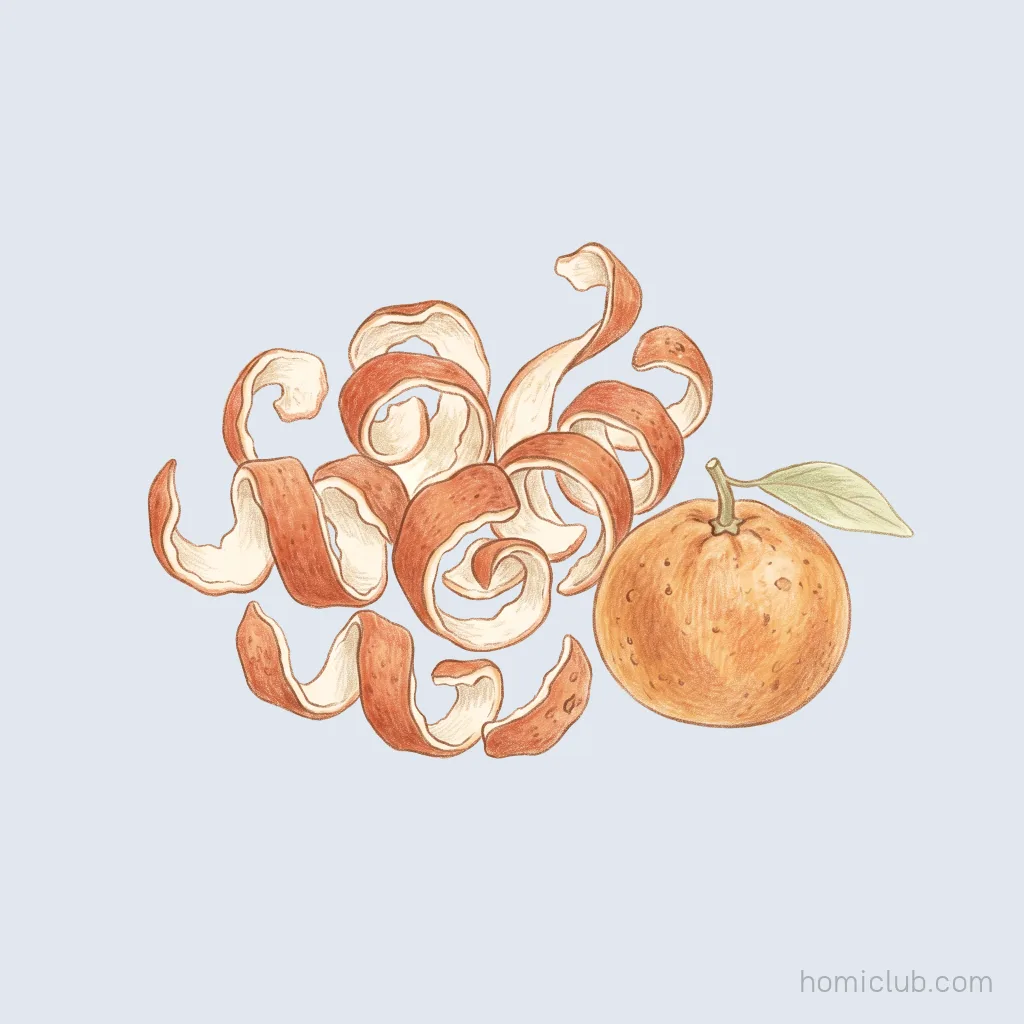
Gyulpi is dried tangerine peel, the same peel as in the crop guide. Reddish peel was called hongpi and long-aged peel jinpi, the name still printed on boxes of jinpi tea. Donguibogam records that in Korea the fruit grew only on Jeju Island, alongside green tangerines, yuja and gamja.
Original, read line by line 東醫寶鑑 · Tangaek — Decoctions vol. 2
-
性溫一云煖, 味苦辛, 無毒. 能治胸膈間氣, 開胃止痢, 消痰涎.
Its nature is warm, though one account calls it hot; its taste is bitter and pungent, and it is non-toxic. It can treat qi lodged between the chest and diaphragm, open the appetite, stop dysentery, and dissolve dam (痰, phlegm) and drool.
HomiclubGyulpi is dried tangerine peel. Because of its red color it was also called hongpi, and long-aged peel is called jinpi; it is still steeped today as jinpi tea.
-
主上氣咳嗽. 止嘔逆, 利水穀道.
It addresses qi surging upward and coughing. It stops retching and frees the passages for water and for grain.
-
木高一二丈, 葉與枳無別, 刺生莖間. 夏初生白花, 六七月而成實, 至冬黃熟, 乃可啖.
The tree stands one or two jang tall, its leaves are no different from those of the trifoliate orange, and thorns grow along the branches. White flowers open in early summer, fruit forms in the sixth and seventh months, and only when it ripens yellow in winter can it be eaten.
HomiclubThe tangerine is an evergreen with thick, glossy leaves, and a small wing on the leaf stalk distinguishes it from other trees. Its white flowers open in early summer and are strongly scented.
-
十月採, 以陳者爲良. 生南方. 《本草》
It is gathered in the tenth month, and aged peel is reckoned the good kind. It grows in the southern regions. 《Boncho (本草)》
-
我國惟産濟州, 其靑橘柚子柑子皆産焉. 《俗方》
In Korea it is produced only on Jeju, where the blue tangerine, yuja (柚子, citron), and gamja (柑子, sweet mandarin) are all grown as well. 《Sokbang (俗方)》
HomiclubJeju is still the main growing area for tangerines, along with parts of the south coast around Seogwipo. Yuja is harvested mostly along the coasts of Goheung, Wando, and Geoje.
-
補脾胃, 不去白. 若理胸中滯氣, 須去白. 色紅, 故名紅皮, 日久者佳, 故名陳皮.
To supplement the biwi (脾胃, spleen and stomach) the white inner layer is left on. To treat qi stagnant in the chest the white must be scraped away. Because its color is red it is named hongpi (紅皮), and because long-aged peel is best it is named jinpi (陳皮).
-
留白者, 補胃和中, 去白者, 消痰泄氣.
Peel with the white left on supplements the stomach and harmonizes the middle; peel with the white removed dissolves phlegm and drains qi.
-
有白朮則補脾胃, 無白朮則瀉脾胃. 有甘草則補肺, 無甘草則瀉肺. 《丹心》
With baekchul (白朮, atractylodes) it supplements the spleen and stomach; without it, it drains them. With gamcho (甘草, licorice) it supplements the lung; without it, it drains the lung. 《Dansim (丹心)》
-
入下焦, 用鹽水浸. 肺燥者, 童尿浸, 曬用. 《入門》
To send it into the lower burner, soak it in salt water. For someone whose lung is dry, soak it in the urine of a young boy and dry it in the sun before use. 《Immun (入門)》
Related Crop
Tangerine peel →
Fruits — more entries
This is a cultural and historical record from a classical text, not a claim about any food’s effects. Nothing here is a health supplement or intended to prevent or treat disease. Consult a medical professional about health concerns. · Text: Korean Medicine Classics DB · Reading: Homiclub