- Type
- Trees & Vines
- Difficulty
- Hard
- Season
- Fall
- Sowing
- Plant a sapling
Chinese Quince
Pseudocydonia sinensis
Organic acids and aromatic oils in the fruit you smell first
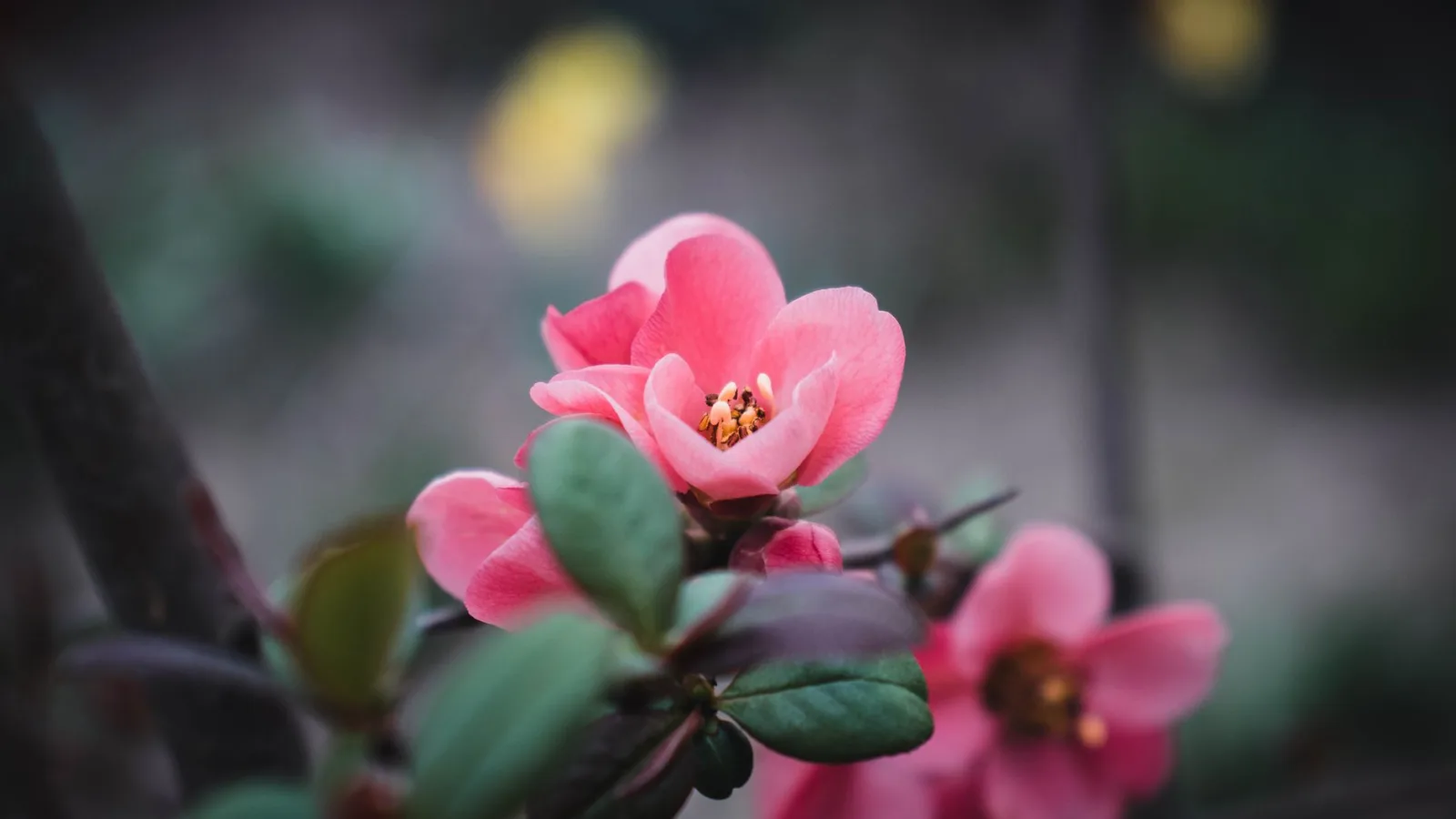
Chinese quince ripens yellow on a rose-family tree in late autumn. Raw it is nearly inedible, hard and astringent, so it gets sliced and packed in sugar as a syrup or dried for tea. The similarly named flowering quince is a different tree, and its fruit is far smaller, which is the easiest way to tell the two apart. The Donguibogam records it as 木瓜, sour in taste and warm in nature, and even leaves preparation notes: keep it away from iron, pare the skin and seeds with a copper knife, slice it thin and dry it.
Year-Round Calendar
- 1
- 2
- 3
- 4
- 5
- 6
- 7
- 8
- 9
- 10
- 11
- 12
- 3
- 4
- 11
- 10
- 11
Where It Grows
- Origin Central China and the provinces to the south — Shandong, Anhui, Hubei, Zhejiang and others — are both where the tree originally grew and where it is mainly grown today.
-
Major producer
Planted in villages and on small plots in the central region and southward. Harvest October, November
- 10
- 11
- Major producer Called karin, and planted in Honshu and southward.
It is native to central and southern China and spread to the Korean Peninsula and Japan through deliberate planting. No large commercial orchards have grown up around it, so in all three countries the trees are scattered at village entrances, in gardens and on small plots. In China the fruit of the flowering quince (Chaenomeles) is also called mugua, and the same Chinese characters are used for the tropical papaya, so following the name alone in search of growing areas will turn up other plants mixed in.
- Optimum
- 15~25℃
- Range
- 5~32℃
- Hardiness
- Hardy
A deciduous tree that flowers in spring and ripens its fruit in late autumn. It tolerates winter cold, but young trees suffer freeze damage, and a late frost around flowering time reduces that year's crop. In a sunny spot with good drainage, the fragrance of the fruit becomes stronger.
Harvested 3–8 years after planting. Grafted saplings start bearing three or four years after planting; trees raised from seed take seven or eight. Flowers that open in April and May become fruit in October and November of the same year.
In Korea Central Korea and south
It has long been planted at village entrances and along the edges of fields in the central region and southward. Commercial orchards are rare, and the trees are usually scattered a few at a time.
How to grow
- Light
- For open ground.
- Soil and depth
- For open ground.
- Spacing
- For open ground.
- Watering
- Water deeply once a week through summer drought for the first two years.
- Feeding
- Work a spadeful of compost around the drip line in February or March.
- Harvest
- Pick in October or November once the skin turns deep yellow and the scent strengthens.
What makes the difference. A pot is effectively out of reach here. What you can do is choose well: look for deep yellow, a scent you catch from a distance, and a surface that feels slightly tacky, which is the sign it is properly ripe.
Why this one is harder. It reaches 6 to 10 m at maturity and roots too deeply to hold in a container.
Common problems
- Cedar-quince rust You will see Orange spots on upper leaf surfaces in spring, with hair-like projections underneath What to do Keep junipers, the alternate host, well away. Collect and dispose of infected leaves
- Aphids You will see New shoots curl and ants gather on the sticky residue What to do Wash them off with a jet of water and leave any ladybirds alone
This page describes how a crop is grown and used. It does not claim health effects for any food, nor is it intended to prevent or treat disease. Component and study notes are references only and do not mean the same result occurs in people. Consult a medical professional about health concerns.
Health Benefits
What the old text says. Chinese quince appears in the Donguibogam's fruit section as mogwa, recorded as warm in nature, sour in taste, and free of toxicity. This is a record from a seventeenth-century medical text, not a modern medical judgement.
What is confirmed today. Analysis confirms that the sourness comes from organic acids such as malic and citric acid, and that the characteristic scent comes from volatile oils concentrated toward the skin. Studies in people are scarce, so what can be said today stops at composition.
Nutrition
- Organic acids (malic, citric) (The main source of the sourness) — Sourness sharp enough to keep the raw fruit off the plate
- Essential oil (Concentrated in the skin) — The scent that fills a room
The acids behind the sourness Malic and citric acid together account for the sharp sourness. That acidity is why you cannot simply bite into the fruit and why sugar or honey is needed to make it edible. The upside is that a syrup this acidic keeps well.
Aromatic oils in the skin The distinctive scent comes from volatile oils concentrated toward the skin. Leave one fruit in a corner of a room and the smell carries for days. That is also why the peel stays on when making syrup.
Cut the seeds out and use only the flesh Chinese quince is a rose-family fruit, and rose-family seeds are reported to carry cyanogenic glycosides such as amygdalin. Cut the seeds away as you slice and use only the flesh. Do not crush or grind the seeds, and do not drop whole fruit into a liqueur or syrup jar. The Donguibogam gives the same handling note: pare the seeds away, slice thin, dry.
Pairings
○ Honey or sugar as syrup — Thin slices packed one to one with sugar or honey is the standard use. Acid and pectin meet the sugar to set a thick syrup, and a spoonful in hot water becomes quince tea.
○ Ginger and jujube — A few slices of ginger and some jujube round off the sourness in quince tea. It has long been the winter version of the drink. Ginger · Jujube
△ Seeds — never crushed, never left whole in the jar — Rose-family seeds are reported to carry amygdalin-type cyanogenic glycosides. Cut the seeds out of Chinese quince, discard them, and use only the flesh. Do not grind the seeds to a powder, and do not put whole fruit into a liqueur or syrup jar. If seeds turn up in a jar already packed, fish them out.
Varieties
- Native Chinese quince (Sapling) — The common Korean form. Large fruit, deep fragrance.
- Flowering quince (Sapling) — The 榠樝 of the original text. Smaller fruit without the doubled stem end.
Source: Donguibogam, Fruit Section (木瓜) · Korean Plant Names Index · Rural Development Administration (nongsaro.go.kr)