
Tangaek — Decoctions · Fruits
乳柑子 Sweet mandarin
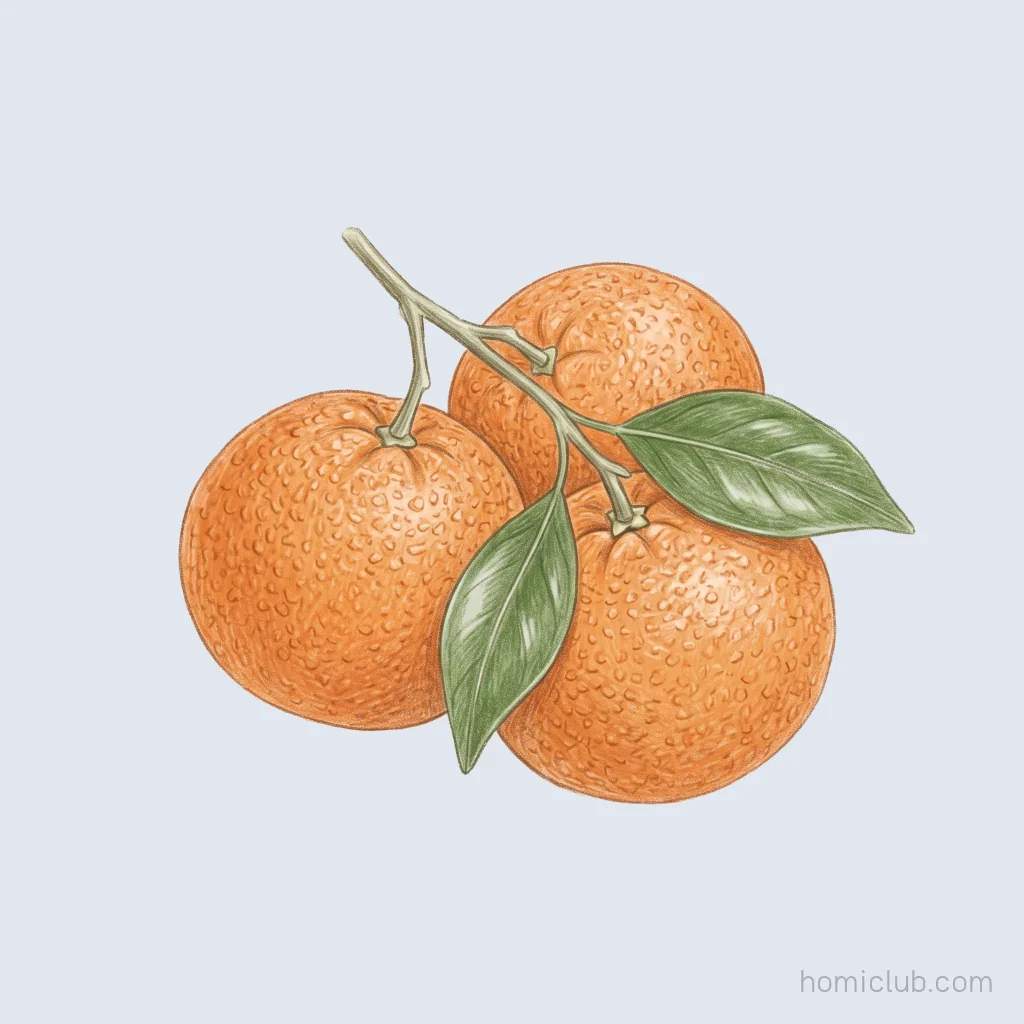 Related Crop · Sweet mandarin →
Yugamja is a sweet mandarin of the citrus group, the same fruit as the field guide's gamgyul. The tree resembles a tangerine tree, but the fruit is rounder and larger, its rind turning yellow and red as it ripens. Its sweetness deepens after frost, which is how it came by the name gamja.
Original, read line by line 東醫寶鑑 · Tangaek — Decoctions vol. 2
-
性大寒一云冷, 味甘, 無毒.
Its nature is greatly cold (some say chilly), its taste sweet, and it has no toxicity.
HomiclubYugam (乳柑) is the mandarin that Han Eonjik (韓彦直) of the Southern Song, in his book on citrus, the 《Gyullok (橘錄)》, records as growing in the counties of Onju (溫州, Wenzhou); it was named for a taste like milk and was also called jingam (眞柑, 'true mandarin'). Yugam was also among the citrus fruits Jeju sent to the court as tribute in the Joseon period.
-
主腸胃中熱毒.
It governs heat toxin (熱毒) in the intestines and stomach.
-
止暴渴, 利小便, 解酒毒及酒渴.
It stops sudden violent thirst, frees urination, and resolves wine toxin and wine-induced thirst.
-
樹若橘樹, 子形似橘而圓大.
The tree resembles the tangerine tree, and its fruit looks like a tangerine but is rounder and larger.
HomiclubIn 1911 Father Emile Taquet, a priest working on Jeju, received fourteen Satsuma mandarin saplings from Japan in return for Jeju flowering cherry trees he had sent, and planted them; these trees, long tended at Myeonhyeong-ui Jip in Seohong-dong, Seogwipo, are known as the origin of the Satsuma mandarins widely grown on Jeju today.
-
皮色生靑熟黃赤.
The rind is green when unripe and turns golden-red as it ripens.
-
霜後甚甛, 故名柑子. 《本草》
After frost it is very sweet, and therefore it is named gamja (柑子). 《Boncho (本草)》
Related Crop
Sweet mandarin →
Reading on Sweet mandarin
Fruits — more entries
This is a cultural and historical record from a classical text, not a claim about any food’s effects. Nothing here is a health supplement or intended to prevent or treat disease. Consult a medical professional about health concerns. · Text: Korean Medicine Classics DB, collated with the Jangseogak copy of the 1613 wooden movable-type edition · Reading: Homiclub