
Tangaek — Decoctions · Fruits
桃核仁 Peach Kernel
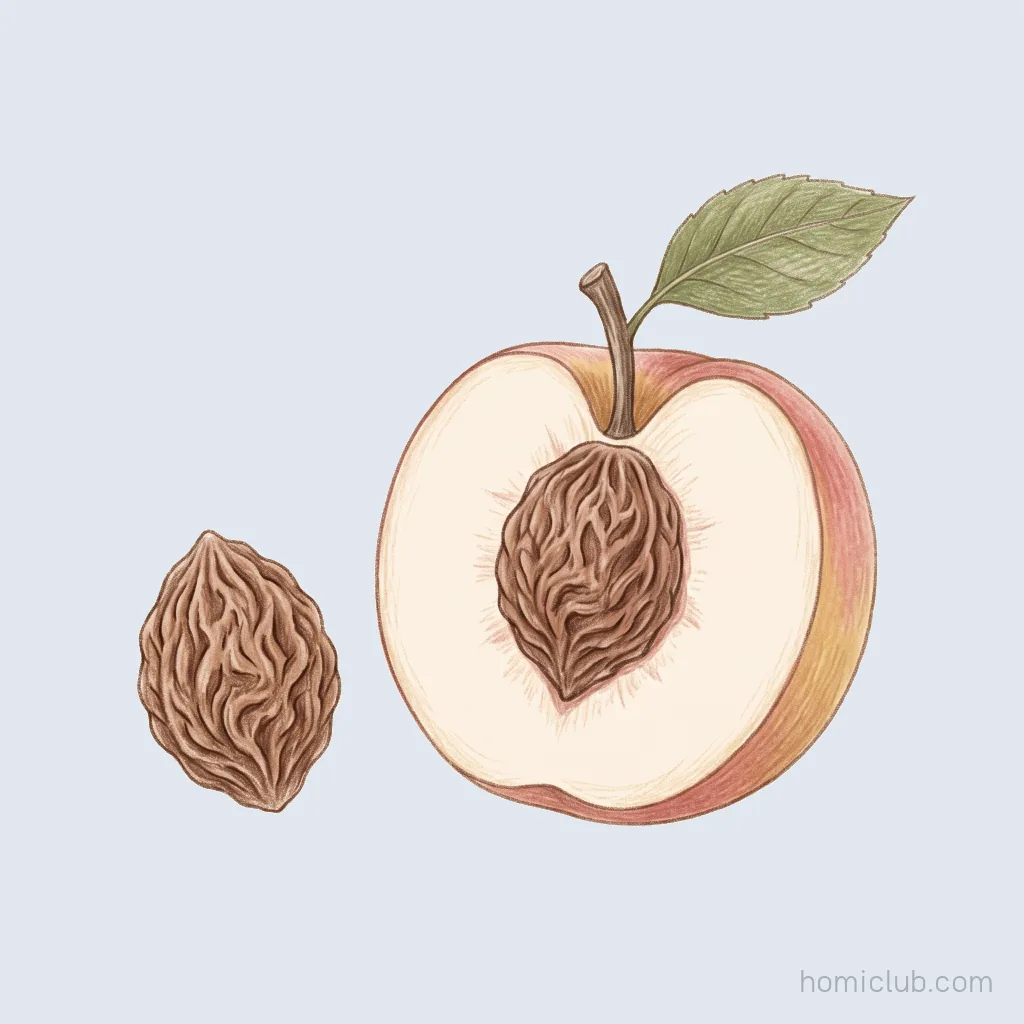 Related Crop · Peach Kernel →
Dohaegin is the kernel taken from inside the hard stone of a peach. It is the same peach kernel shown in the crop guide, and it contains amygdalin, so eating it can cause cyanide poisoning. Dongui Bogam places it in the fruits section, noting that the stones were gathered in the seventh lunar month and dried in the shade.
Original, read line by line 東醫寶鑑 · Tangaek — Decoctions vol. 2
-
性平一云溫, 味苦甘, 無毒. 主瘀血血閉.
Its nature is neutral (some say warm), its taste bitter and sweet, and it is non-toxic. It governs eohyeol (瘀血, static blood) and hyeolpye (血閉, blocked menses).
HomiclubDohaegin is the kernel taken from inside the hard peach stone. It looks like an almond, but it contains amygdalin, and eating it can cause cyanide poisoning.
-
破癥瘕, 通月水, 止心痛, 殺三蟲.
It breaks up jingga (癥瘕, abdominal masses), frees the monthly flow, stops heart pain, and kills the samchung (三蟲, three worms).
-
處處有之, 七月採核, 破之取仁, 陰乾. 《本草》
It is found everywhere. In the seventh month the pits are gathered, cracked open to take out the kernel, and dried in the shade. 《Boncho (本草)》
HomiclubThe seventh lunar month shifts from year to year but usually falls around August. That is when peaches ripen and soften, so the stones left after the flesh is eaten are washed, dried, and then cracked.
-
破滯血生新血, 逐瘀活血, 有功. 《醫鑑》
It has merit in breaking stagnant blood and engendering new blood, in driving out stasis and quickening the blood. 《Uigam (醫鑑)》
-
肝者血之海, 血受邪則肝氣燥. 經曰, 肝苦急, 急食甘以緩之.
The gan (肝, liver) is the sea of blood; when the blood receives evil qi, the qi of the liver turns dry. The Classic says: when the liver suffers from urgency, urgently give sweetness to relax it.
-
桃仁味苦甘辛, 散血, 緩肝也. 《綱目》
Doin (桃仁, peach kernel) is bitter, sweet, and pungent in taste; it disperses blood and relaxes the liver. 《Gangmok (綱目)》
-
入手足厥陰經, 湯浸, 去雙仁及皮尖, 硏如泥用. 《湯液》
It enters the hand and foot gworeum channels. Soak it in hot water, remove double kernels along with the skin and the tip, and grind it to a paste for use. 《Tangaek (湯液)》
HomiclubSsangin (雙仁) means a stone holding two kernels instead of one. Old texts repeatedly say to sort these out and discard them, and the same instruction appears again in the later entry on apricot kernel. Soaking the kernels in hot water to strip the skin and tips is explained in Chinese herbal processing by the principle of 'killing the enzyme while keeping the glycoside' (殺酶保苷), and the glycoside kept is amygdalin. A 2024 study in 《Jungguk Hyeondae Jungyak (中國現代中藥)》 likewise found that the total amygdalin in blanched peach kernels barely changed while they were stir-fried.
Related Crop
Peach Kernel →
Reading on Peach Kernel
Fruits — more entries
This is a cultural and historical record from a classical text, not a claim about any food’s effects. Nothing here is a health supplement or intended to prevent or treat disease. Consult a medical professional about health concerns. · Text: Korean Medicine Classics DB, collated with the Jangseogak copy of the 1613 wooden movable-type edition · Reading: Homiclub