

- Type
- Trees & Vines
- Difficulty
- Hard
- Season
- Summer
- Sowing
- Plant a sapling
Peach Kernel
Prunus persica
Amygdalin in the peach seed. Not for eating
The peach kernel is the seed you get by cracking the hard stone inside a peach. This entry covers that kernel, not the flesh eaten as a summer fruit. The part most people throw away was a named material in traditional medicine, 桃仁. The Donguibogam records it as 桃核仁 and gives full handling instructions: collect the stones in the seventh lunar month, crack them and dry the kernels in shade, then soak in boiling water to strip the skin and tip, discard any doubled kernels, and grind what remains to a paste. The text describes 桃仁 as free of toxicity, but the kernel is now known to contain amygdalin, a cyanogenic glycoside, so it is not something to eat as food. If a kernel has been crushed or chewed and swallowed, contact emergency services rather than waiting for symptoms.
Year-Round Calendar
- 1
- 2
- 3
- 4
- 5
- 6
- 7
- 8
- 9
- 10
- 11
- 12
- 3
- 11
- 7
- 8
- 9
Where It Grows
-
Origin
The north-western interior around Gansu and Shaanxi is considered its place of origin, and it is still the largest producing area, yielding well over half of world production. Harvest June, July, August, September
- 6
- 7
- 8
- 9
-
Main producer
Aragon and Catalonia in the Ebro valley are the centre, and they lead European volume. Harvest May, June, July, August
- 5
- 6
- 7
- 8
-
Major producer
Emilia-Romagna and the south are the growing areas. Harvest June, July, August
- 6
- 7
- 8
- Major producer It is grown along the Marmara and Aegean coasts.
- Major producer The growing areas for canning yellow peaches are concentrated in the Macedonia region in the north.
- Major producer California's Central Valley is the centre, with Georgia and South Carolina next.
-
Major producer
Being in the Southern Hemisphere, its harvest season is the exact opposite of the Northern Hemisphere's, so it supplies the market in the season when the north is idle. Harvest December, January, February, March
- 1
- 2
- 3
- 12
It originated in north-western China and travelled the Silk Road through Persia into the Mediterranean. The persica in its scientific name is a trace of Europe's mistaken assumption that Persia was its homeland. China is still the overwhelming leader, with the Mediterranean coast next. The seed dealt with in this entry — the kernel inside the stone — is not grown as a crop of its own but comes from the stones left after the flesh has been used, so its growing areas and season are exactly those of the peach.
- Optimum
- 20~25℃
- Range
- 10~32℃
- Hardiness
- Hardy
This is a deciduous fruit tree that must go through a certain number of hours of winter cold before its flower buds will open properly the following year. For that reason it does not bear fruit in the tropics, where there is no winter; conversely, a late frost around blossom time cuts that year's crop. It is vulnerable to the summer monsoon rains and to humidity, so low hills with little rain and good drainage suit it best.
Harvested 3–4 years after planting. Trees start bearing three or four years after the saplings are planted, and blossom that opens in April ripens into fruit in July to September of the same year. The seed is obtained by cracking the stone of that fruit, so it follows the fruit's harvest season.
In Korea Nationwide except Jeju
Inland hills with little rain and good drainage suit it best. Cheongdo, Gyeongsan and Yeongcheon in North Gyeongsang, Eumseong and Chungju in North Chungcheong, and Icheon in Gyeonggi are the known areas, while on Jeju, which has heavy rain and humidity, it is hardly grown at all.
How to grow
- Light
- Full sun all day.
- Soil and depth
- Free-draining sandy loam.
- Spacing
- Allow 4 to 5 m between trees in open ground.
- Watering
- A dry spell from June to August while the fruit sizes leaves you small peaches.
- Feeding
- Compost as a base dressing in February, with one application in September after harvest.
- Harvest
- July through September depending on cultivar.
What makes the difference. Throw the leftover stone away without cracking it. Folk recipes for grinding the kernel circulate, but the amygdalin makes them dangerous. If you plant a tree, bagging the fruit in June before the rainy season cuts both fruit moth damage and splitting.
Why this one is harder. It reaches 3 to 5 m at maturity, and managing bacterial shot hole through the rainy season makes it hard to keep a potted tree going for more than a few years.
Common problems
- Peach fruit moth You will see Pinprick marks on the surface with browning inside What to do Bag the fruit in June and clear fallen fruit immediately
- Bacterial shot hole You will see Purple spots on leaves that drop out and leave holes What to do Open the canopy for airflow and cut back nitrogen. Prune out affected leaves and shoots
This page describes how a crop is grown and used. It does not claim health effects for any food, nor is it intended to prevent or treat disease. Component and study notes are references only and do not mean the same result occurs in people. Consult a medical professional about health concerns.
Health Benefits
What the old text says. Peach kernel appears in the Donguibogam's fruit section as dohaegin. The text calls it free of toxicity, yet the apricot-kernel entry in the same book warns that doubled kernels kill, and the peach-kernel handling note tells you to discard them. This is a record from a seventeenth-century medical text, not a modern medical judgement, and the kernel is never eaten raw.
How it is handled today. Compositional analysis confirms amygdalin in peach kernels, and food safety authorities have repeatedly noted that crushing and consuming the seed can result in cyanide exposure. This is information about hazard, not about benefit.
Nutrition
- Amygdalin (A cyanogenic glycoside) — Breaks down in the body to release cyanide
- Emulsin (beta-glucosidase) (An enzyme present in the kernel itself) — Splits amygdalin and releases hydrogen cyanide
The compound called amygdalin Peach kernels contain amygdalin. The glycoside itself is harmless, but chewing or grinding ruptures the cells and an enzyme inside the same seed breaks it down into hydrogen cyanide. Apricot, plum, and apple seeds share the same structure.
The part you actually eat is the flesh What you eat from a peach is the flesh, not the seed. The flesh is about 88 percent water and carries potassium, vitamin C, and polyphenols concentrated toward the skin. That is where its value as a summer fruit sits.
Pairings
○ Peach flesh with yogurt — The edible half of this equation is the flesh. Sliced ripe peach over plain yogurt sets the tartness against the sweetness nicely.
○ Peach flesh with cured ham and cheese — Like figs, peach flesh sits well with salty cured meats and aged cheese. Fat and salt hold the sweetness in place.
△ Do not crack the stone and eat the kernel — The kernel inside a peach stone contains amygdalin; chewed or ground and swallowed, enzymes break it down and cyanide is released. It belongs to the same class of compound as apricot and plum kernels. Cracking stones open at home to eat or grind the kernel is not done, and ground kernel is not taken as a health food. The part that is eaten is the flesh. If a kernel has been crushed or chewed and swallowed, contact emergency services rather than waiting for symptoms. Apricot Kernel · Plum Kernel
Varieties
- Yumyeong (Sapling) — Korea's representative yellow-fleshed peach. Ripens in late August.
- Kawanakajima Hakuto (Sapling) — A mid-season white-fleshed peach. Very juicy.
Source: Donguibogam, Fruit Section (桃核仁) · Rural Development Administration (nongsaro.go.kr) · Ministry of Food and Drug Safety guidance on amygdalin
Stories about Peach Kernel
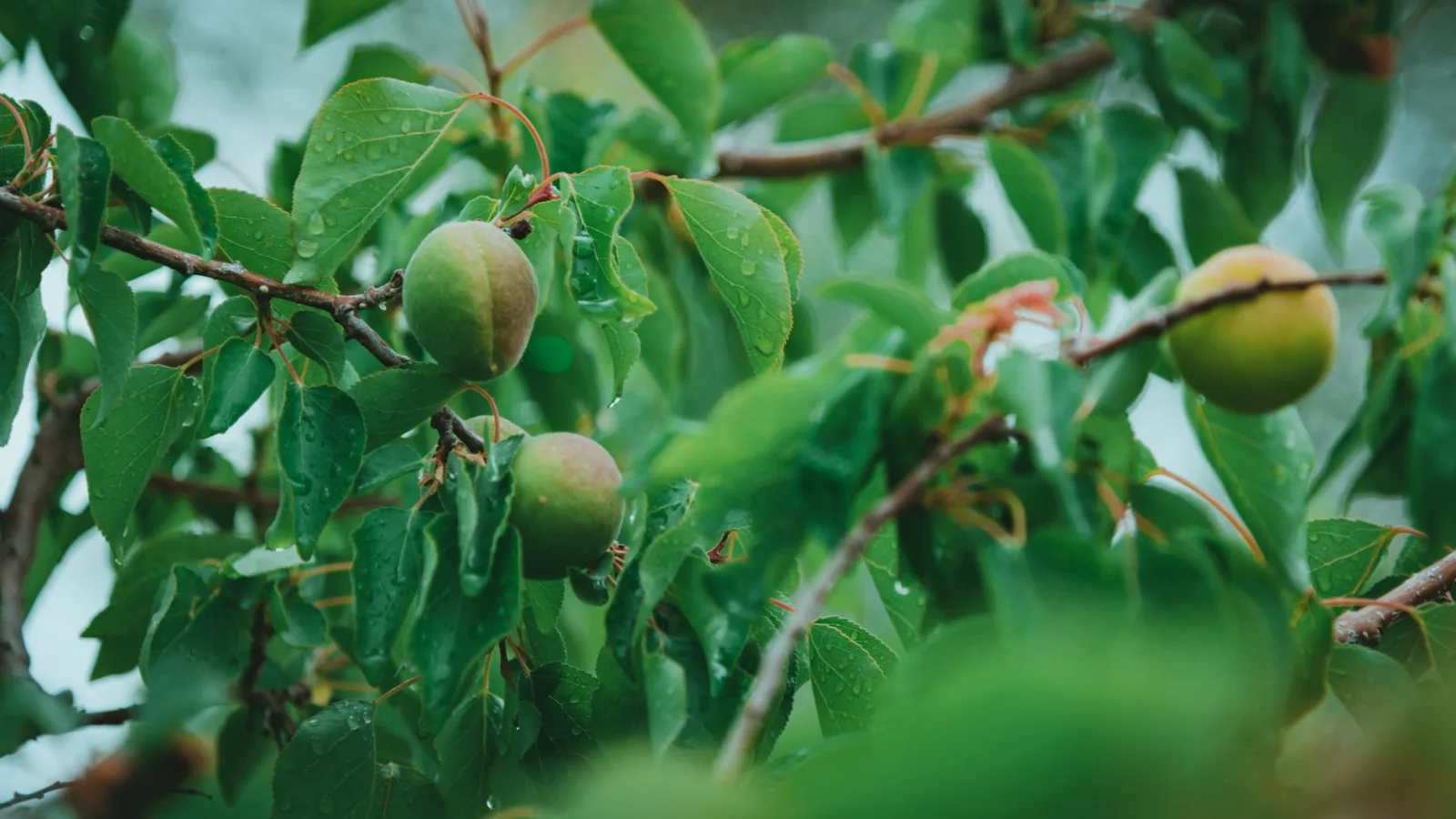
An Old Korean Medical Text Called Peach Kernels "Nonpoisonous." So Why Shouldn't We Eat Them Today?
A 17th-century Korean medical text called the peach kernel nonpoisonous, but analysis today shows it contains amygdalin, which can release cyanide. Here's why you should throw the pit away, and what to do if someone chews or swallows a kernel.
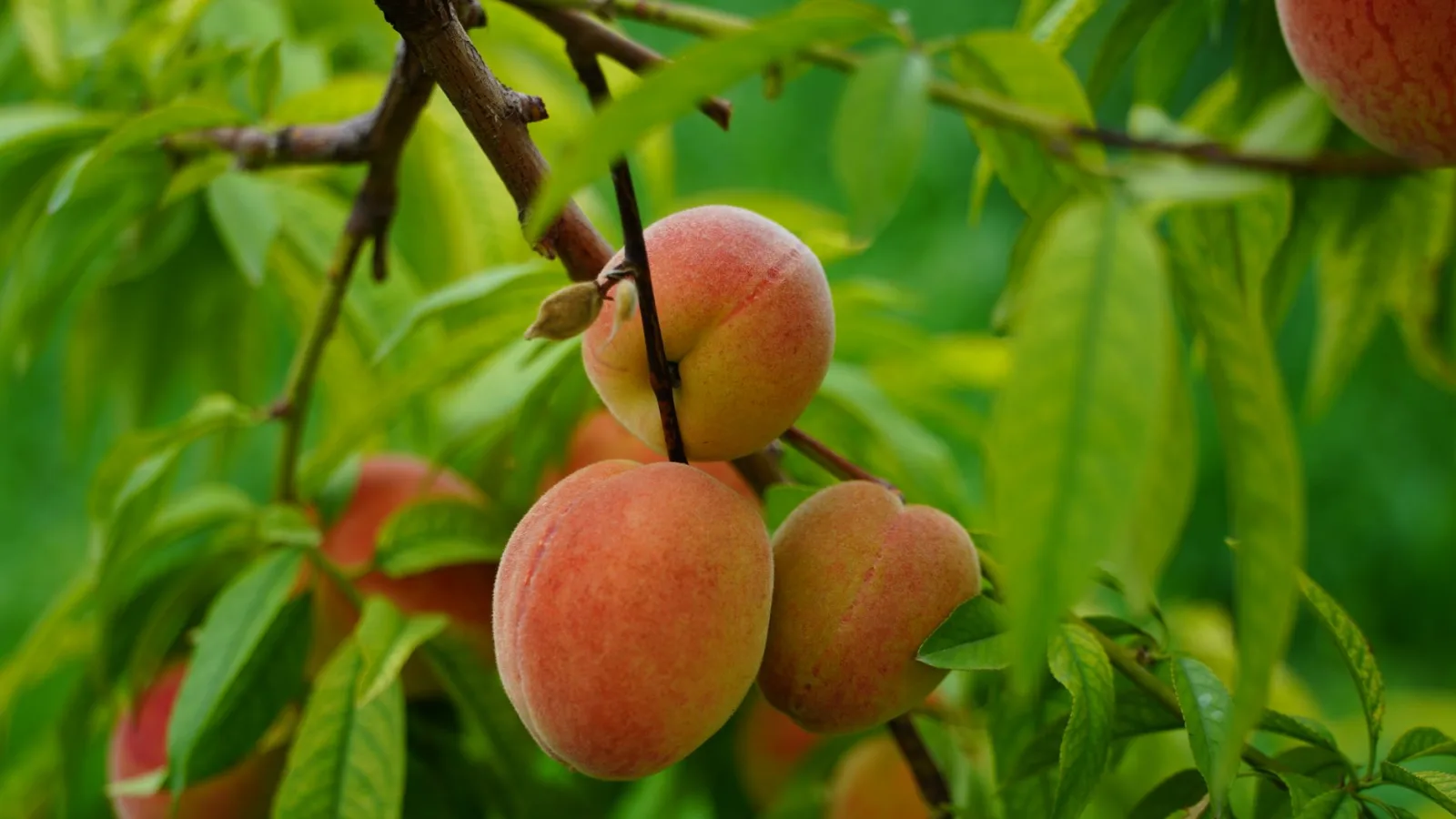
Growing Peach Trees and Handling the Pits: Leave the Kernel Uncracked
Peach trees need winter cold, dry summers, and well-drained soil to bear fruit. Here's how to grow them from saplings and when to harvest, and why you should throw the pits away without cracking them.