
Tangaek — Decoctions · Fruits
蓮實 Lotus Seed
 Related Crop · Lotus Seed →
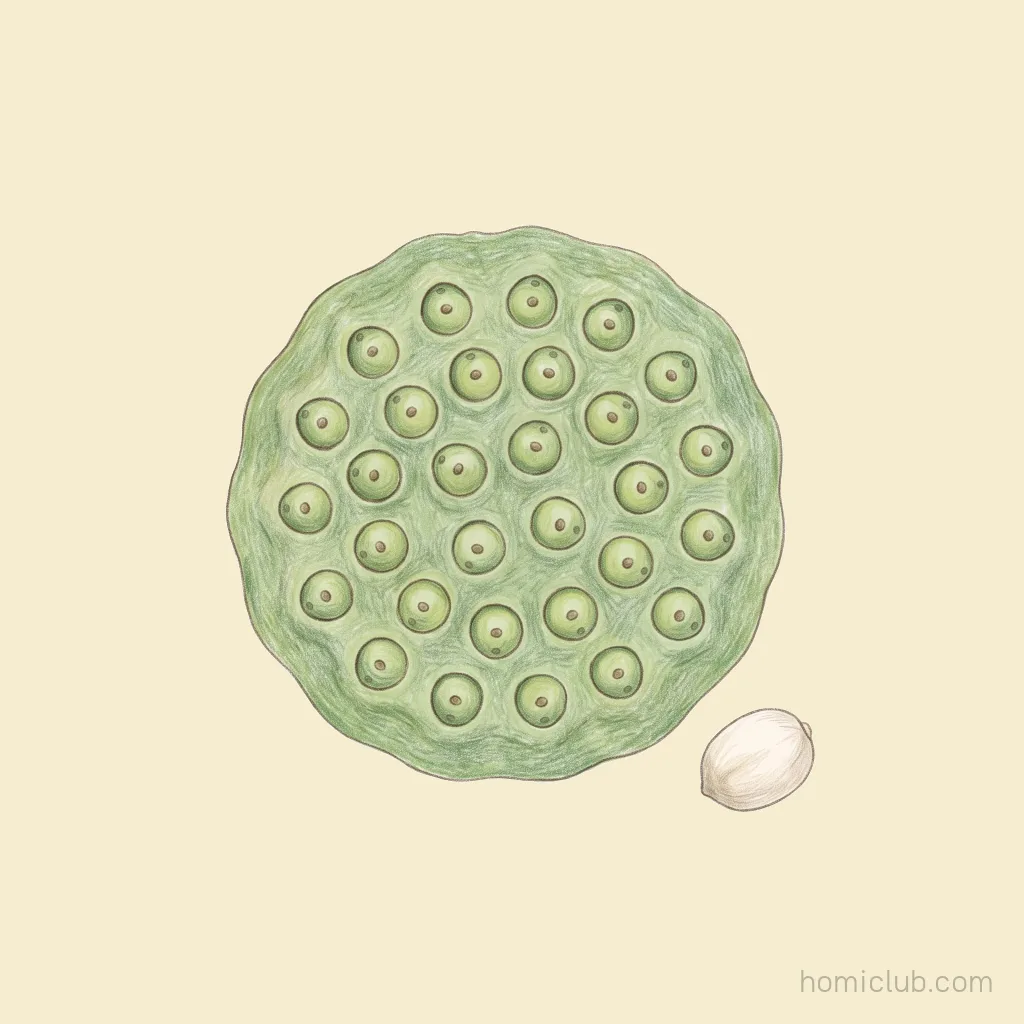
Lotus seed is the nut a lotus sets in its spongy seed head, the same lotus seed found in the crop guide. It still turns up in porridge and rice dishes, from the plant that also gives lotus root and lotus leaf. Donguibogam lists it among fruits under older names such as sujidan and usil, and calls the dark seeds that sink in water seongnyeon.
Original, read line by line 東醫寶鑑 · Tangaek — Decoctions vol. 2
-
性平寒, 味甘, 無毒.
Its nature is neutral and cold, its taste is sweet, and it is non-toxic.
HomiclubYeonsil is the seed borne by the lotus. When the flower falls it leaves a receptacle pitted like a honeycomb, and a single seed sits in each of those pits.
-
養氣力, 除百疾, 補五藏, 止渴, 止痢, 益神安心. 多食令人喜. 《本草》
It nourishes strength, removes the hundred ailments, supplements the five viscera (五藏), quenches thirst, stops dysentery, boosts the spirit, and calms the heart. Eating much of it makes a person glad. 《Boncho (本草)》
-
補十二經氣血. 《入門》
It supplements the qi and blood of the twelve channels (十二經). 《Immun (入門)》
-
一名水芝丹, 一名瑞蓮, 亦謂之藕實. 其皮黑而沈水者, 謂之石蓮.
It is also called sujidan (水芝丹), also seoryeon (瑞蓮), and likewise usil (藕實). Those whose skin is black and which sink in water are called seongnyeon (石蓮).
-
入水必沈, 惟煎鹽鹵能浮之. 處處有之, 生池澤中. 八月九月, 取堅黑者.
Put in water it always sinks, and only a decocted brine can make it float. It is found everywhere, growing in ponds and marshes. In the eighth and ninth months the hard, black ones are gathered.
HomiclubWell-filled lotus seeds sink while unripe ones float. Brine is heavier than fresh water and lifts what would otherwise sink, so this passage appears to turn that property to use.
-
用生則脹人腹中, 蒸食之良. 《本草》
Used raw it distends the belly, so steaming it before eating is good. 《Boncho (本草)》
-
其葉爲荷, 其莖爲茄, 其本爲蔤.
Its leaf is called ha (荷), its stalk ga (茄), and its base mil (蔤).
-
其花未發爲菡萏, 已發爲芙蓉, 其實爲蓮, 其根爲藕, 其中爲的, 的中有靑長二分爲薏, 味苦者是也. 芙蕖, 其總名也. 《本草》
The flower not yet open is called hamdam (菡萏) and the opened one buyong (芙蓉); its fruit is called yeon (蓮), its root u (藕), and its core jeok (的); the green part two bun long inside the jeok is called ui (薏), the bitter-tasting one. Bugeo (芙蕖) is the general name for the whole plant. 《Boncho (本草)》
HomiclubThis passage assigns a separate name to the leaf, stalk, flower, fruit, and root of a single plant. Split a lotus seed and a green plumule sits at its center: that is the ui named here, called yeonjasim today.
-
凡用, 白蓮爲佳. 《日用》
For use in general, the white lotus is held to be best. 《Ilyong (日用)》
Related Crop
Lotus Seed →
Fruits — more entries
This is a cultural and historical record from a classical text, not a claim about any food’s effects. Nothing here is a health supplement or intended to prevent or treat disease. Consult a medical professional about health concerns. · Text: Korean Medicine Classics DB · Reading: Homiclub