
Tangaek — Decoctions · Vegetables
薄荷 Mint
 Related Crop · Mint →
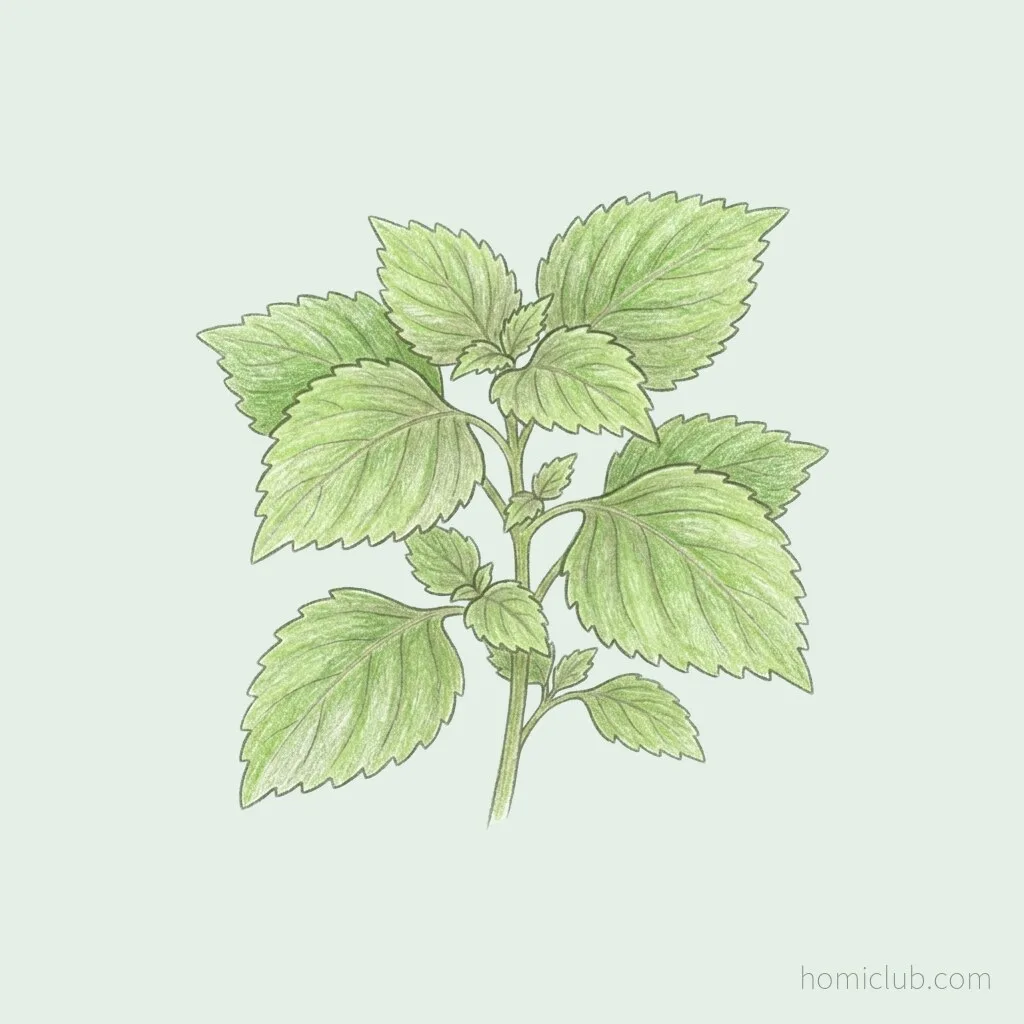
Bakha is mint, a perennial in the deadnettle family and the same plant as the crop guide's mint. The Donguibogam has the stems and leaves picked in summer and autumn and dried in the sun, and says it was grown in kitchen gardens to be eaten raw or salted down. It also passes along the observation that cats go giddy on it.
Original, read line by line 東醫寶鑑 · Tangaek — Decoctions vol. 2
-
性溫一云平, 味辛苦, 無毒.
Its nature is warm, though one account calls it neutral; its taste is pungent and bitter, and it is non-toxic.
HomiclubMint is a perennial that grows wild in Korean fields and along streams, in the same genus as Western peppermint and spearmint. Its stem is square in cross-section and its leaves release a cool scent when rubbed.
-
能引諸藥入榮衛, 發毒汗, 療傷寒頭痛.
It can lead other medicines into the yeong and wi (榮衛, nutrient and defensive qi), induce a sweat that carries out toxin, and treat headache from cold damage.
-
治中風賊風頭風. 通利關節, 大解勞乏.
It treats jungpung (中風, wind stroke), jeokpung (賊風, thief wind), and dupung (頭風, head wind). It frees the joints and greatly relieves fatigue and depletion.
-
圃中種蒔, 可生啖, 亦宜作葅. 夏秋採莖葉, 暴乾用. 《本草》
Planted in a garden plot it can be eaten raw and also suits being made into jeo (葅, salted pickle). Gather the stems and leaves in summer and autumn and dry them in the sun for use. 《Boncho (本草)》
-
性味辛涼. 最淸頭目, 治骨蒸. 入手太陰ㆍ手厥陰經, 上行之藥也. 《湯液》
Its nature and taste are pungent and cool. It clears the head and eyes best of all and treats steaming bone fever. It enters the hand taeeum and hand gwoleum channels and is a medicine that travels upward. 《Tangaek (湯液)》
-
猫食薄荷則醉. 《食物》
When a cat eats mint it becomes intoxicated. 《Singmul (食物)》
HomiclubThe intoxicated cat almost certainly refers to gaebakha, catnip, rather than to true mint. Catnip belongs to the same mint family but is a different plant.
Related Crop
Mint →
Reading on Mint
Vegetables — more entries
This is a cultural and historical record from a classical text, not a claim about any food’s effects. Nothing here is a health supplement or intended to prevent or treat disease. Consult a medical professional about health concerns. · Text: Korean Medicine Classics DB · Reading: Homiclub