
Tangaek — Decoctions · Vegetables
苜蓿 Alfalfa
 Related Crop · Alfalfa →
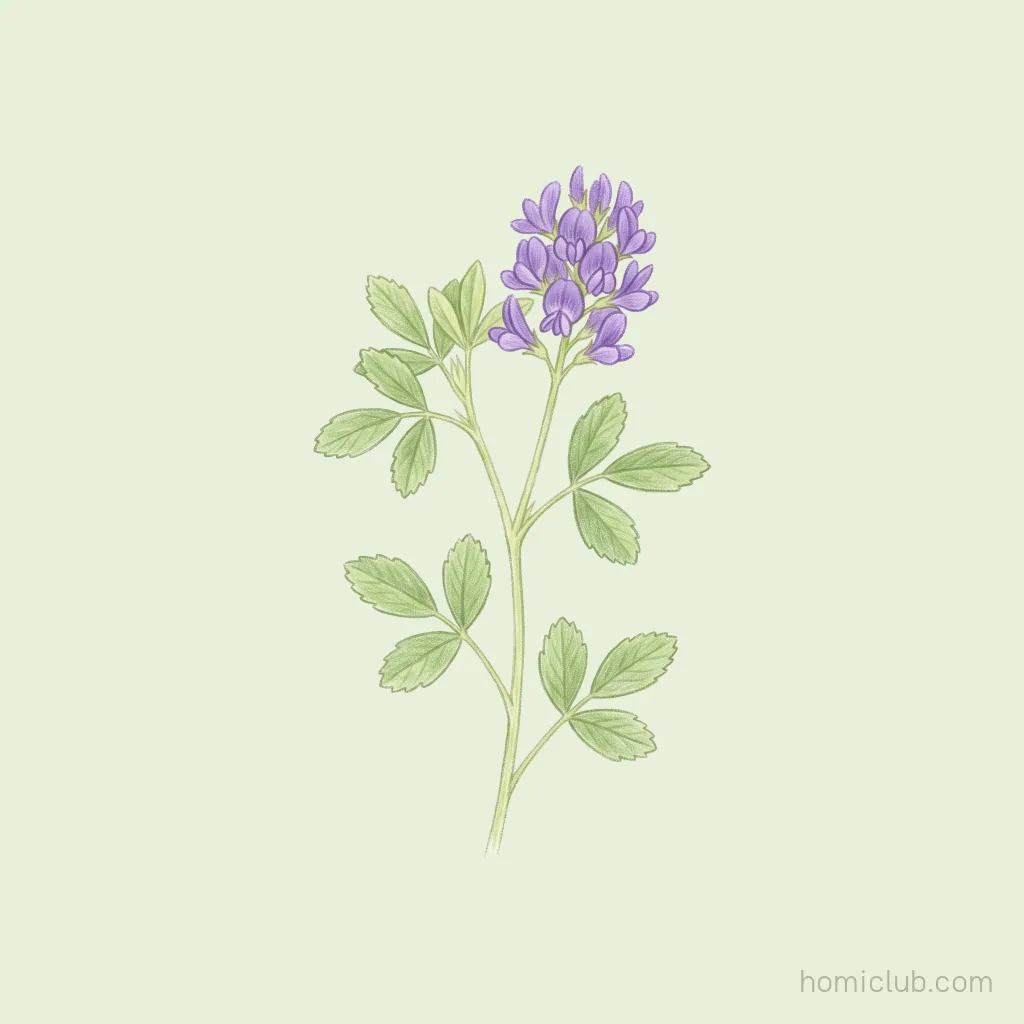
Moksuk is a clover-family plant called geoyeomok in Korean, the same one as in the crop guide. It is grown today as alfalfa, for sprouts on the table and fodder in the field. The Dongui Bogam says it was boiled and dressed with soybean paste or eaten raw, but warns against eating much of it.
Original, read line by line 東醫寶鑑 · Tangaek — Decoctions vol. 2
-
莖葉性平, 根性涼. 味苦, 無毒.
The stem and leaves are neutral in nature and the root is cool. Its taste is bitter and it is non-toxic.
HomiclubMoksuk is a medick of the pea family, called geoyeomok in old Korean. The plant known in the West as alfalfa belongs to the same group, and it is also what is grown as sprouts. Its leaves come in threes and its small flowers cluster together.
-
安中, 利五藏, 去脾胃間邪氣, 諸惡熱毒, 利大小腸, 療黃疸.
It calms the center, benefits the five viscera (五藏), removes evil qi (邪氣) between spleen and stomach as well as various malign heat toxins, benefits the large and small intestines, and treats jaundice.
-
處處有之, 生田野濕地. 人多採取, 煮和醬食之. 生食亦可. 但多食則瘦人. 《本草》
It is found everywhere, growing on damp ground in fields and plains. People gather much of it, boil it, and dress it with soybean paste to eat. It may also be eaten raw. But eating much of it makes a person thin. 《Boncho (本草)》
Related Crop
Alfalfa →
Vegetables — more entries
This is a cultural and historical record from a classical text, not a claim about any food’s effects. Nothing here is a health supplement or intended to prevent or treat disease. Consult a medical professional about health concerns. · Text: Korean Medicine Classics DB · Reading: Homiclub