

- Type
- Herbs & Aromatics
- Difficulty
- Easy
- Season
- Year-round
- Sowing
- Transplant
Mint
Mentha spp.
Menthol and carvone — an aroma that shifts with the species
Mint releases a cold, sharp aroma at the lightest brush of a leaf, and menthol is the compound at the centre of that scent. A few leaves change the character of tea, desserts and chilled drinks. It grows readily, thriving even in a container with very little fuss, but it spreads aggressively, so it is best kept in a pot of its own rather than sharing with other plants.
Year-Round Calendar
- 1
- 2
- 3
- 4
- 5
- 6
- 7
- 8
- 9
- 10
- 11
- 12
- 3
- 4
- 5
- 6
- 7
- 8
- 9
- 10
Where It Grows
-
Main producer
The Ganges plain in Uttar Pradesh produces most of the world's menthol mint oil. It is planted in January–February and cut in early summer. Harvest June, July
- 6
- 7
-
Major producer
Irrigated land in Oregon, Washington and Idaho yields peppermint and spearmint essential oil. Harvest July, August
- 7
- 8
- Major producer Jiangsu and Anhui produce mint oil.
- Major producer Spearmint for tea is grown on a large scale, and fresh leaves are shipped to Europe.
- Major producer The Nile Delta produces dried mint leaves for export.
Mint is not one species but a name for several species of the genus Mentha taken together. Peppermint, the kind commonly used for its leaves, is a hybrid of watermint and spearmint (Mentha x piperita); menthol is drawn mainly from cornmint (Mentha arvensis), and the wild mint of Korea's hills and fields belongs to this group as well. Its native range covers Europe, West Asia and the Mediterranean, so it cannot be pinned to any one country. The list above also takes in countries that are large producers of essential oil rather than of leaves, so it should be read with the point in mind that the species grown differs from country to country.
- Optimum
- 18~25℃
- Range
- 5~30℃
- Hardiness
- Hardy
- Day length
- Long-day
Mint grows well even in cool places and likes ground with plenty of moisture. In winter the top growth dies back and the plant overwinters — comes through the cold season — on its underground rhizomes, then rises again in spring. In early summer, as the days lengthen, it sends up flower stalks, and around that time the essential oil in the leaves is at its strongest.
In Korea Nationwide
It can be grown anywhere in the country and does well in pots too. Wild mint comes up in damp spots such as watersides and the banks between rice paddies.
How to grow
- Light
- Sun is good, part shade is fine
- Soil and depth
- 20cm deep
- Spacing
- 30cm
- Watering
- It likes water. Do not let it dry
- Feeding
- A little after each cut
- Harvest
- Cut the stems. The more you cut, the bushier it gets
What makes the difference. Keep it in a pot of its own, always. Put it in the ground and the roots will take over the whole bed
Common problems
- Rust You will see Orange powder on the leaf undersides What to do Remove affected leaves and improve airflow
This page describes how a crop is grown and used. It does not claim health effects for any food, nor is it intended to prevent or treat disease. Component and study notes are references only and do not mean the same result occurs in people. Consult a medical professional about health concerns.
Health Benefits
What the Donguibogam recorded. The Donguibogam records this group of plants in its vegetable section under the single name bakha (薄荷). It calls the plant warm in nature — neutral, by another account — pungent and bitter in taste, and free of toxicity. It notes that it was grown in garden plots and eaten raw or salted into a pickle, and that stems and leaves were gathered in summer and autumn and dried in the sun. It also records that a cat that eats mint becomes drunk. This is a record from an old medical text, not a judgment that holds today.
What is established about menthol. It is established that menthol stimulates the cold receptors of the skin and mucous membranes to produce a cooling sensation. That is an account of a sensation, and it is a different thing from saying that eating the leaf makes anything better.
The distance between extract research and the leaf. The clinical research was carried out on peppermint essential oil packed into enteric-coated capsules, which differs in both form and dose from picking leaves off a pot and steeping them as tea. For the leaf itself, what can be said today stops at composition: it holds menthol and the other essential-oil compounds.
Nutrition
- Menthol (Main component of peppermint oil) — The compound behind the cold sensation
- Carvone (Main component of spearmint oil) — The compound behind the soft, sweet aroma
Menthol Menthol is the largest single component of peppermint essential oil; the European Pharmacopoeia sets its content in that oil at 30-55%. Its defining trait is that it stimulates the cold receptors of the skin and mucous membranes to produce a cool feeling, and it stands at the centre of mint's scent.
Carvone Carvone is the main component of spearmint essential oil and, unlike the menthol of peppermint, carries a soft sweetness. Its character is a gentle aroma rather than sharp coolness, which is why it appears more often as a garnish on drinks and desserts.
Rosmarinic acid This polyphenol is common to plants of the mint family. Antioxidant activity has been reported for it in vitro and in animal studies, and nothing has been established in humans.
Flavonoids Mint contains a range of flavonoids including luteolin and eriocitrin. They belong to the group of compounds plants build for colour and aroma, and their antioxidant activity is reported at the in-vitro level.
Vitamin A, C & trace minerals Mint leaves hold vitamins A and C along with small amounts of minerals. Since the quantity eaten at one time is small, they count for little as a nutrient source, and aroma is where the value of this herb lies.
Pairings
○ Watermelon and strawberries — Adding mint to a watermelon salad or a strawberry mojito lets the aroma and cooling sensation play off each other. The sweetness of summer fruit meets mint's fresh scent to leave the palate clean and bright. Strawberry · Watermelon
○ Lamb — British-style mint sauce is the classic pairing of mint with lamb. Mint's aroma cuts through the fattiness and gaminess of the meat while supporting digestion, giving a lighter finish to a heavy dish.
○ Tea (green and black) — Moroccan mint tea and Turkish mint tea have become the established way to combine mint with tea. The cooling note of mint folded into a warm cup aids after-meal digestion and freshens the mouth at the same time.
○ Yogurt — India's raita and Turkey's cacik are traditional dishes that fold mint into yogurt. Protein meets a cooling freshness, smoothing out the heat of spicy food.
○ Dark chocolate — Menthol and cacao are a classic dessert pairing. The deep flavor of cacao contrasts with mint's coolness to create a layered taste in the mouth.
△ Acid reflux (GERD) — Mint relaxes the lower esophageal sphincter, so people with acid reflux should skip the after-dinner mint tea. It can make reflux symptoms worse—swapping in a different herbal tea is the safer choice.
△ Gallstones — Mint essential oil stimulates bile flow, so people with gallstones should avoid it. It can set stones in motion and trigger pain, so steer clear of essential oil supplements without medical guidance.
△ Never on or near an infant's nose — Never apply mint essential oil in or around an infant's nostrils. Menthol can cause respiratory suppression and laryngeal spasm, and it's classified as contraindicated for children under age 2.
Varieties
- Peppermint (Seedling transplanting) — Sharp, cooling scent for tea and syrup where the aroma should carry; leaves are narrow and dark green.
- Spearmint (Seedling transplanting) — Softer and slightly sweet, useful in both drinks and cooking; crinkled leaves and quick growth.
- Apple mint (Seedling transplanting) — Downy leaves and a mild scent, pleasant eaten fresh; the clump spreads sideways, so give it a wide pot.
- Bakha (native field mint) (Seedling transplanting) — Hardy enough to winter outdoors and return the next spring; the scent runs hot rather than sweet.
Source: Food and Nutrition Information
Stories about Mint
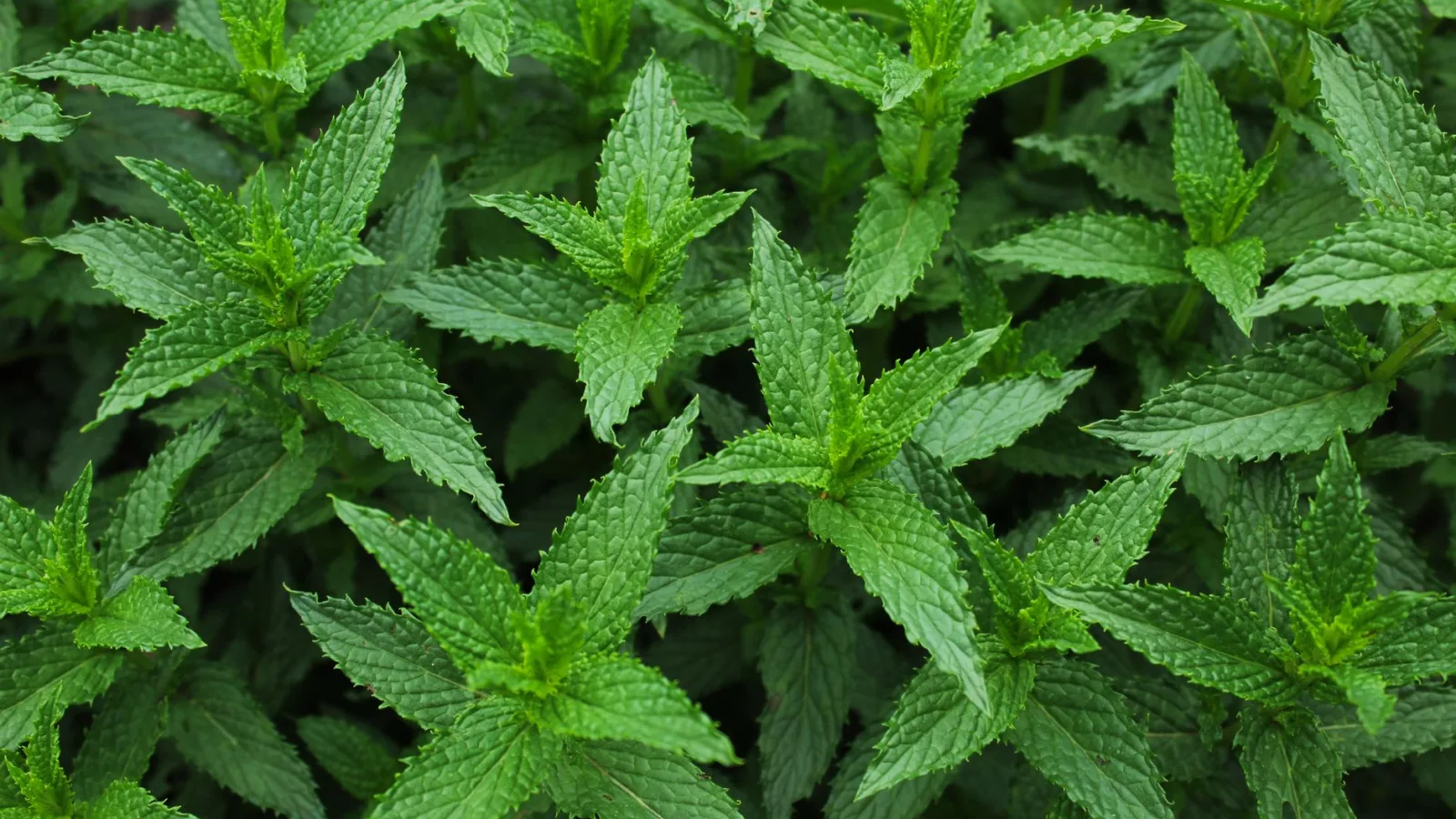
Same Spearmint, Different Scent: Here's Why
A study that grew spearmint from eight Iranian regions in one field found striking differences in yield, essential oil, leaf compounds, and even chromosome number. Here's what that means for the mint on your balcony.
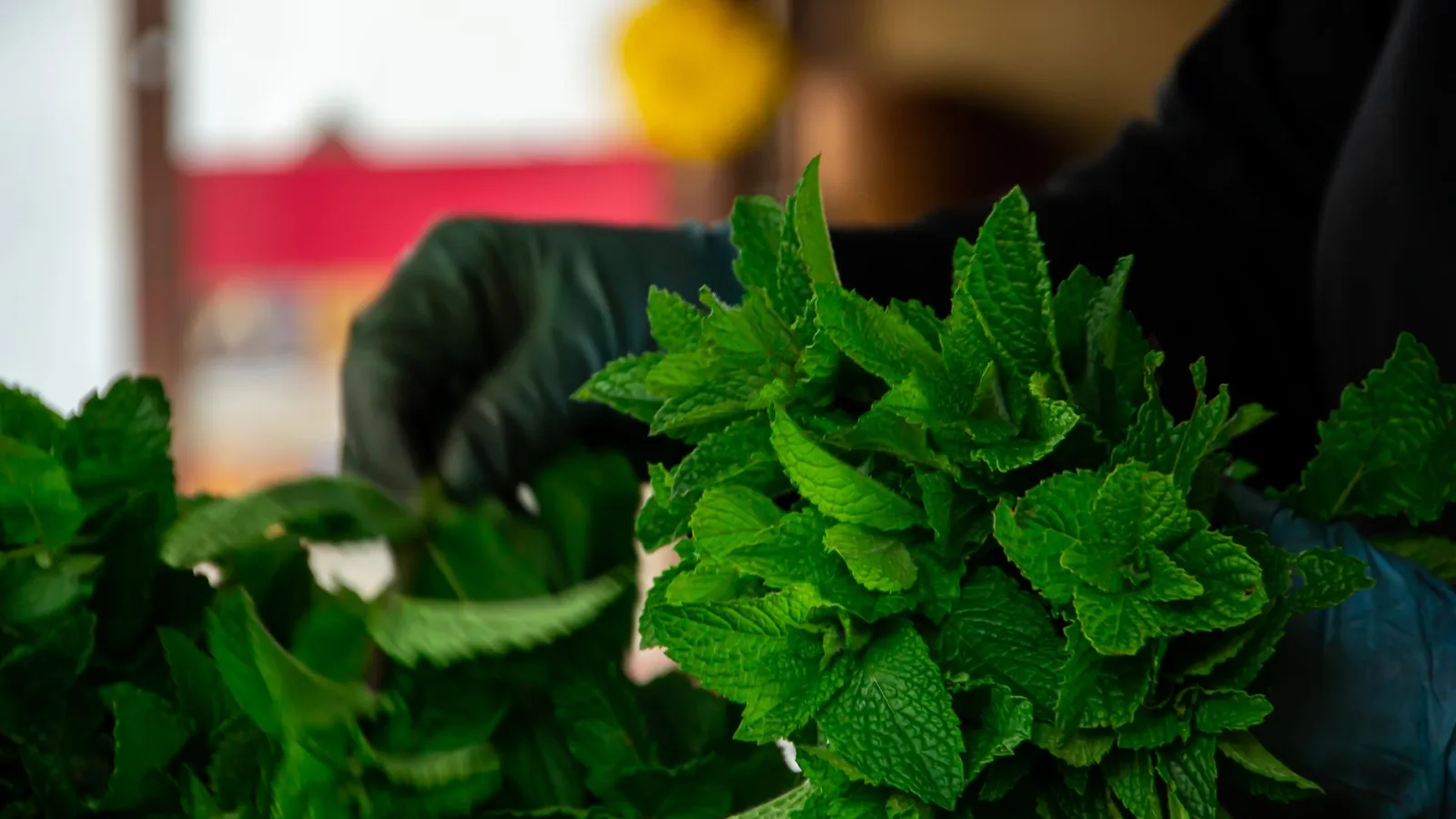
A Handful of Water Mint: Hot Water Only Gets You Halfway
Steep water mint in hot water and the fragrance rises within minutes, but many of the leaf's polyphenols stay behind. One study found that a water-ethanol extract held nearly three times the polyphenols of a plain water infusion. Here's how to use both methods at home.
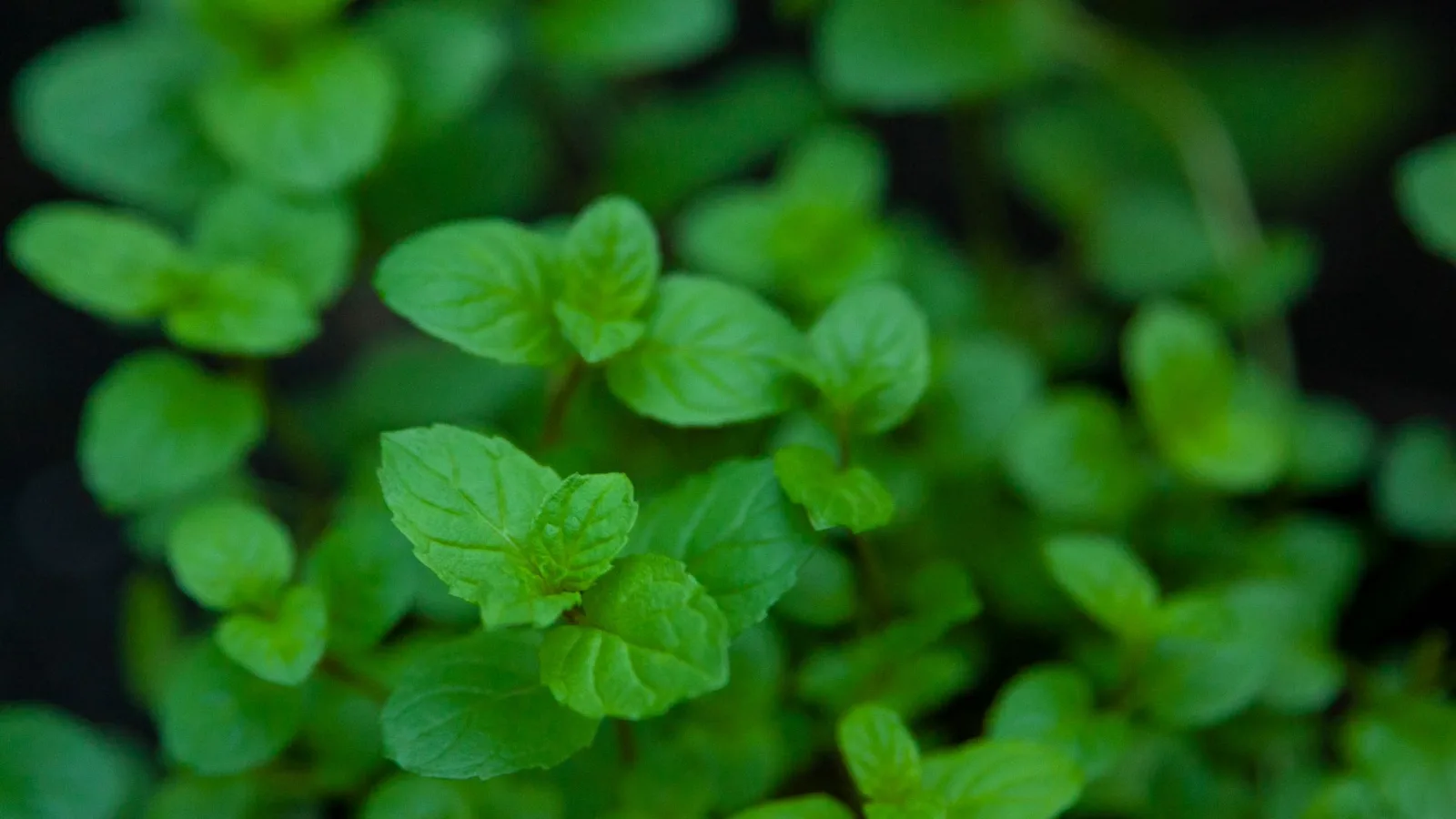
Mint: Health as the Donguibogam Saw It
Mint spreads through a garden corner on its own and turns into iced water or tea by evening. The Donguibogam recorded it as bakha, a pungent, cooling herb said to clear the head and eyes — a view that still tracks with how that menthol scent feels today.
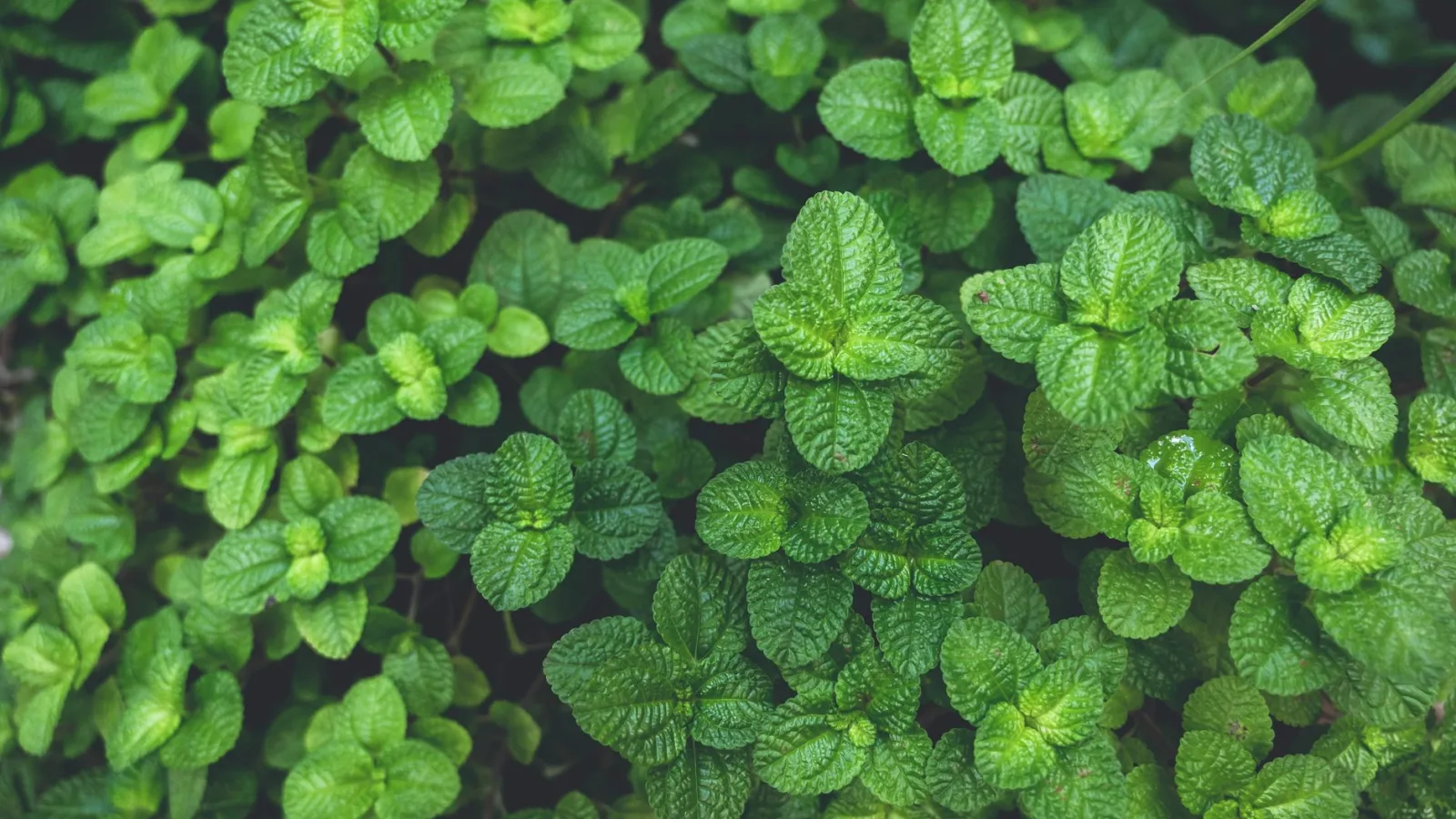
If Your Mint Has Lost Its Scent, Start With the Soil
Sandy soil lets water and nutrients slide straight past the roots, and mint pays for it in fragrance. A two-year Egyptian trial found that spearmint given biochar and fertilizer together yielded the most leaves and the most essential oil — and the same trick scales down to a flowerpot.