
Tangaek — Decoctions · Vegetables
大蒜 Garlic
 Related Crop · Garlic →
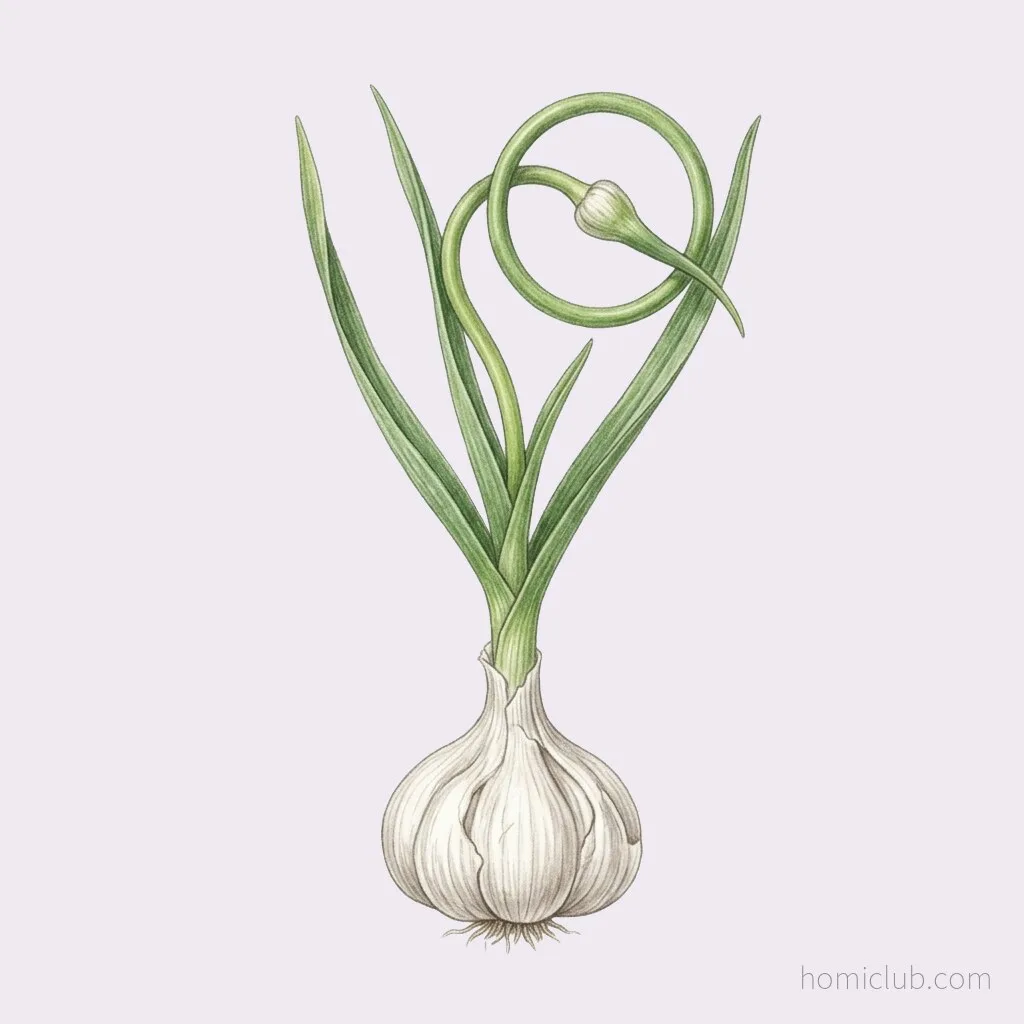
Daesan is garlic, the same plant as the garlic in the crop guide. The Donguibogam preferred bulbs held over a year, and gave a name of its own, dokdusan, to a bulb grown as a single clove — today's solo garlic. It also cautions against eating this pungent allium over long stretches.
Original, read line by line 東醫寶鑑 · Tangaek — Decoctions vol. 2
-
性溫一云熱, 味辛, 有毒.
Its nature is warm, though one account calls it hot; its taste is pungent and it is toxic.
HomiclubDaesan is garlic, a perennial allium alongside the scallion and the Korean chive. Its underground bulb ripens divided into several cloves. In Korea it goes into kimchi and seasoning pastes without fail.
-
主散癰腫, 除風濕, 去瘴氣, 爛痃癖, 破冷除風, 建脾溫胃, 止霍亂轉筋, 辟溫疫, 療勞瘧, 去蠱毒, 療蛇蟲傷.
It chiefly disperses abscesses and swellings, removes wind-damp, drives off janggi (瘴氣, miasmic qi), dissolves hyeonbyeok (痃癖, abdominal masses), breaks cold and dispels wind, builds up the bi (脾, spleen) and warms the wi (胃, stomach), stops cramping from sudden turmoil disorder, wards off epidemic pestilence, treats nohak (勞瘧, taxation malaria), removes godok (蠱毒, parasitic toxin), and treats bites from snakes and insects.
-
園圃皆種之, 經年者良. 五月五日採.
It is planted throughout garden plots, and those that have passed a year are good. It is dug on the fifth day of the fifth month.
HomiclubThe fifth day of the fifth month is the lunar Dano festival, falling in early June today. Garlic is still lifted around that time, dried with the stalks on, and then stored.
-
蒜, 葷菜也. 今人謂葫爲大蒜, 性最葷臭, 不可食. 久食傷肝損目.
San (蒜) is a hunchae (葷菜, pungent vegetable). People today call ho (葫) the daesan, and its nature is the most rankly pungent, so it should not be eaten. Eaten over a long time it injures the liver and harms the eyes.
-
獨顆者, 謂之獨頭蒜, 殺鬼去痛. 灸癰疽方, 多用之. 도야마
The kind formed as a single lump is called doktusan (獨頭蒜, single-head garlic); it slays specters and removes pain. It is much used in methods of moxibustion for abscesses. 도야마
HomiclubDoktusan (獨頭蒜) is garlic that ripens as one undivided lump, called oetol-maneul or tong-maneul in Korean. A bulb forms this way when the seed clove is small or growth has been slow.
-
久食能淸血, 令髮早白. 《本草》
Eaten over a long time it can clear the blood, but it makes the hair whiten early. 《Boncho (本草)》
Related Crop
Garlic →
Reading on Garlic
Vegetables — more entries
This is a cultural and historical record from a classical text, not a claim about any food’s effects. Nothing here is a health supplement or intended to prevent or treat disease. Consult a medical professional about health concerns. · Text: Korean Medicine Classics DB · Reading: Homiclub