
Tangaek — Decoctions · Fruits
殼 Seongnyu Kkeopjil (석류 껍질)
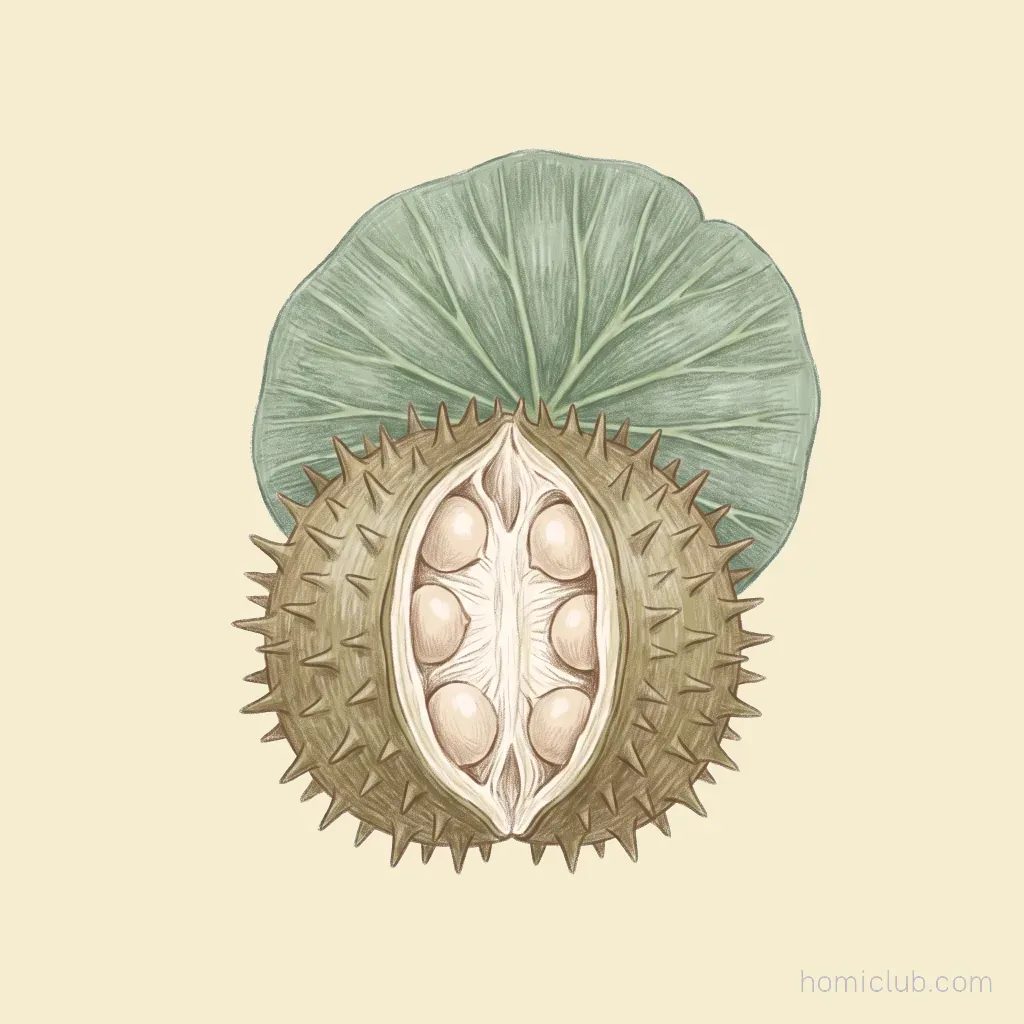
Gak (殼) means "husk" or "rind," and here it refers to the fruit rind of the pomegranate described in the preceding entry. It is the thick, tough shell left behind once the red arils have been picked out, and when dried it becomes as hard as wood.
The Dongui Bogam considers two kinds best: rind from fruit borne on old trees, and rind that has been stored for a long time. Before use, the text says, it should be lightly parched — that is, briefly dry-roasted, a routine preparation step for herbal materials in Korean traditional medicine.
Rich in tannins, pomegranate rind has also long been used outside of medicine, as a dye and as a material for tanning leather.
Original, read line by line 東醫寶鑑 · Tangaek — Decoctions vol. 2
-
味酸, 無毒. 止漏精, 澁腸, 止赤白痢.
Its taste is sour and it is non-toxic. It stops seminal leakage, astringes the intestines, and stops jeokbaengni (赤白痢, red and white dysentery).
HomiclubGak (殼) is the fruit rind of the preceding entry, the pomegranate. It is the thick, leathery red husk left once the arils are picked out; rich in tannin, it has long served as a dye and a tanning material.
-
須老木所結及陳久者, 佳. 微炒用. 《本草》
Those borne on an old tree and those long aged are best. Parch it lightly before use. 《Boncho (本草)》
Fruits — more entries
This is a cultural and historical record from a classical text, not a claim about any food’s effects. Nothing here is a health supplement or intended to prevent or treat disease. Consult a medical professional about health concerns. · Text: Korean Medicine Classics DB · Reading: Homiclub