
Tangaek — Decoctions · Fruits
櫻桃 Nanking Cherry
 Related Crop · Nanking Cherry →
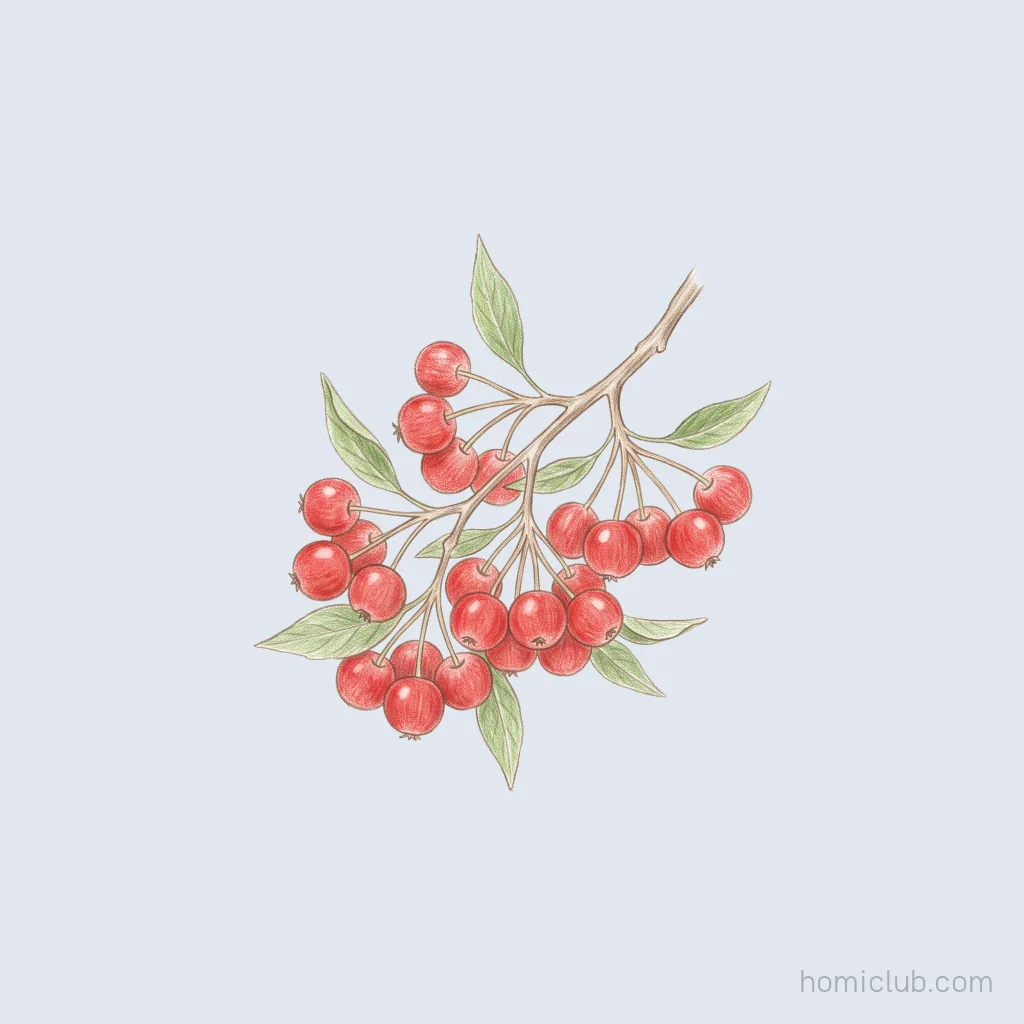
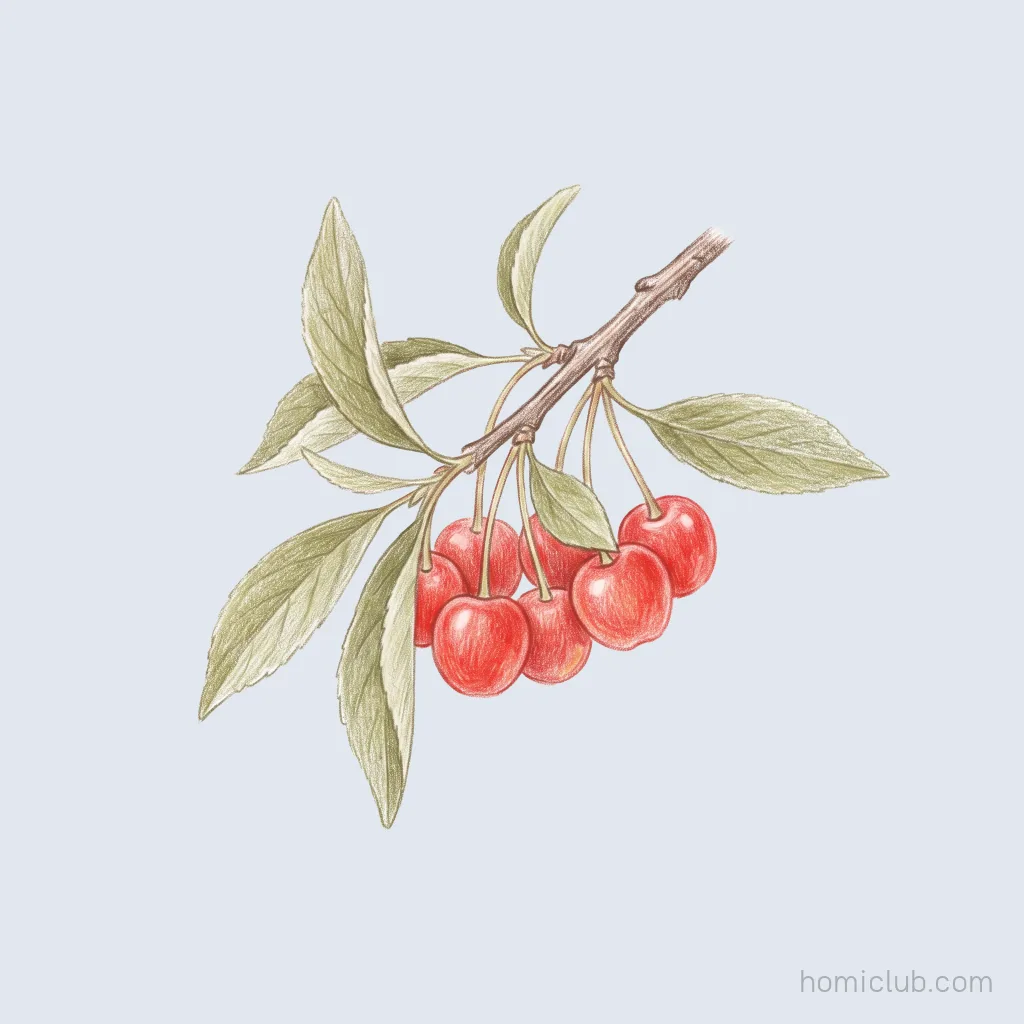
Aengdu is the small red fruit of the Korean bush cherry, the same plant in the crop guide and a different tree from the Western sweet cherry. Ripening before all other fruit, it was offered first at the royal shrine, and its name joins the oriole that ate it to the peach it resembles.
Original, read line by line 東醫寶鑑 · Tangaek — Decoctions vol. 2
-
性熱一云溫, 味甘, 無毒一云微毒. 主調中益脾氣, 令人好顔色, 美志, 止水穀痢.
Its nature is hot, though one account calls it warm; its taste is sweet and it is non-toxic, though one account calls it slightly toxic. It harmonizes the middle, augments the qi of the spleen, gives a good complexion, makes the will fine, and stops sugongni (水穀痢, dysentery of undigested food).
HomiclubAengdu is the red fruit of the Korean bush cherry, a different tree from the sweet cherry sold today. Its fruits are small and sit tight against the branch.
-
先百果而熟, 故古人多貴之, 以薦寢廟. 一名含桃.
It ripens before all other fruits, so people of old prized it and offered it at the chimmyo (寢廟, ancestral shrine). Another name for it is hamdo (含桃).
-
此桃在三月末四月初熟, 得正陽之氣, 先諸果熟, 故性熱.
This cherry ripens at the end of the third month and the start of the fourth; having received the qi of full yang, it ripens ahead of all other fruits, and so its nature is hot.
HomiclubThe end of the third lunar month and the start of the fourth fall around May. Aengdu still reddens earliest among the early-summer fruits.
-
雖多食無損, 但發虛熱耳. 《本草》
Even eaten in quantity it does no harm; it merely stirs up heoyeol (虛熱, deficiency heat). 《Boncho (本草)》
-
爲鸎鳥所含, 且形似桃, 故曰櫻桃. 《入門》
Because orioles hold it in their beaks and its shape resembles a peach, it is called aengdo (櫻桃). 《Immun (入門)》
Related Crop
Nanking Cherry →
Fruits — more entries
This is a cultural and historical record from a classical text, not a claim about any food’s effects. Nothing here is a health supplement or intended to prevent or treat disease. Consult a medical professional about health concerns. · Text: Korean Medicine Classics DB · Reading: Homiclub