
Tangaek — Decoctions · Vegetables
芋子 Taro (Toran)
 Related Crop · Taro (Toran) →
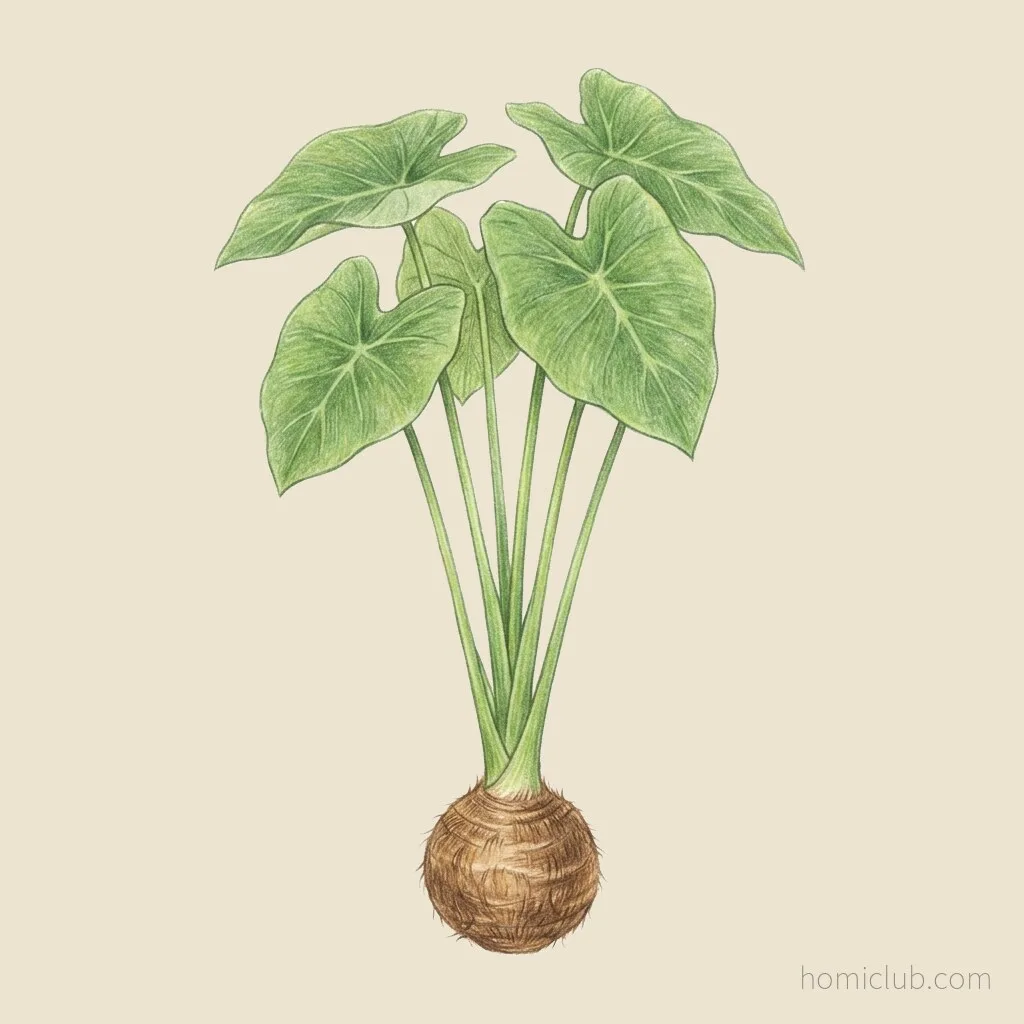
Taro is the underground corm of an aroid perennial, the same plant as the taro in the crop guide. It is the tuber that goes into the soup eaten at Chuseok, long known as toji or toryeon. Dongui Bogam warns that raw taro is acrid and inedible and must be cooked first.
Original, read line by line 東醫寶鑑 · Tangaek — Decoctions vol. 2
-
性平一云冷, 味辛, 有毒.
Its nature is neutral, though one account calls it cold; its taste is pungent, and it is toxic.
HomiclubToran (taro) is the underground corm of a perennial in the arum family. It is the tuber put into toran soup around Chuseok, and its broad leaves are familiar for the way they roll rainwater off.
-
寬腸胃, 充肌膚, 滑中, 破宿血, 去死肌.
It relaxes the intestines and stomach, fills out the flesh and skin, makes the interior slippery, breaks up stagnant blood, and removes dead flesh.
-
一名土芝, 處處有之. 生則有毒, 薟不可食. 性滑.
It is also called toji (土芝) and is found everywhere. Raw it is toxic and too acrid to eat. Its nature is slippery.
HomiclubThe acrid bite of raw taro comes from needle-shaped calcium oxalate crystals in the corm. The same crystals make hands itch during peeling, which is why taro is still trimmed with gloves on and then boiled.
-
熟則無毒, 甚補益. 和鯽魚作羹, 尤良. 《本草》
Cooked it loses its toxicity and is greatly nourishing. Made into a soup together with crucian carp it is better still. 《Boncho (本草)》
-
園圃中種者可食, 野芋有毒, 不堪啖.
Taro planted in a garden plot may be eaten, but wild taro is toxic and cannot be eaten.
-
當中出苗者爲芋頭, 四面附芋頭而生者爲芋子. 《本草》
The one from whose center the shoot emerges is called udu (芋頭), and those growing attached around it are called uja (芋子). 《Boncho (本草)》
-
今人呼爲土蓮. 《俗方》
People now call it toryeon (土蓮). 《Sokbang (俗方)》
Related Crop
Taro (Toran) →
Reading on Taro (Toran)
Vegetables — more entries
This is a cultural and historical record from a classical text, not a claim about any food’s effects. Nothing here is a health supplement or intended to prevent or treat disease. Consult a medical professional about health concerns. · Text: Korean Medicine Classics DB · Reading: Homiclub