
Tangaek — Decoctions · Fruits
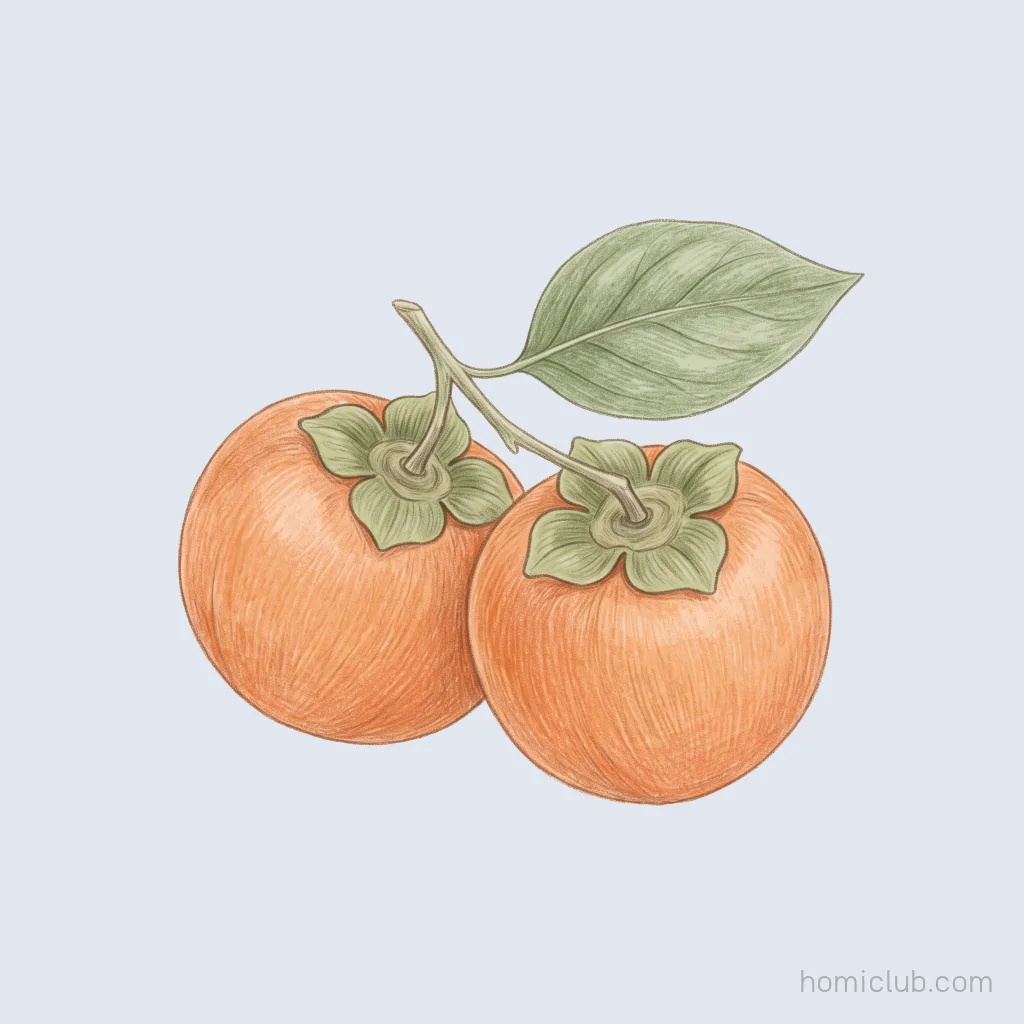
紅柿 Persimmon (hongsi)
 Related Crop · Persimmon (hongsi) →
Hongsi is a persimmon left on the tree until the flesh turns red and soft. It is the same fruit as the persimmon in the crop guide, the one that feels ready to burst in late autumn. The Donguibogam sorted the dried forms by name: baeksi sun-dried, osi fire-dried, and sisang for the white bloom on dried persimmon.
Original, read line by line 東醫寶鑑 · Tangaek — Decoctions vol. 2
-
性寒一云冷, 味甘, 無毒. 潤心肺, 止渴, 療肺痿心熱. 開胃, 解酒熱毒, 壓胃間熱, 止口乾, 亦治吐血.
Its nature is cold, though one account calls it chilly; its taste is sweet and it is non-toxic. It moistens the heart and lung, stops thirst, and treats pyewi (肺痿, lung atrophy) and heart heat. It opens the appetite, resolves the heat toxin of liquor, presses down heat in the stomach, stops dryness of the mouth, and also treats the vomiting of blood.
HomiclubHongsi is a persimmon ripened until it is soft and red inside, the late-autumn fruit that feels ready to burst in the hand. The name marks the stage at which the astringency has gone.
-
生南方, 軟熟者爲紅柿. 飮酒不可食, 令心痛, 且易醉. 不可與蟹同食, 令腹痛吐瀉.
It grows in the southern regions, and the softly ripened fruit is called hongsi. It must not be eaten while drinking, for it brings pain to the chest and makes one drunk easily. It must not be eaten together with crab, for that brings abdominal pain, vomiting, and diarrhea.
-
柿有七絶, 一壽, 二多陰, 三無鳥巢, 四無蟲蠹, 五霜葉可玩, 六佳實, 七落葉肥大.
The persimmon has seven excellences: first, long life; second, deep shade; third, no birds' nests; fourth, no boring insects; fifth, frost-touched leaves worth admiring; sixth, handsome fruit; seventh, fallen leaves that are broad and thick.
HomiclubThat persimmon trees live long and cast wide shade still holds in the old trees standing at village entrances. The frost-touched leaves are the persimmon foliage that turns red in late autumn.
-
柿實, 初則色靑而苦澁, 熟則色紅, 澁味自無矣. 《本草》
The persimmon is green at first, bitter and astringent, but when ripe it turns red and the astringency vanishes of itself. 《Boncho (本草)》
-
柿, 朱果也. 故有牛心紅珠之稱. 日乾者名白柿, 火乾者名烏柿, 其白柿皮上凝厚者, 謂之柿霜. 《入門》
The persimmon is a vermilion fruit, and so it bears names like usim (牛心, ox heart) and hongju (紅珠, red pearl). Sun-dried it is called baeksi (白柿), fire-dried osi (烏柿), and the thick bloom that gathers on the skin of baeksi is called sisang (柿霜). 《Immun (入門)》
HomiclubSisang is the white powder that blooms on dried persimmons: sugars from inside the fruit migrate to the surface as it dries and crystallize there. It is not mold, and its appearance is read as a sign the fruit dried well.
Related Crop
Persimmon (hongsi) →
Fruits — more entries
This is a cultural and historical record from a classical text, not a claim about any food’s effects. Nothing here is a health supplement or intended to prevent or treat disease. Consult a medical professional about health concerns. · Text: Korean Medicine Classics DB · Reading: Homiclub