
Tangaek — Decoctions · Fruits
蒲萄 Grape
 Related Crop · Grape →
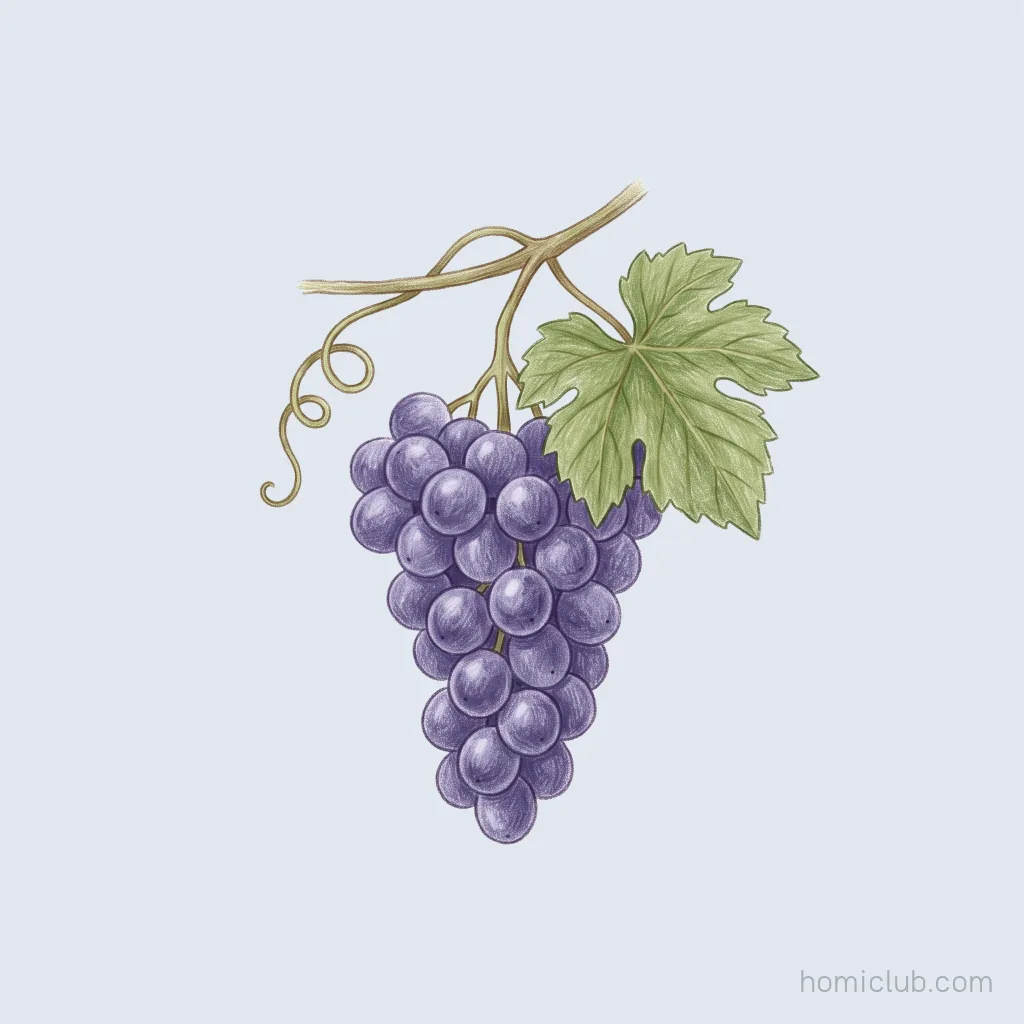
Grapes hang in clusters on the vine, the same fruit as the grape in the crop guide. Dongui Bogam calls the purple kind mayu and the white kind sujeong, notes seedless sorts, and says the juice pressed and fermented from them is podoju, grape wine. The small wild kind, yeongug, is the Korean mountain grape, meoru.
Original, read line by line 東醫寶鑑 · Tangaek — Decoctions vol. 2
-
性平, 味甘一云甘酸, 無毒. 主濕痺. 治淋, 通小便, 益氣强志, 令人肥健.
Its nature is neutral and its taste sweet, though one account calls it sweet and sour; it is non-toxic. It addresses seupbi (濕痺, damp impediment). It treats strangury, frees urination, augments qi, strengthens the will, and makes a person plump and sturdy.
HomiclubGrapes hang in clusters from a climbing vine. Because the plant pulls itself up by tendrils, growers train it onto trellises or wires.
-
子有紫白二色. 紫者名馬乳, 白者名水晶, 又有圓者, 又有無核者. 七月八月熟, 北果之最珍者.
The fruit comes in two colors, purple and white. The purple is called mayu (馬乳, mare's milk) and the white sujeong (水晶, crystal); there are also round ones and seedless ones. It ripens in the seventh and eighth months and is the most prized of the northern fruits.
HomiclubMayu names a grape whose berries are elongated like a mare's teat, and sujeong a green grape with translucent skin. Seedless grapes already appear here in the original text.
-
暴收其實, 以治瘡疹不出, 甚效. 多食, 昏人眼.
The fruit is dried in the sun and stored; used for changjin (瘡疹, pox eruptions) that fail to come out, it is highly effective. Eaten in quantity it dims the eyes.
-
取汁釀酒, 名曰蒲萄酒. 《本草》
Its juice is pressed out and fermented into wine, and this is called podoju (蒲萄酒, grape wine). 《Boncho (本草)》
Related Crop
Grape →
Reading on Grape
Fruits — more entries
This is a cultural and historical record from a classical text, not a claim about any food’s effects. Nothing here is a health supplement or intended to prevent or treat disease. Consult a medical professional about health concerns. · Text: Korean Medicine Classics DB · Reading: Homiclub