
Tangaek — Decoctions · Fruits
核 Haek (핵)

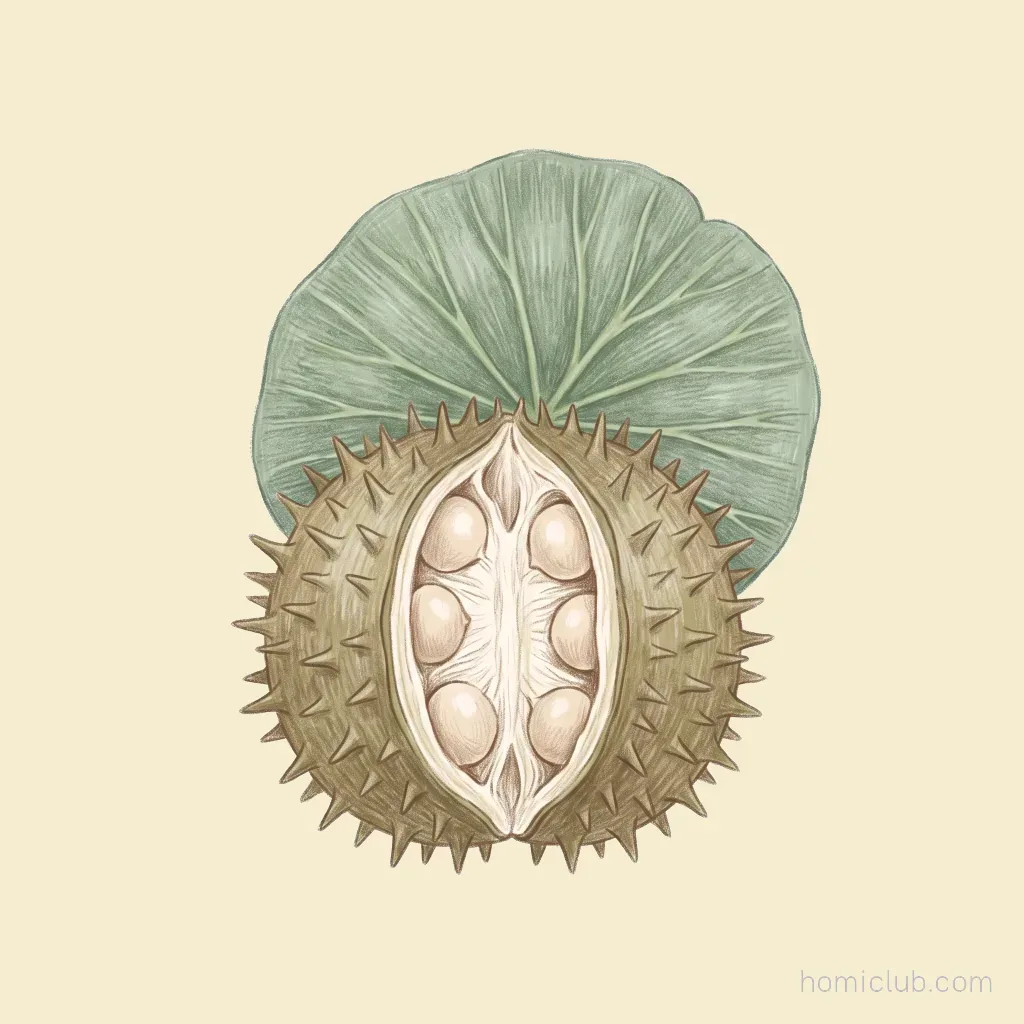
Haek (核) means seed, and refers to the seed of yeoji, that is, the lychee, in the preceding entry. It is the glossy chestnut-brown seed that appears when the white flesh is peeled away, one to each fruit. The Dongui Bogam records briefly that it is burned, powdered, and taken stirred into warm wine. Yeoji was included as a medicinal brought in from southern China.
Original, read line by line 東醫寶鑑 · Tangaek — Decoctions vol. 2
-
治心痛及小腸疝氣.
It treats heart pain and sangi (疝氣, hernial qi) of the small intestine.
HomiclubHaek (核) means the pit, here the seed of the preceding entry yeoji, the lychee. It is the glossy chestnut-brown stone at the center of the white flesh, one to each fruit. Lychee seeds contain methylenecyclopropylglycine (MCPG), a close relative of hypoglycin A, which can cause dangerously low blood sugar. Outbreaks of encephalopathy among children in India and northern Vietnam have been linked to hypoglycin A and MCPG poisoning, with malnourished children who ate lychees on an empty stomach most at risk.
-
燒爲末, 溫酒調下. 《入門》
Burn it, reduce it to powder, and take it stirred into warm liquor. 《Immun (入門)》
Fruits — more entries
This is a cultural and historical record from a classical text, not a claim about any food’s effects. Nothing here is a health supplement or intended to prevent or treat disease. Consult a medical professional about health concerns. · Text: Korean Medicine Classics DB, collated with the Jangseogak copy of the 1613 wooden movable-type edition · Reading: Homiclub