
Tangaek — Decoctions · Fruits
荔枝 Lychee
 Related Crop · Lychee →
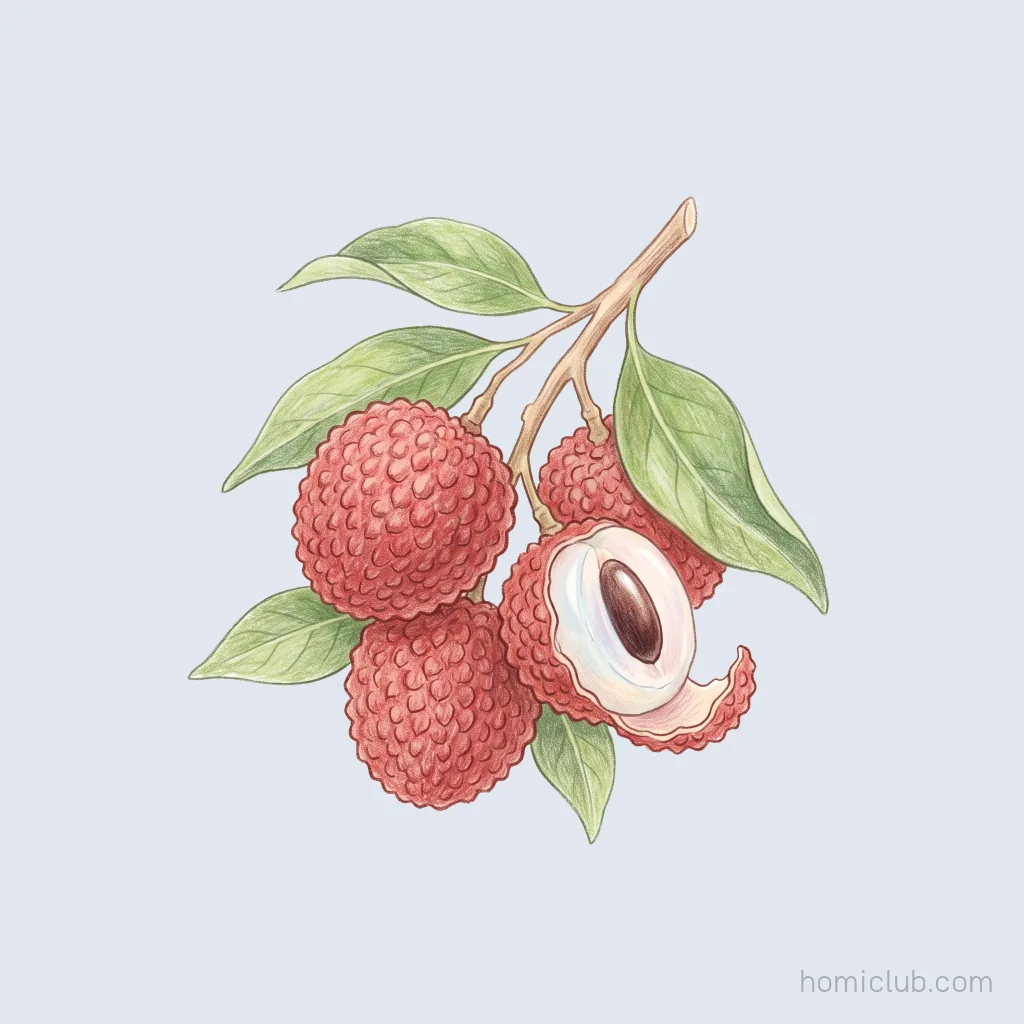
Yeoji is the fruit of a soapberry-family tree, the lychee sold today. The text describes a red rind patterned like figured silk and flesh as clear and white as crystal. Donguibogam lists it with the 【唐】 mark, sourced from Shu and Yunnan in China.
Original, read line by line 東醫寶鑑 · Tangaek — Decoctions vol. 2
-
性平一云微溫, 味甘一云甘酸, 無毒.
Its nature is neutral, though one account calls it slightly warm; its taste is sweet, though one account calls it sweet and sour; and it is non-toxic.
HomiclubYeoji is the fruit of a soapberry-family tree known today as the lychee. Peeling the red, bumpy rind reveals translucent white flesh; in Korean markets it arrives mostly frozen or canned.
-
通神, 益智, 止煩渴, 好顔色.
It opens the spirit, augments the wits, stops beongal (煩渴, vexing thirst), and improves the complexion.
-
生川蜀雲南. 子如雞卵大, 殼朱如紅羅文.
It grows in Chok (蜀, Sichuan) and Unnam (雲南, Yunnan). The fruit is the size of a hen's egg, and its rind is red like the figured pattern of red silk gauze.
HomiclubThe Chok and Unnam of the text are today's Sichuan and Yunnan provinces. Southern China remains a major growing region for lychee, along with Taiwan, Vietnam, and Thailand.
-
肉靑白如水晶, 甘美如蜜. 又云, 核如蓮子, 肉白如肪脂, 甘而多汁.
The flesh is a bluish white like crystal, sweet and delicious as honey. It is also said that the pit resembles a lotus seed, that the flesh is white like fat, and that it is sweet and full of juice.
-
多食則發熱, 飮蜜漿解之.
Eating much of it brings on heat; drinking honey water resolves it.
-
結實時, 枝弱而蔕牢, 不可摘取, 以刀斧劙取其枝, 故以爲名耳. 《本草》
When the fruit sets, the branch is weak but the stem-base is firm, so it cannot be plucked; the branch is cut away with a knife or axe. Hence merely the name. 《Boncho (本草)》
HomiclubThis passage derives the name yeoji (荔枝) from the practice of cutting the branch to harvest it. Lychee is still sold in growing regions as clusters cut off with the branch attached.
Related Crop
Lychee →
Reading on Lychee
Fruits — more entries
This is a cultural and historical record from a classical text, not a claim about any food’s effects. Nothing here is a health supplement or intended to prevent or treat disease. Consult a medical professional about health concerns. · Text: Korean Medicine Classics DB · Reading: Homiclub