
Tangaek — Decoctions · Vegetables
蘩蔞 Chickweed
 Related Crop · Chickweed →
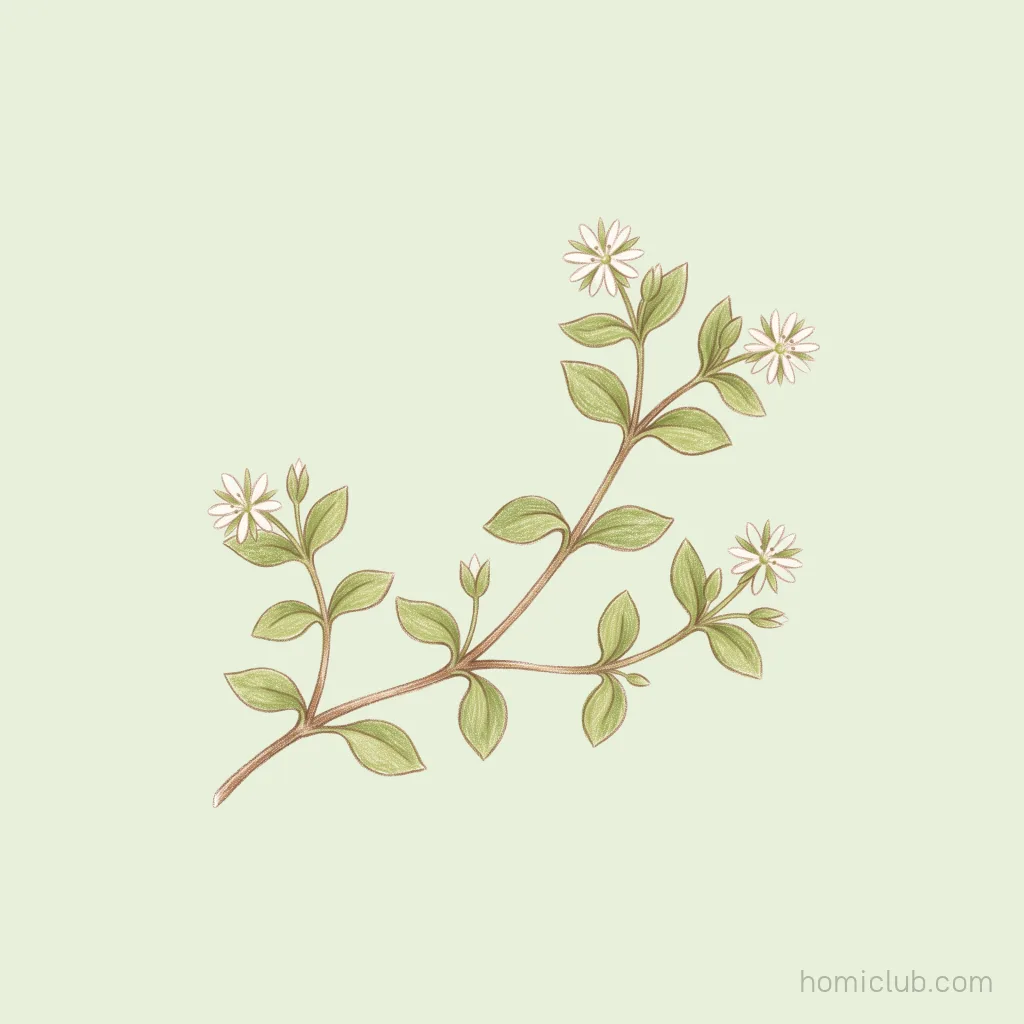
Beollu is the old name for chickweed, the same plant as the field guide's byeolkkot. It mats over field edges in early spring and is boiled and dressed as a wild green. Snap a stem and fine threads trail from the hollow core, like a chicken's gut, hence its other name gyejangcho.
Original, read line by line 東醫寶鑑 · Tangaek — Decoctions vol. 2
-
性平一云微寒, 味酸一云微, 無毒.
Its nature is neutral, though one account calls it slightly cold; its taste is sour, though one account calls it only slightly so, and it is non-toxic.
HomiclubBeollu is byeolkkot, chickweed. In early spring it mats low along field edges and at the foot of walls, its five white petals cleft so deeply that they look like ten.
-
主毒腫. 止小便利, 破瘀血, 療積年惡瘡.
It governs toxic swellings (毒腫). It stops frequent urination, breaks static blood (瘀血), and treats malign sores (惡瘡) of many years' standing.
-
卽雞腸草也. 處處有之. 其莖作蔓, 斷之有絲縷, 細而中空, 似雞腸, 故因此得名.
It is none other than gyejangcho (雞腸草, chicken-gut herb). It is found everywhere. Its stem trails like a vine, and when broken shows fine threads; being slender and hollow within, it resembles a chicken's gut, and from this it took its name.
HomiclubWhen the stem is snapped its core draws out in a thread, a cue still used to pick out the chickweed group. A single line of hairs running down one side of the stem is another mark of these plants.
-
煮作菜食, 亦可生食. 《本草》
It is boiled and made into a vegetable dish, and may also be eaten raw. 《Boncho (本草)》
Related Crop
Chickweed →
Reading on Chickweed
Vegetables — more entries
This is a cultural and historical record from a classical text, not a claim about any food’s effects. Nothing here is a health supplement or intended to prevent or treat disease. Consult a medical professional about health concerns. · Text: Korean Medicine Classics DB · Reading: Homiclub