
Tangaek — Decoctions · Fruits
龍眼 Longan
 Related Crop · Longan →
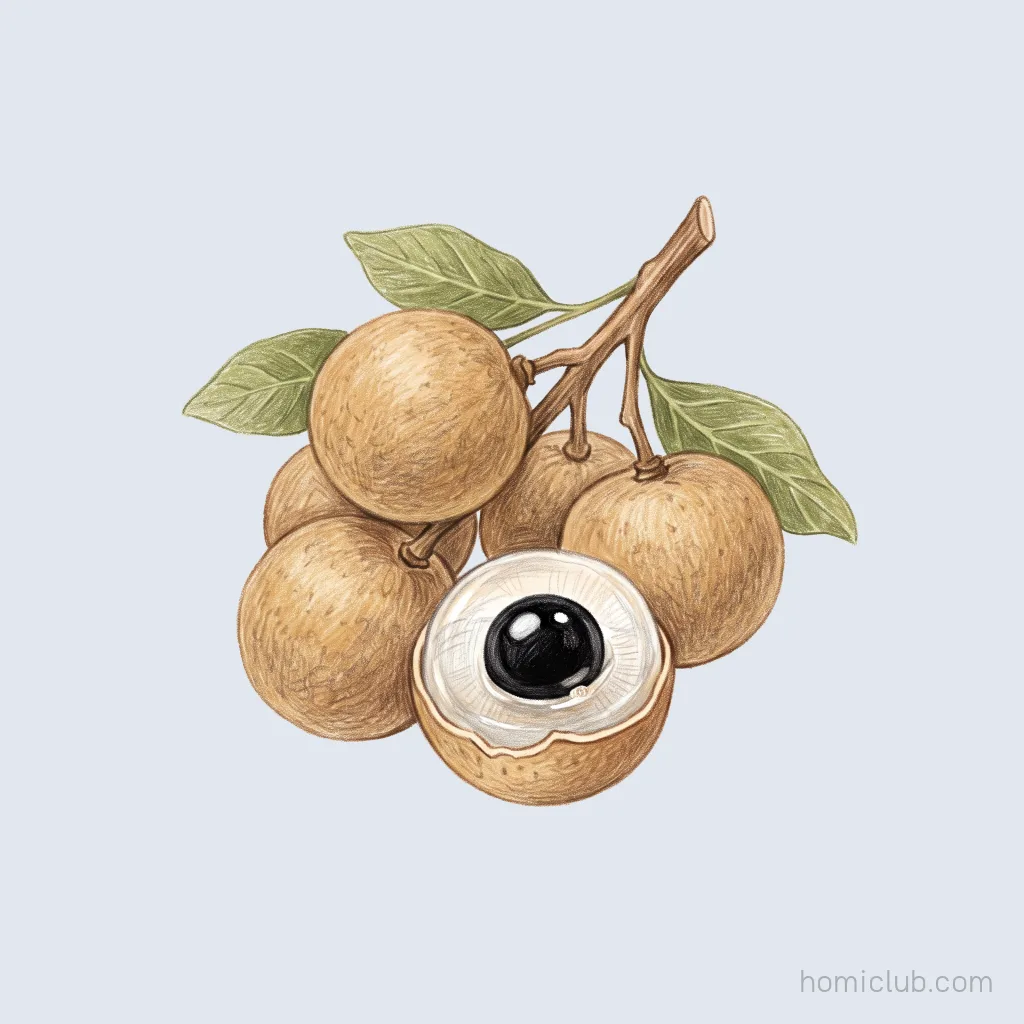
Yongan is a subtropical fruit of the soapberry family, sold today as longan and a close cousin of the lychee; the dried flesh is yonganyuk. The Dongui Bogam marks it 【唐】 and explains the name, since a peeled fruit looks like a dragon's eye, alongside the alternate names wonan and yeojino.
Original, read line by line 東醫寶鑑 · Tangaek — Decoctions vol. 2
-
性平, 味甘, 無毒. 主五藏邪氣.
Its nature is neutral, its taste sweet, and it is non-toxic. It governs evil qi in the five jang (五藏, five viscera).
HomiclubYongan is the fruit of a soapberry-family tree akin to the lychee, known today as longan. Its dried flesh is sold in herb shops under the name yonganyuk (龍眼肉).
-
安志, 除蠱毒, 去三蟲.
It settles the will, removes godok (蠱毒, gu poisoning), and expels the samchung (三蟲, three worms).
-
其味歸脾而能益志.
Its taste returns to the bi (脾, spleen) and so can augment the will.
-
生西南, 與荔枝同. 似檳榔而小. 肉薄於荔枝, 甘美堪食. 《本草》
It grows in the southwest, the same as yeoji (荔枝, lychee). It resembles binrang (檳榔, areca nut) but is smaller. Its flesh is thinner than the lychee's, sweet and good enough to eat. 《Boncho (本草)》
HomiclubIts rind is a smoother yellow-brown than the lychee's and the fruit is smaller. Once peeled, the dark seed shows through the translucent flesh.
-
形如龍之眼, 故謂之龍眼. 《入門》
Its form is like a dragon's eye, and so it is called yongan (龍眼, dragon eye). 《Immun (入門)》
-
一名圓眼, 一名益智. 生食不及荔枝, 故曰荔枝奴. 《食物》
It is also called wonan (圓眼, round eye) and ikji (益智). Eaten raw it does not match the lychee, and so it is called yeojino (荔枝奴, the lychee's servant). 《Singmul (食物)》
Related Crop
Longan →
Reading on Longan
Fruits — more entries
This is a cultural and historical record from a classical text, not a claim about any food’s effects. Nothing here is a health supplement or intended to prevent or treat disease. Consult a medical professional about health concerns. · Text: Korean Medicine Classics DB · Reading: Homiclub