
Tangaek — Decoctions · Vegetables
胡葱 Shallot
 Related Crop · Shallot →
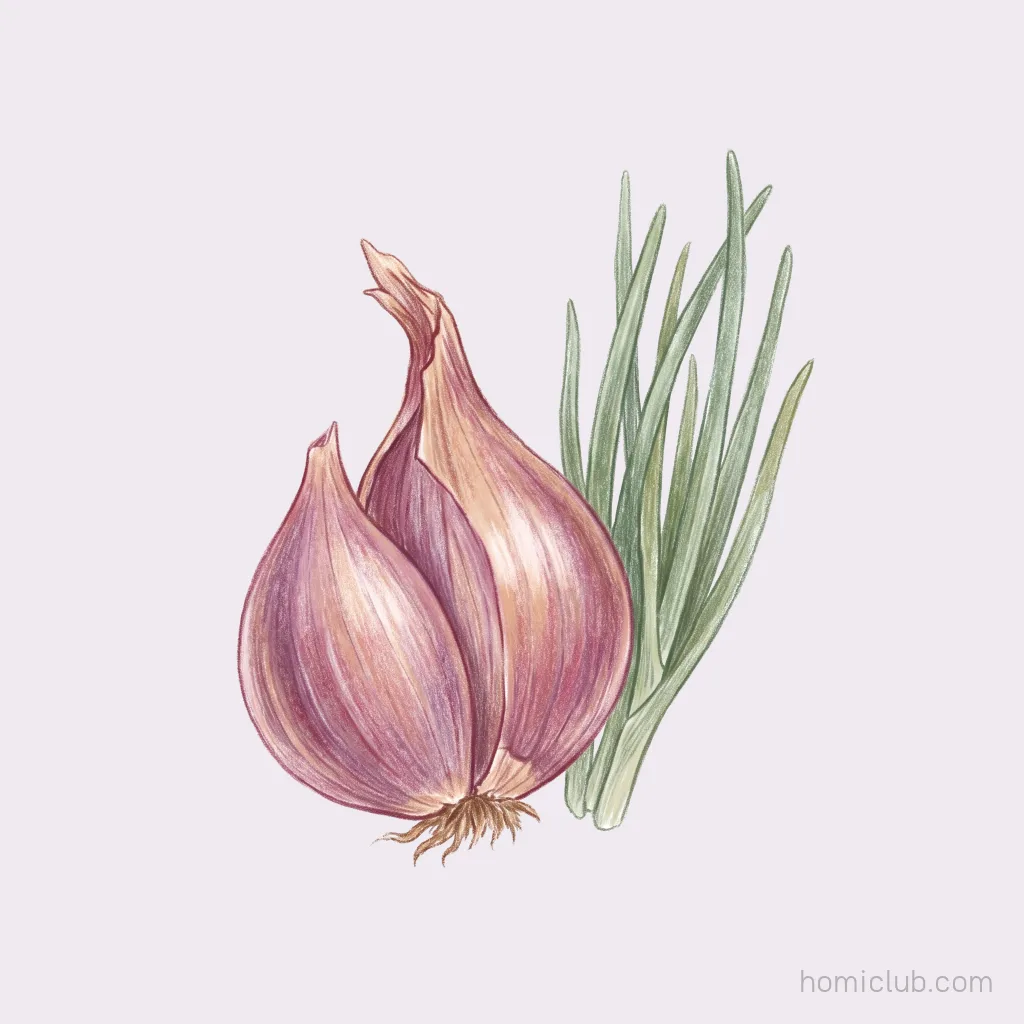
Hochong is a small bulbing onion of the allium group. It looks like garlic, but the bulb is smaller, red-skinned and tapered, and it is lifted in the fifth or sixth lunar month. Donguibogam found it milder than scallion and guessed it was what people of the day called jachong, the purple onion.
Original, read line by line 東醫寶鑑 · Tangaek — Decoctions vol. 2
-
性溫, 味辛, 無毒.
Its nature is warm, its taste is pungent, and it is non-toxic.
HomiclubHochong belongs to the alliums whose bulbs ripen small, close in kind to today's bunching shallot. The ho (胡) at the head of its name marks it as having arrived by way of the western regions.
-
溫中消穀, 下氣殺蟲. 久食傷神損性.
It warms the center and digests grain, sends qi downward, and kills worms. Eaten over a long time it injures the spirit and harms the disposition.
-
其狀似大蒜而小, 形圓皮赤, 稍長而銳. 五六月採, 亦是葷物耳. 《本草》
Its form resembles garlic but is small, round with a red skin, somewhat elongated and pointed. It is dug in the fifth and sixth months, and it too is merely a hunmul (葷物, pungent thing). 《Boncho (本草)》
HomiclubThe description of a small bulb with red skin drawn to a point matches the visual clues by which shallots and red onions are recognized today.
-
味似葱而不甚辛. 疑是今之紫葱也. 《俗方》
Its taste is like the scallion but not very pungent. It is likely what is now called jachong (紫葱, purple scallion). 《Sokbang (俗方)》
Related Crop
Shallot →
Reading on Shallot
Vegetables — more entries
This is a cultural and historical record from a classical text, not a claim about any food’s effects. Nothing here is a health supplement or intended to prevent or treat disease. Consult a medical professional about health concerns. · Text: Korean Medicine Classics DB · Reading: Homiclub