
Tangaek — Decoctions · Vegetables
西瓜 Watermelon
 Related Crop · Watermelon →
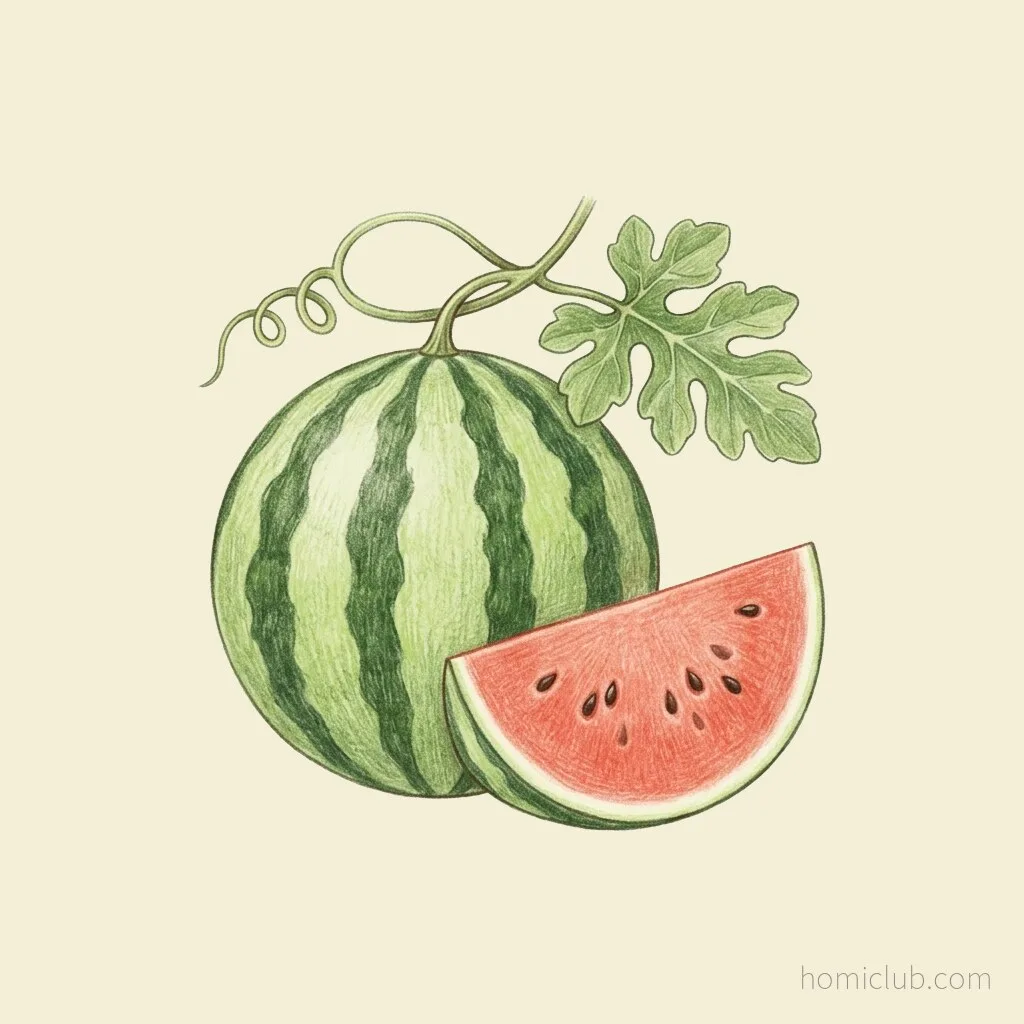
Seogwa is watermelon, the same fruit as the watermelon in the crop guide. The Donguibogam records how the seed travelled east — the Khitan took it after defeating the Uighurs and sowed it under a mulch of cow dung — and describes fruit round as a gourd, jade-green skinned, ripening in the sixth and seventh months.
Original, read line by line 東醫寶鑑 · Tangaek — Decoctions vol. 2
-
性寒, 味甘極淡, 無毒.
Its nature is cold, its taste sweet and extremely bland, and it is not toxic.
-
壓煩渴, 消暑毒, 寬中下氣, 利小便.
It presses down beongal (煩渴, vexing thirst), dispels summer-heat toxin, loosens the middle and sends qi downward, and promotes urination.
-
治血痢, 療口瘡. 《入門》
It treats hyeolli (血痢, bloody dysentery) and heals sores in the mouth. 《Ipmun》
-
契丹破回紇, 得此種, 以牛糞覆而種之.
The Khitan defeated the Uyghurs, obtained this seed, and planted it covered over with cow dung.
HomiclubThis passage records how the watermelon travelled into East Asia. The plant originates in Africa and reached the region by way of Central Asia and China.
-
其實圓大如瓠, 色如靑玉, 子如金色, 或赤或黑, 或黑麻色.
Its fruit is round and as large as a bottle gourd, its colour like blue jade; the seeds are gold-coloured, or red, or black, or the colour of black sesame.
-
北地多有之, 今則流播南北, 處處皆有之. 六七月熟. 《日用》
It was abundant in the northern lands; now it has spread north and south and is found everywhere. It ripens in the sixth and seventh months. 《Iryong》
-
有一種楊溪瓜, 秋生冬熟, 形略長匾而大, 瓤色臙紅.
There is one kind called yanggyegwa (楊溪瓜): it comes up in autumn and ripens in winter, its shape somewhat long, flattened and large, and its flesh rouge-red.
HomiclubWhich variety yanggyegwa referred to can no longer be identified today.
-
味勝西瓜. 可留至次年夏間.
Its taste surpasses that of the watermelon. It can be kept until the summer of the following year.
-
或云, 異人遺種也. 《食物》
Some say it is a seed left behind by an extraordinary person. 《Sikmul》
Related Crop
Watermelon →
Reading on Watermelon
Vegetables — more entries
This is a cultural and historical record from a classical text, not a claim about any food’s effects. Nothing here is a health supplement or intended to prevent or treat disease. Consult a medical professional about health concerns. · Text: Korean Medicine Classics DB · Reading: Homiclub