

- Type
- Gourds & Squash
- Difficulty
- Hard
- Season
- Summer
- Sowing
- Transplant
Watermelon
Citrullus lanatus
Citrulline and lycopene in a midsummer fruit that's mostly water
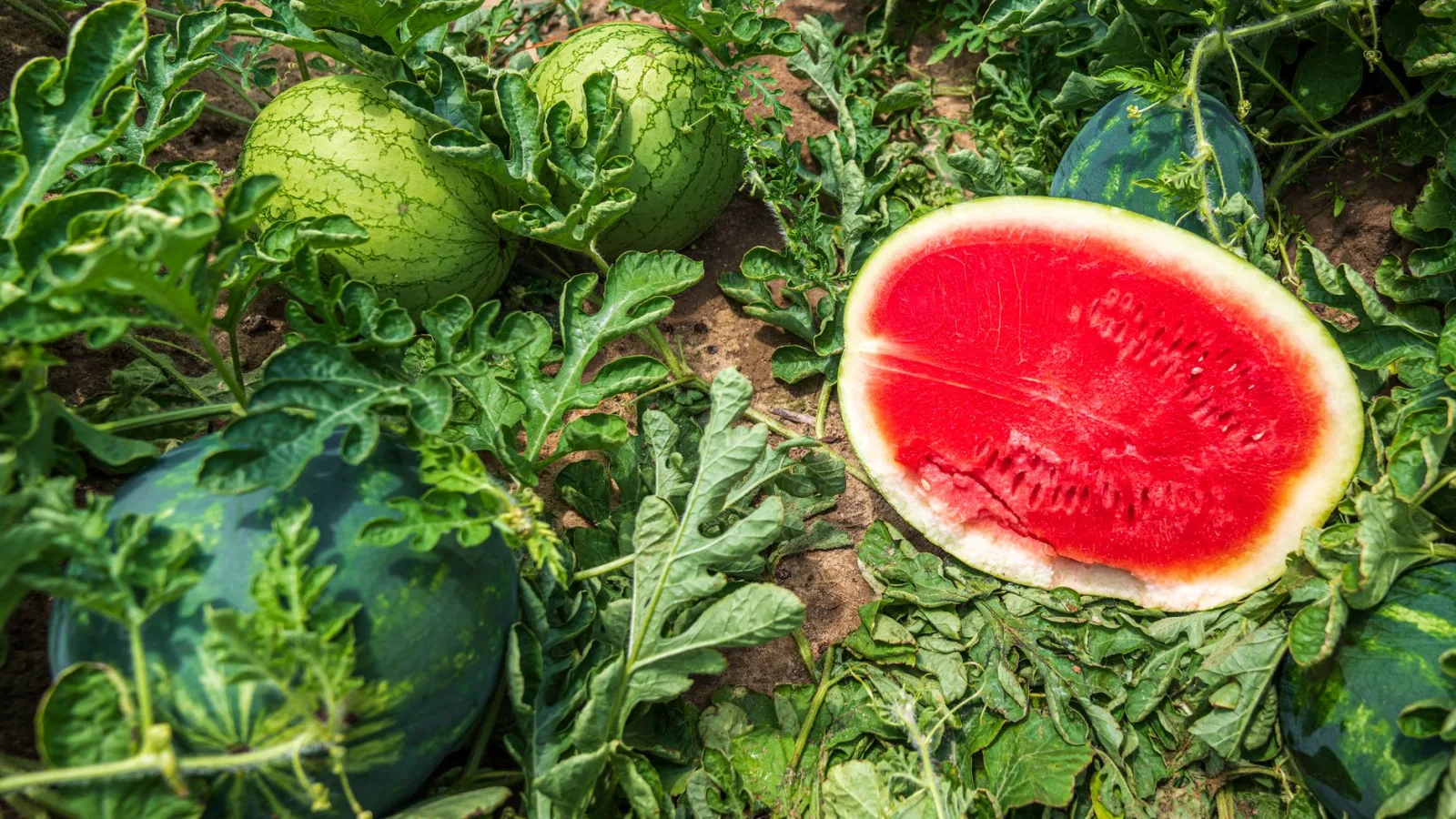
Watermelon is about 92% water, making it one of the best fruits for staying hydrated and beating thirst at the peak of summer. Its signature compounds are citrulline, an amino acid it carries in quantity, and the lycopene that colors the red flesh. There's plenty of citrulline in the pale rind just inside the skin too, which Koreans often slice up and toss into a seasoned side dish rather than throwing it away. Set out transplants in May and give the plants a sunny spot with room to spread.
Year-Round Calendar
- 1
- 2
- 3
- 4
- 5
- 6
- 7
- 8
- 9
- 10
- 11
- 12
- 4
- 5
- 7
- 8
Where It Grows
- Main producer Accounts for well over half of world production. Open-field and greenhouse cultivation run side by side across North and Central China.
- Major producer The hot, dry summers of inland Anatolia suit watermelon. This is the summer supply region for the European market.
- Major producer Grown on the northern plains and riverside sandy soils, timed to the heat at the end of the dry season.
- Major producer Being in the southern hemisphere, its harvest season is the reverse of Korea's. The growing areas are the dry northeast and the south.
- Major producer Grown through irrigated oasis farming along the northern edge of the Sahara.
- Origin Wild watermelons in the western Kordofan area are identified as the ancestor of cultivated watermelon. Seed watermelons for oil pressing are still grown there today.
Genetic research is lending weight to the view that the crop diverged from a wild species in northeastern Africa — more precisely, in Kordofan, Sudan. It spread through Egypt to the Mediterranean and West Asia, reached China around the 10th century, and arrived on the Korean peninsula between the late Goryeo and early Joseon periods. Today it is grown on every continent wherever summers are hot and dry.
- Optimum
- 25~30℃
- Range
- 15~35℃
- Hardiness
- Not hardy
Sugar levels rise in hot, sunny climates with little rain. Growth stops below 15℃, and a single frost kills the plant. Frequent rain around ripening makes the flesh bland and splits the fruit, so dry, continental uplands suit it best.
In Korea Nationwide
Open-field calendars are much the same nationwide: transplanting in April–May, harvest in July–August. Buyeo and Nonsan in South Chungcheong, Goryeong in North Gyeongsang, and Haman and Uiryeong in South Gyeongsang are the well-known areas, while the volume that appears in spring comes from greenhouse growers in the south who transplant in winter to bring the crop forward.
How to grow
- Light
- It wants a great deal of sun
- Soil and depth
- 30cm deep or more with good drainage
- Spacing
- A metre or more
- Watering
- Plenty while growing, then ease off as it ripens. Water to the end and it tastes of nothing
- Feeding
- Generous base dressing plus one feed once the fruit sets
- Harvest
- When the tendril next to the fruit has dried and it sounds hollow
What makes the difference. Leave one or two fruit per vine and remove the rest. Get greedy and every one of them is small and watery
Why this one is harder. It takes a lot of ground, the ripening moment is hard to judge, and the watering is fussy
Common problems
- Fusarium wilt You will see Wilts in the afternoon, recovers, then dies What to do Never follow one cucurbit with another in the same ground
- Aphids You will see Sticky new growth What to do Wash them off
This page describes how a crop is grown and used. It does not claim health effects for any food, nor is it intended to prevent or treat disease. Component and study notes are references only and do not mean the same result occurs in people. Consult a medical professional about health concerns.
Health Benefits
Citrulline: the gap between supplement studies and food. The blood-pressure figures usually quoted come from studies on purified L-citrulline supplements, which differ from eating watermelon as fruit in both form and dose. What can be said here stops at the fact that watermelon contains citrulline.
The path citrulline takes in the body. That citrulline converts to arginine in the body and takes part in the nitric oxide (NO) pathway is established biochemistry. It does not mean that eating watermelon changes the risk of any particular condition.
Lycopene. The color of the red flesh comes from the carotenoid pigment lycopene. A considerable body of research has accumulated on its antioxidant activity, but that is not yet something to carry over directly to what happens when a person eats watermelon.
Water and electrolytes. More than 90% of watermelon's weight is water, and it carries electrolytes such as potassium along with it. That it is a good fruit for topping up fluids after sweating is the part that can be said with the most confidence.
Studies in people. Small clinical studies giving participants watermelon juice have been reported, but the numbers and durations were limited. What can be said today stops at composition and hydration.
Nutrition
- Water (about 92%) — Most of the flesh by weight
- Citrulline (present) — An amino acid abundant in watermelon
- Lycopene (in the red flesh) — The carotenoid behind the red color
Water content More than 92% of watermelon's weight is water. It tops up the fluids and electrolytes that summer sweat carries away as easily as a drink does, which is how it became the first fruit people reach for in the heat.
Citrulline (L-citrulline) An amino acid present in watermelon in relatively large amounts. That it converts to arginine in the body and takes part in the nitric oxide (NO) pathway is established biochemistry. Most of the clinical research, however, was done on purified L-citrulline supplements, which differ from eating watermelon as fruit in both form and dose.
Lycopene This carotenoid pigment produces the red color of watermelon, and research has accumulated on its antioxidant activity. Depending on variety and ripeness, the concentration can run comparable to tomato.
Beta-carotene & vitamin A Yellow watermelon carries a different set of carotenoids from the red kind. Not every carotenoid is a vitamin A precursor, though. Beta-carotene converts to retinol in the body, while lycopene, the main pigment of the red flesh, lacks the structure for that and does not convert. A deeper red does not mean more vitamin A.
Potassium & magnesium Watermelon contains potassium and magnesium. Both minerals are nutrients involved in fluid and electrolyte balance, which helps replace what summer sweat carries off.
Vitamin C & B6 Watermelon contains vitamin C and B6. They are taken in whole along with the water of the flesh, and that is what characterizes watermelon as an ingredient.
Pairings
○ A pinch of salt — The Korean habit of sprinkling a pinch of salt over watermelon brings out the sweetness and replaces electrolytes at the same time. It's a smart way to naturally restore the sodium you lose through sweat in hot weather.
○ Mint and basil — A salad that pairs watermelon with herbs creates a synergy of aroma and nutrition. The cool freshness of mint and the deeper fragrance of basil lift the fruit's sweetness, making it a summer favorite. Basil · Mint
○ Feta and balsamic — Mediterranean-style watermelon salad balances sweet, salty, and tangy with feta cheese and balsamic. It may sound like an unlikely combination, but it's become a Western classic, and the protein and polyphenols round out the nutrition.
○ Post-workout drink — Watermelon juice delivers citrulline, electrolytes, and natural sugars all at once, making it a natural sports drink. It's regarded as a more wholesome way to refuel than artificial sports beverages, and it has real value as a post-exercise recovery food.
○ Lemon and lime — Adding lemon or lime to a watermelon punch (hwachae) or a watermelon mojito boosts the vitamin C. The acidity sharpens the fruit's sweetness and keeps it from tasting flat and one-note.
△ Lots of cold watermelon on an empty stomach — Eating a large amount of chilled watermelon on an empty stomach can irritate the gut and trigger diarrhea. Enjoying a moderate portion with a meal or as dessert is easier on the stomach.
△ Alongside alcohol — Watermelon is great for hydration, but pairing cold watermelon with cold drinks puts real strain on the stomach. While drinking, it's safer to stick to a moderate amount of room-temperature watermelon.
△ Medications (blood pressure drugs and PDE5 inhibitors) — Citrulline in watermelon dilates blood vessels, so patients taking blood pressure medication or PDE5 inhibitors should seek medical advice before eating large amounts. The combined effect can amplify the drugs and cause low blood pressure.
Varieties
- Large-fruited type (Transplant) — Fruit runs 6-8 kg. Vines spread wide, so keep only one or two melons on each plant.
- Apple watermelon (small-fruited type) (Transplant) — About 1.5 kg with a thin rind, and it takes little room, so it suits a small plot.
- Yellow-fleshed watermelon (Transplant) — Yellow flesh and usually a smaller fruit. Grown exactly like the red-fleshed kinds.
- Seedless watermelon (Transplant) — Almost no seeds, but a normal watermelon must grow nearby to supply pollen for fruit set.
Source: Food and nutrition references
Stories about Watermelon
Watermelon, as the Donguibogam Saw It
Korea's classic medical text, the Donguibogam, described watermelon as cold in nature, sweet, and faintly bland — a fruit that quiets feverish thirst, dispels summer heat, and moves the water along. Here's how that old reading lines up with what we know today, plus how to eat it kindly.
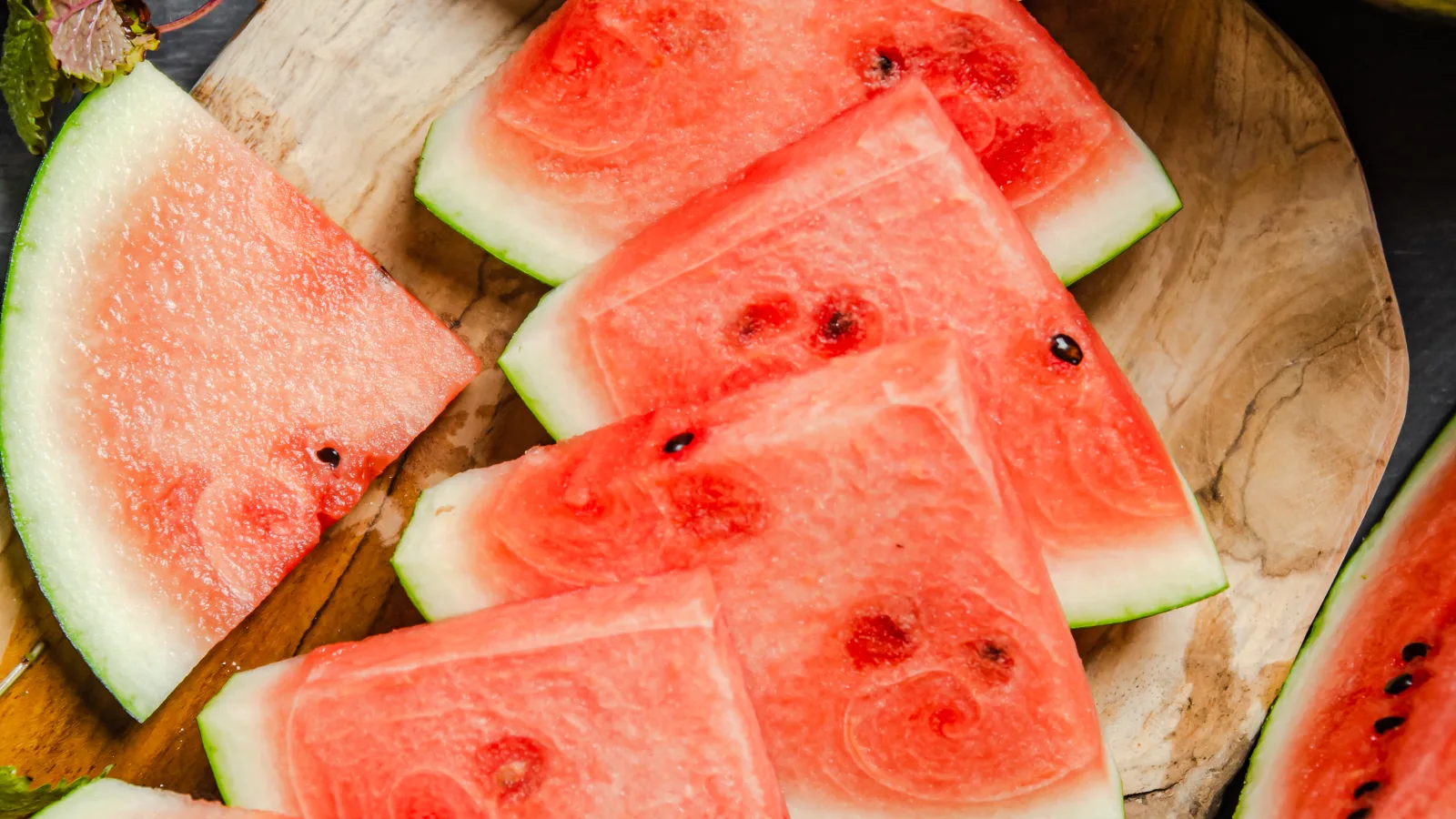
Don't Toss the Watermelon Rind—Turn It Into a Side Dish
The pale layer between a watermelon's red flesh and green skin holds more blood-vessel-friendly citrulline than the fruit itself. Here's how to clean it up and cook it into easy summer side dishes.