
Tangaek — Decoctions · Fruits
榧子 Torreya Nut
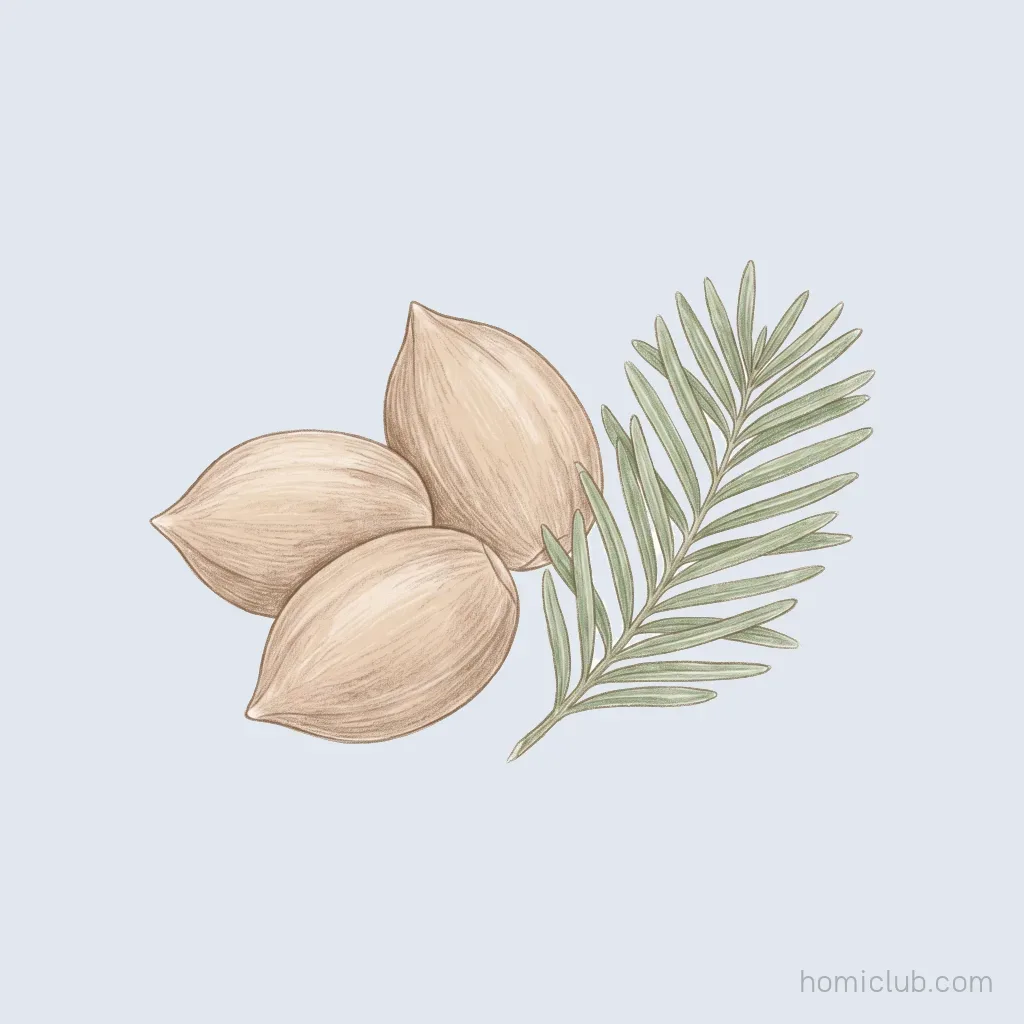 Related Crop · Torreya Nut →
Bija is the seed of the Japanese torreya. It is the same bija as in the crop guide: the hull is stripped and the kernel eaten, and it went by okbi as well, or jeokgwa among local people. A Korean note in Donguibogam says the tree grows nowhere in the country but Jeju.
Original, read line by line 東醫寶鑑 · Tangaek — Decoctions vol. 2
-
性平, 味甘, 無毒. 主五痔.
Its nature is neutral, its taste sweet, and it is non-toxic. It governs the five piles.
-
去三蟲鬼疰, 消穀.
It expels the samchung (三蟲, three worms) and gwiju (鬼疰, ghost infixation), and digests grain.
-
一名玉榧, 土人呼爲赤果. 去皮, 取中仁食之. 《日用》
It is also called okbi (玉榧), and local people call it jeokgwa (赤果, red fruit). Peel off the shell, take the kernel inside, and eat it. 《Iryong (日用)》
-
患寸白蟲, 日食七枚, 七日, 其蟲皆化爲水. 《入門》
For chonbaekchung (寸白蟲, tapeworm), eat seven nuts a day for seven days and the worms all turn to water. 《Immun (入門)》
-
榧, 文木也. 作板甚有文彩. 我國惟出濟州. 《俗方》
The torreya is a figured wood. Sawn into boards it shows a very fine grain and color. In our country it comes only from Jeju. 《Sokbang (俗方)》
HomiclubFine-grained and firm, torreya boards have long been the most prized material for go boards. The torreya grove at Gujwa-eup on Jeju is still protected as a natural monument.
Related Crop
Torreya Nut →
Fruits — more entries
This is a cultural and historical record from a classical text, not a claim about any food’s effects. Nothing here is a health supplement or intended to prevent or treat disease. Consult a medical professional about health concerns. · Text: Korean Medicine Classics DB · Reading: Homiclub