
Tangaek — Decoctions · Vegetables
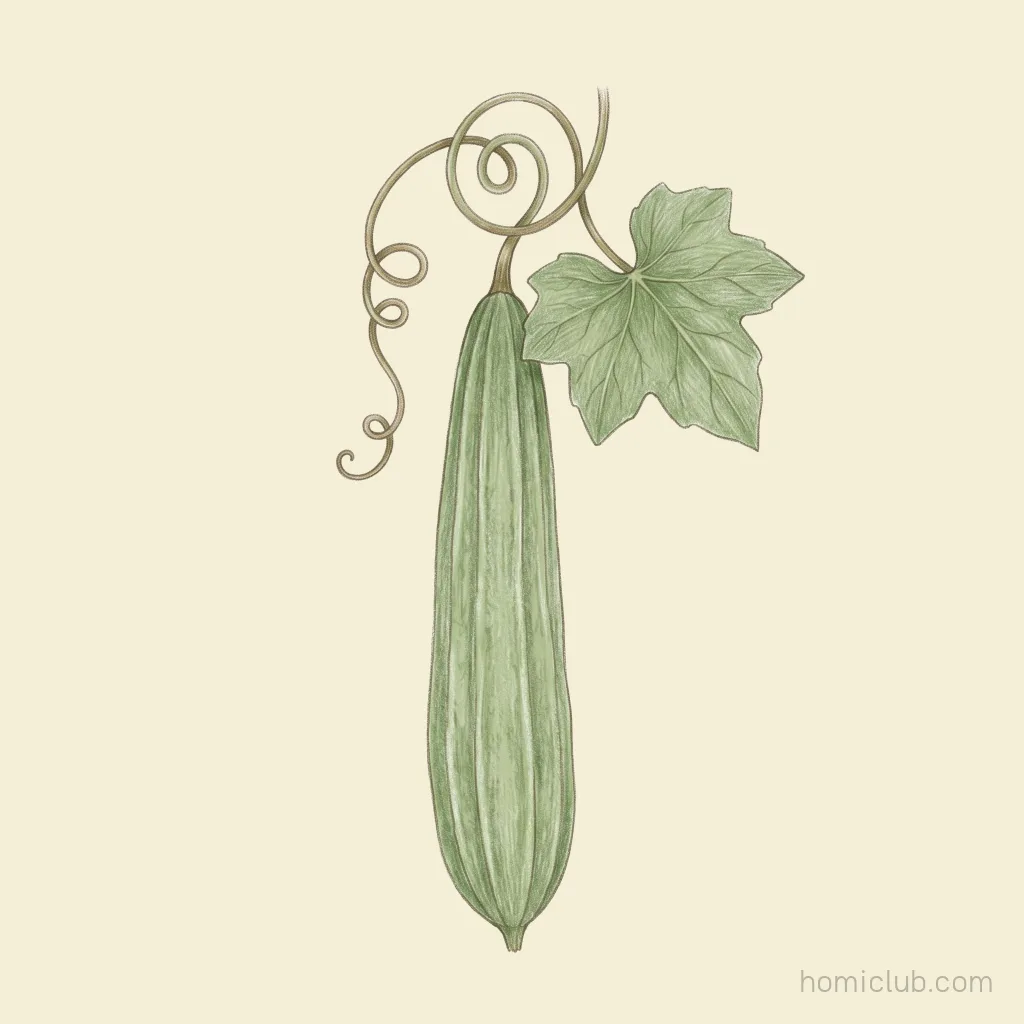
絲瓜 Luffa (sponge gourd)
 Related Crop · Luffa (sponge gourd) →
Sagwa is the fruit of the luffa gourd, the same luffa in the crop guide. It also went by cheolla and cheollaksa, and the young fruit was boiled and eaten with ginger and vinegar. Once ripe and dry, the skin and seeds shake out and the fibrous net inside becomes the scrubbing sponge it is named for.
Original, read line by line 東醫寶鑑 · Tangaek — Decoctions vol. 2
-
性冷.
Its nature is cold.
-
解毒, 治一切惡瘡, 小兒痘疹, 幷乳疽丁瘡脚癰.
It detoxifies and treats all kinds of malignant sores, smallpox and measles in children, as well as breast abscesses, carbuncles, and leg ulcers.
-
霜後, 取老絲瓜, 連皮根子全者, 燒存性爲末, 蜜湯調下二三錢, 則腫消毒散, 不致內攻. 《入門》
After the first frost, take an old luffa whole with its skin, roots, and seeds, burn it preserving its medicinal properties, grind it into powder, and take two or three jeon mixed in honey water. The swelling will subside and the toxin will disperse, preventing it from attacking inwardly. From the Yimun.
-
一名天蘿, 一名天絡絲. 葉名虞刺葉. 《正傳》
It is also called cheonra or cheonnaksa, and its leaves are called ujayeop. From the Jeongjeon.
-
嫩者煮熟, 薑醋食之. 枯者去皮及子, 用瓤滌器. 《食物》
Tender ones are boiled and eaten with ginger and vinegar, while dried ones have their skin and seeds removed so the inner fibers can be used to scrub dishes. From the Sikmul Boncho.
-
自中原, 得子移種, 形如胡瓜, 極長大. 《俗方》
Its seeds were brought from China and transplanted here; it resembles a cucumber in shape but grows much longer and larger. From the Sokbang.
Related Crop
Luffa (sponge gourd) →
Reading on Luffa (sponge gourd)
Vegetables — more entries
This is a cultural and historical record from a classical text, not a claim about any food’s effects. Nothing here is a health supplement or intended to prevent or treat disease. Consult a medical professional about health concerns. · Text: Korean Medicine Classics DB · Reading: Homiclub