
Tangaek — Decoctions · Vegetables
生薑 Ginger
 Related Crop · Ginger →
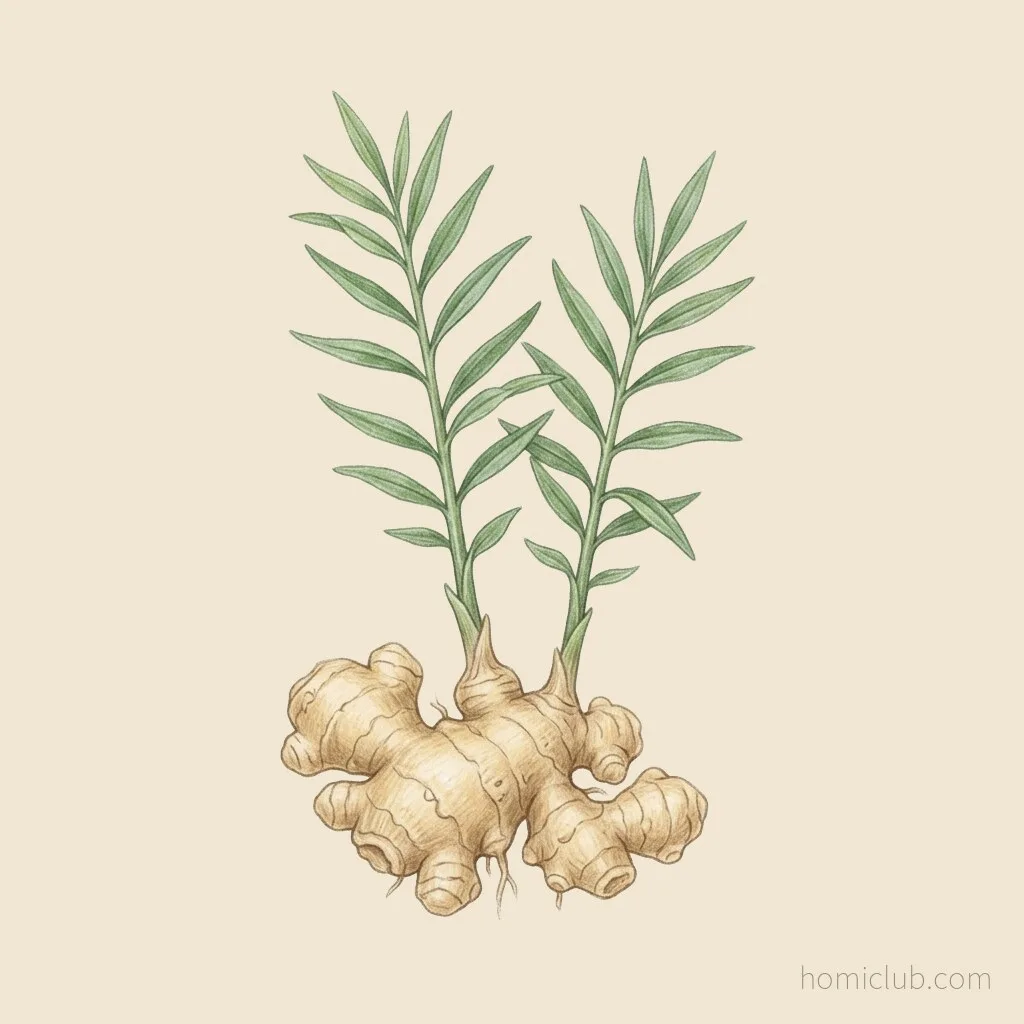
Ginger is the thick rhizome of a tropical perennial, the same plant as the ginger in the crop guide. It is the root that goes into kimchi seasoning, candied ginger and ginger tea. Dongui Bogam notes that in Korea it grew mainly around Jeonju, and keeps peeled and unpeeled ginger as separate entries.
Original, read line by line 東醫寶鑑 · Tangaek — Decoctions vol. 2
-
性微溫, 味辛, 無毒.
Its nature is slightly warm, its taste pungent, and it is non-toxic.
HomiclubGinger is the thick rhizome of a perennial in the ginger family. It is the same root used in kimchi seasoning, candied ginger, and ginger tea, growing in finger-like segments off each node.
-
歸五藏, 去痰下氣, 止嘔吐, 除風寒濕氣.
It returns to the five jang (五藏, viscera), removes phlegm and sends qi downward, stops vomiting, and dispels wind, cold, and damp qi.
-
療咳逆上氣喘嗽.
It treats haeyeok (咳逆, coughing counterflow), sanggi (上氣, qi rushing upward), and wheezing cough.
-
性溫而皮寒, 須熱卽去皮, 要冷卽留皮. 《本草》
Its nature is warm but its skin is cold, so peel it when warmth is wanted and leave the skin on when coolness is wanted. 《Boncho (本草)》
HomiclubThe peeled-versus-unpeeled distinction carries into the following entries: ginger dried after peeling is listed separately as baekgang (白薑), and ginger dried in its skin as geonsaenggang (乾生薑).
-
能制半夏ㆍ南星ㆍ厚朴之毒. 止嘔吐反胃之聖藥也. 《湯液》
It can curb the toxicity of banha (半夏), namseong (南星), and hubak (厚朴). It is the sage medicine for stopping vomiting and banwi (反胃, stomach reflux). 《Tangaek (湯液)》
-
古云, 不徹薑食. 言可常啖. 但勿過多爾, 夜間勿食.
An old saying holds that ginger is never taken off the table. This means it may be eaten regularly. Only do not eat too much of it, and do not eat it at night.
-
又云, 八九月多食薑, 至春, 患眼損壽, 減筋力. 《本草》
It is also said that eating much ginger in the eighth and ninth months brings eye trouble by spring, shortens the lifespan, and diminishes muscular strength. 《Boncho (本草)》
-
我國惟全州多産焉. 《俗方》
In this country it is produced in abundance only in Jeonju. 《Sokbang (俗方)》
HomiclubThe ginger country around Jeonju persists to this day. Bongdong in Wanju, North Jeolla, is renowned for its ginger, and Seosan in South Chungcheong is another leading growing area.
Related Crop
Ginger →
Reading on Ginger
Vegetables — more entries
This is a cultural and historical record from a classical text, not a claim about any food’s effects. Nothing here is a health supplement or intended to prevent or treat disease. Consult a medical professional about health concerns. · Text: Korean Medicine Classics DB · Reading: Homiclub