
Tangaek — Decoctions · Vegetables
鹿角菜 Sea Staghorn
 Related Crop · Sea Staghorn →
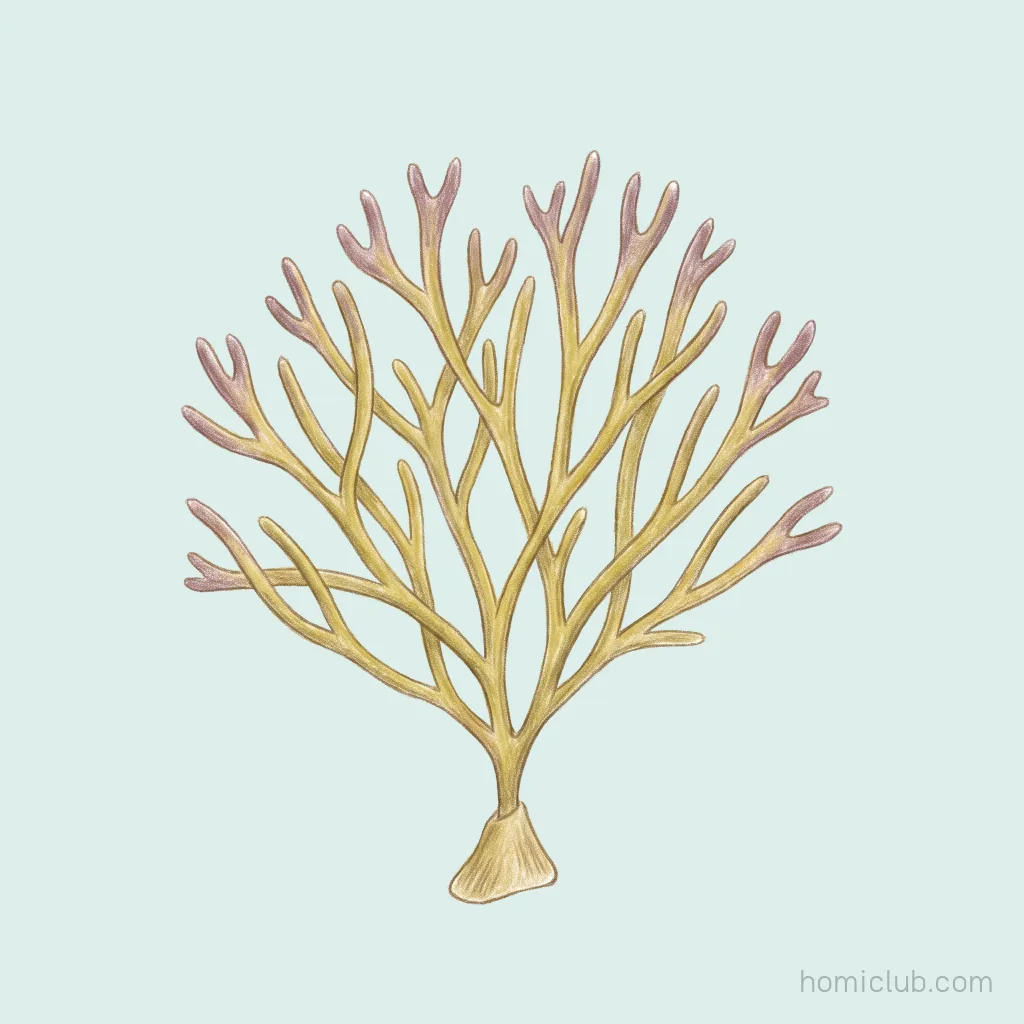
Nokgakchae is a seaweed gathered in the East Sea, named for fronds that fork like antlers. Donguibogam suggests it is the same as the cheonggak seaweed of its own day, and adds a caution against eating it over long stretches.
Original, read line by line 東醫寶鑑 · Tangaek — Decoctions vol. 2
-
性大寒, 無毒一云微毒.
Its nature is very cold and it is non-toxic, though one account calls it slightly toxic.
HomiclubNokgakchae names a seaweed that forks again and again like a stag's antler. In Korean waters cheonggak, dead man's fingers, has just that form.
-
下熱氣, 療小兒骨蒸, 解麪毒.
It brings down hot qi, treats gol-jeung (骨蒸, steaming-bone fever) in children, and resolves the toxin of wheat flour.
-
生東海中, 不可久食. 《本草》
It grows in the Eastern Sea, and must not be eaten for long. 《Boncho (本草)》
-
疑是今之靑角菜. 《俗方》
It is suspected to be what is now called cheonggakchae (靑角菜). 《Sokbang (俗方)》
HomiclubThe Sokbang passages are the ones that add Korean circumstances to the text. Cheonggak is a green alga whose hollow cylinders fork like antlers, and it goes into the seasoning of winter kimchi.
Related Crop
Sea Staghorn →
Reading on Sea Staghorn
Vegetables — more entries
This is a cultural and historical record from a classical text, not a claim about any food’s effects. Nothing here is a health supplement or intended to prevent or treat disease. Consult a medical professional about health concerns. · Text: Korean Medicine Classics DB · Reading: Homiclub