- Type
- Sea Vegetables
- Difficulty
- Hard
- Season
- Summer·Fall
- Sowing
- Foraged
Sea Staghorn
Codium fragile
Polysaccharides and minerals · the antler-shaped seaweed in kimjang kimchi
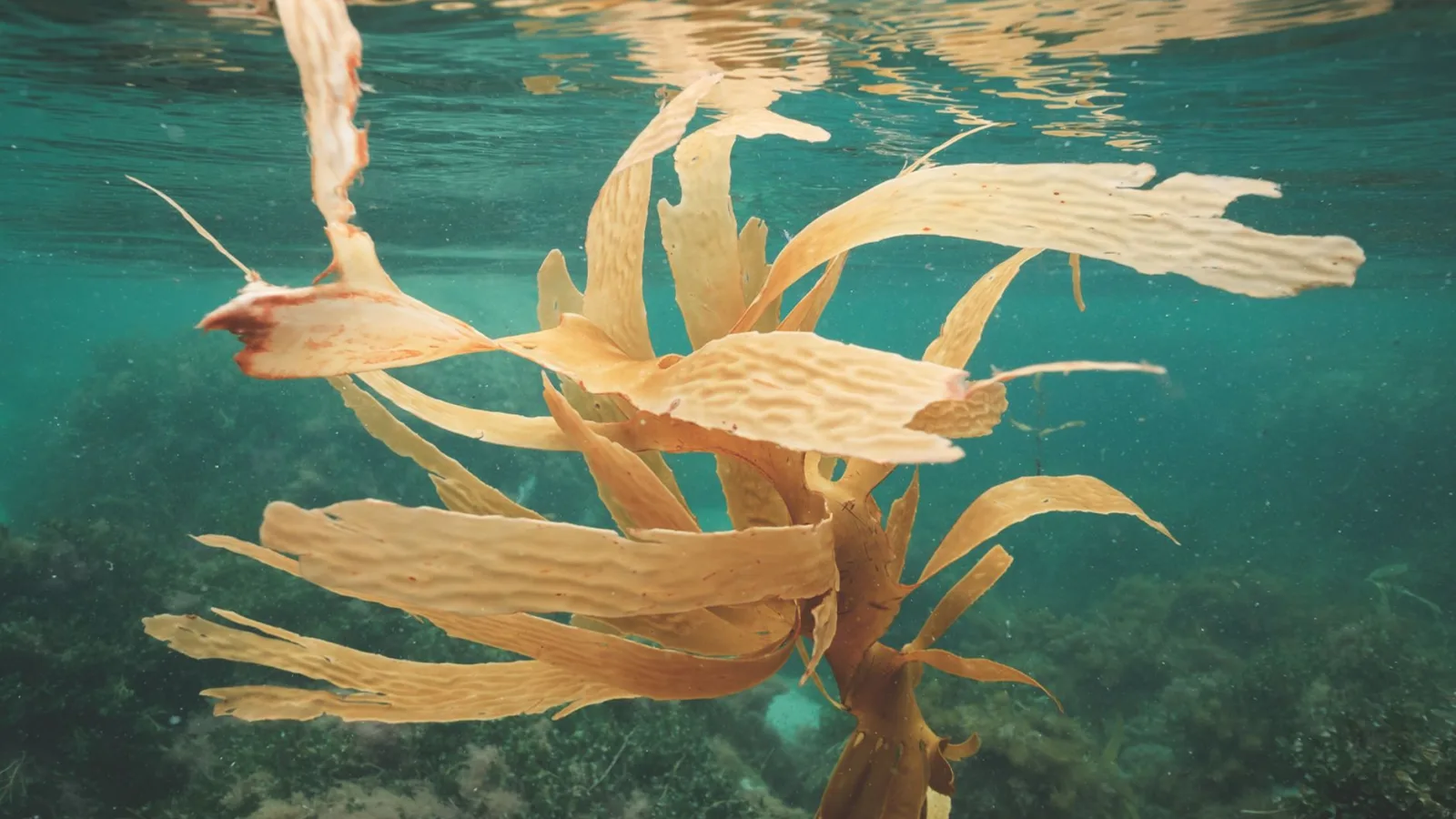
Sea staghorn is a deep green seaweed that grows fastened to coastal rock, its cylindrical branches forking again and again like a stag's antlers. It feels spongy and water-filled in the hand, and even dried and rehydrated it keeps that texture. At kimjang time it is chopped fine into the cabbage filling, where it has long served as the ingredient that keeps the brine from turning heavy and leaves a clean, cool finish. The Donguibogam carries a seaweed in the Vegetable section entered as 鹿角菜, setting down a strongly cold nature and no toxicity, recording that it grows in the East Sea, and adding a caution against eating it over a long stretch. The name comes from the antler-like branching, and the original itself only ventures that it seems to be what is now called cheonggak, so whether the two are the same is not settled. Markets sell it dried in a bundle or salted; look for a deep green, plump branches, and a piece that does not crumble in the hand. Dried staghorn is soaked in cold water and then raked through by hand, because sand and shell fragments left in the branches will grit through the whole batch of kimchi. Seaweed on coastal rock generally belongs to a village fishery, so it is not gathered at will.
Year-Round Calendar
- 1
- 2
- 3
- 4
- 5
- 6
- 7
- 8
- 9
- 10
- 11
- 12
- 7
- 8
- 9
Where It Grows
-
Main producer
It is harvested in summer from the shore rocks of the south and west coasts, and some is grown on suspended ropes. Because it goes into the seasoning for kimjang (the annual winter kimchi-making), gathering and trade continue. Harvest July, August, September
- 7
- 8
- 9
- Major producer Known there as miru, it is harvested along the coasts from Honshu southward.
- Major producer It is found along the coasts of the Yellow Sea and the East China Sea.
It is native to the coasts of the northwestern Pacific, and its use as human food is concentrated in Korea and Japan. It has spread to both shores of the North Atlantic and to Europe and New Zealand on ships' hulls and with oyster seed stock, but in those places it is treated as an invasive species rather than a product, so they are not counted among the growing regions.
- Optimum water temp.
- 15~25℃
- Range
- 5~30℃
- Hardiness
- Not applicable
- Day length
- Not applicable
What sets the growing season here is water temperature, not air temperature. Through winter and spring the young plants grow attached to rock, and they are at their thickest in summer, when the water climbs to around 20℃; that is when they are harvested. They grow in warmer water than sea mustard (miyeok) or kelp (dasima), so they remain on the shore rocks through the summer.
In Korea Coastal areas
It is harvested in summer from the lower intertidal zone of the shore rocks along the south coast of South Jeolla and South Gyeongsang and along the west coast. Those rocks are mostly held as fishing grounds by the village fishing cooperative (eochongye), so gathering at will is difficult.
How to grow
- Light
- Shallow, sunlit water — fastened to rock at the lower intertidal, exposed when the tide drops
- Soil and depth
- Nothing grows in soil here. It anchors to rock, shell or rope with a holdfast
- Spacing
- Markets sell it dried in bundles or packed in salt. Choose deep green pieces with plump branches that do not crumble in the hand
- Watering
- Soak the dried form in cold water for twenty to thirty minutes. Hot water softens it until it mashes under the knife
- Feeding
- There is no feeding. It lives on the minerals dissolved in seawater and on light
- Harvest
- July to September, cut with shears at low tide from exposed rock, leaving the holdfast in place. Torn off whole, it does not return to that spot the following year. Rinse the catch in fresh water and dry it hard, or pack it in salt
What makes the difference. Shake off the water after soaking and chop it fine into the kimjang seasoning. A handful is plenty for ten heads of cabbage
Why this one is harder. Coastal rock generally belongs to a village fishery, which makes casual gathering difficult, and the ground itself is dangerous to anyone who does not read the tide. Buying is the safer route; if you do gather, work only where you have permission and check when the water turns
Common problems
- Sand and shell You will see Grit settling at the bottom of the soaking bowl and a gritty bite What to do Change the water three or four times, raking the branches through by hand. Repeat until the last water runs clear
- Other seaweeds mixed in You will see Strands of a different colour or texture inside the dried bundle What to do Spread it out after soaking and pick out anything off-colour. Staghorn is deep green with cylindrical branches that fork in twos
- Damp and mould You will see A musty smell and white patches on the dried material What to do Store it sealed with a desiccant somewhere cool. Discard anything that has picked up a smell
This page describes how a crop is grown and used. It does not claim health effects for any food, nor is it intended to prevent or treat disease. Component and study notes are references only and do not mean the same result occurs in people. Consult a medical professional about health concerns.
Health Benefits
The old record — nokgakchae (鹿角菜). The Donguibogam lists it in the Vegetable section as 鹿角菜. Its nature is set down as strongly cold and it is described as having no toxicity, with a note that some call it slightly toxic. The text records that it grows in the East Sea, and leaves a caution against eating it over a long stretch. It closes with a folk note that it seems to be what is now called cheonggakchae, so the original itself does not settle which seaweed it means. The name comes from the antler-like branching. What an old medical text wrote differs from how it is judged today.
The identity question behind the name. Because the original leaves the matter open with the word 疑是, views differ on whether 鹿角菜 is the seaweed called cheonggak today. Antler-like branching occurs in both green and brown algae, so the name alone does not narrow the species. What this entry covers is the green alga sold as cheonggak and used in kimjang today.
Compounds reported in green algae. Sulfated polysaccharides have been isolated from the cell walls of green algae including the genus Codium. Measurements of mineral and fibre composition appear alongside them. These are compositional analyses and nothing beyond that.
Nutrition
- Polysaccharides (the material of the cell wall) — sulfated polysaccharides reported in green algae
- Dietary fibre (concentrated in the dried form) — largely water-insoluble fibre
- Minerals (drawn from seawater) — calcium, magnesium and iodine among others
- Chlorophyll (the source of the deep green) — the pigment that colours green algae
An ingredient in kimjang kimchi Chopped fine into the cabbage filling, it keeps the brine from turning heavy and leaves a clean finish. Southern kimchi, which carries more salted seafood, has used it longest. A handful for ten heads of cabbage is about right; more than that and the slippery texture comes forward.
Soaking and rinsing Soak the dried form in cold water for twenty to thirty minutes. Hot water softens the texture until it mashes under the knife. After soaking, change the water and rake through it by hand to release the sand and shell fragments caught between the branches.
Polysaccharides and fibre Sulfated polysaccharides are reported in the cell walls of green algae. Dried staghorn carries a lot of fibre for its bulk, most of it on the insoluble side. This entry stays with the compositional record.
It contains iodine Seaweeds contain iodine and this one is no exception. Anyone advised to manage their iodine intake is better off keeping the amount steady, counting the staghorn inside kimchi as part of it. If dietary restrictions have been advised ahead of a test, count seaweed-containing kimchi too.
Pairings
○ Kimjang kimchi filling — Soak, rinse and chop it fine into the seasoning paste for the cabbage. It softens the heavy finish of the salted seafood and tidies the brine. Left whole rather than chopped, the slippery texture stays in the bite.
○ Cold cucumber and radish soup — Cut soaked staghorn short and float it in a chilled soup with shredded cucumber. The colour holds and the texture stays lively, which suits a summer bowl. Season with nothing but vinegar and salt. Cucumber · Korean Radish (Mu)
○ Dressed in vinegar — Dress soaked, rinsed staghorn with vinegar, soy sauce and a little sugar. The acidity tidies the sea note. Shake it dry just before dressing so the sauce does not thin.
△ Do not gather from coastal rock at will — Seaweed on the rocks along the shore generally falls inside a village fishery managed by the local cooperative. Taking it without permission means harvesting someone else's ground. Buy it, or gather only within the areas set aside by a local hands-on programme.
△ Do not go out without knowing the tide — Staghorn sits in the intertidal zone, exposed only at low water. Walking out without checking when the tide turns can leave the way back cut off. Do not go alone, and carry your load on your back so both hands are free on slick rock.
△ Never skip the sand — Sand and shell fragments lodge between the branches, and staghorn added unrinsed will grit through an entire batch of kimchi. Change the water three or four times, raking through by hand, until nothing settles out. The last rinse should run clear.
Varieties
- Dried (form) — Rehydrated before use. Compact to store and the usual form at kimjang time
- Salted (form) — Packed in salt. Rinse repeatedly to draw the salt out before use
- Fresh (form) — Available near the coast in season only. Brighter in colour with plumper branches
Source: Donguibogam, Vegetable Section 鹿角菜 · National Institute of Fisheries Science · Ministry of Oceans and Fisheries