
Tangaek — Decoctions · Fruits
枇杷葉 Loquat
 Related Crop · Loquat →
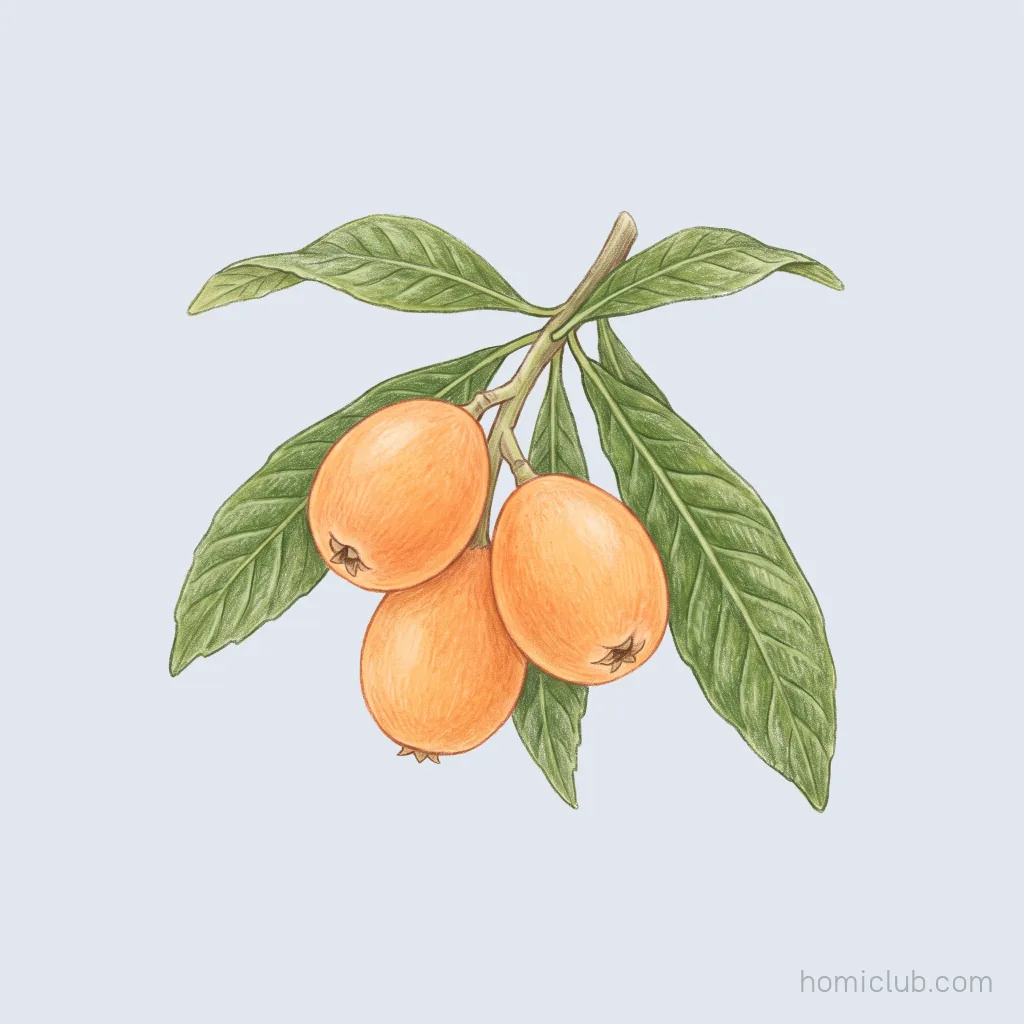
Bipayeop is the leaf of the loquat, the same tree as the bipa in the crop guide. It is an evergreen of the warm south, with leaves as broad as a donkey's ear and a dense fuzz on the underside. Dongui Bogam insists the leaf be passed over a flame and wiped free of every hair with cloth before use.
Original, read line by line 東醫寶鑑 · Tangaek — Decoctions vol. 2
-
性平, 味苦一云甘, 無毒. 主咳逆不下食, 胃冷嘔噦. 治肺氣, 主渴疾.
Its nature is neutral and its taste bitter, though one account calls it sweet; it is non-toxic. It addresses coughing counterflow with food that will not go down, and retching and hiccups from a cold stomach. It treats the qi of the lung and addresses thirsting disorders.
HomiclubBipayeop is the leaf of the loquat tree, an evergreen of warm regions. In Korea it is grown on Jeju and along the south coast; it flowers in winter and ripens its yellow fruit in early summer.
-
生南方, 木高丈餘, 葉大如驢耳, 背有毛. 四月採葉, 暴乾.
It grows in the southern regions; the tree stands a little over a jang tall, its leaves are as large as a donkey's ears, and their undersides bear hairs. The leaves are gathered in the fourth month and dried in the sun.
HomiclubThe comparison to a donkey's ear is apt: a loquat leaf runs longer than an adult's palm, with dense brown wool on the underside. It is thick and stiff, and the veins stand out like furrows.
-
須火灸, 以布拭去上黃毛令盡. 不爾, 毛射人肺, 令人咳不已. 《本草》
It must be roasted over fire and then wiped with cloth until the yellow hairs on its surface are entirely gone. Otherwise the hairs pierce a person's lung and set off a cough that will not stop. 《Boncho (本草)》
Related Crop
Loquat →
Fruits — more entries
This is a cultural and historical record from a classical text, not a claim about any food’s effects. Nothing here is a health supplement or intended to prevent or treat disease. Consult a medical professional about health concerns. · Text: Korean Medicine Classics DB · Reading: Homiclub