
Tangaek — Decoctions · Vegetables
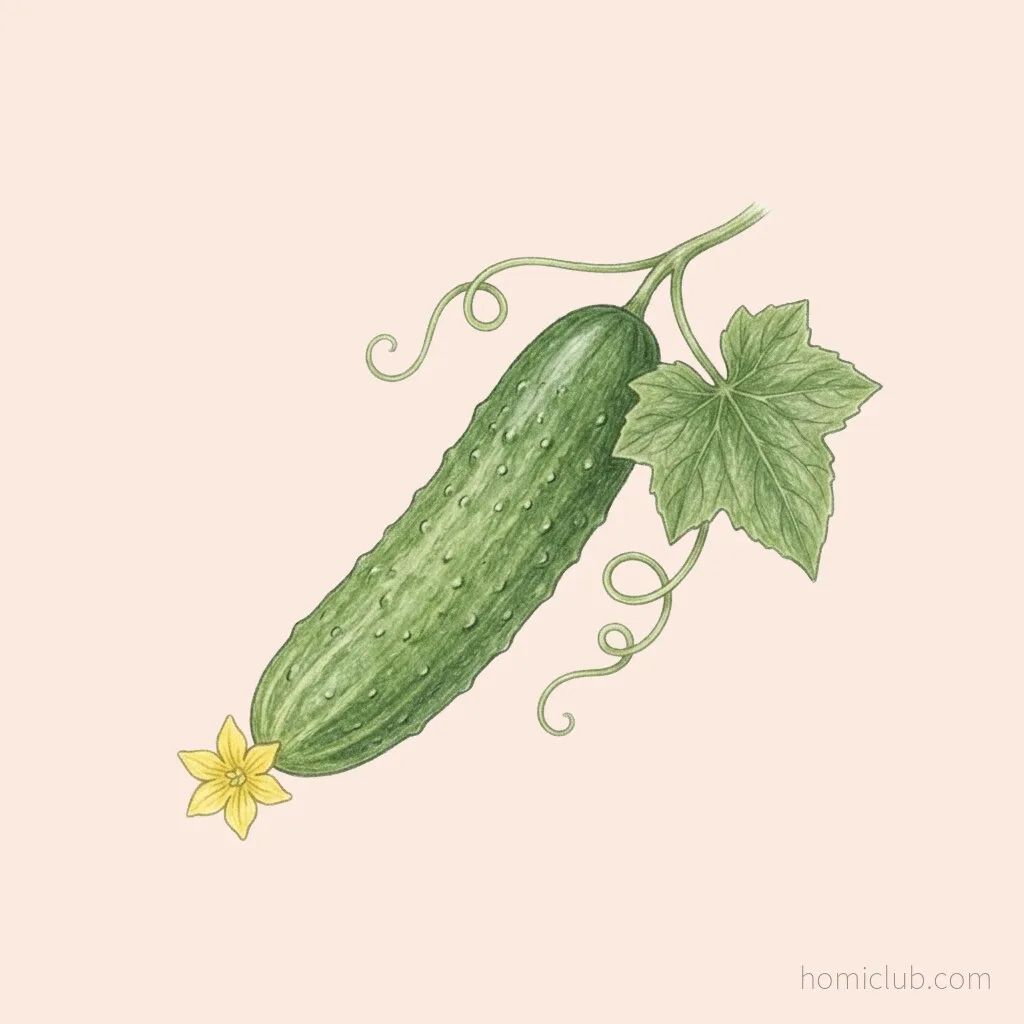
胡瓜 Cucumber
 Related Crop · Cucumber →
Hogwa is the cucumber. It is the same oi as in the crop guide, the gourd-family vine behind Korean summer pickles and cold cucumber dishes. Left on the vine it ripens yellow, which is why it also went by hwanggwa, yellow gourd; the entry takes in the leaf, the root and the pale wolgwa melon.
Original, read line by line 東醫寶鑑 · Tangaek — Decoctions vol. 2
-
性寒, 味甘, 無毒.
Its nature is cold, its taste is sweet, and it is non-toxic.
HomiclubHogwa is the cucumber, the fruit of an annual cucurbit vine. The ho (胡) in its name marks it as having arrived by way of the western regions. Korean tables use it for pickled oiji, seasoned salads, and chilled cucumber soup.
-
不可多食, 動寒熱, 多瘧病.
It should not be eaten in quantity, for it stirs up chills and fever and brings on much malarial illness.
-
卽今常食瓜子也. 老則色黃, 故謂之黃瓜. 《本草》
This is the cucumber commonly eaten today. When old its color turns yellow, and so it is called hwanggwa (黃瓜, yellow gourd). 《Boncho (本草)》
HomiclubA cucumber left on the vine until its skin ripens yellow is called nogak in Korean. Chinese still writes cucumber as huanggua (黃瓜), the same yellow gourd named here.
Related Crop
Cucumber →
Reading on Cucumber
Vegetables — more entries
This is a cultural and historical record from a classical text, not a claim about any food’s effects. Nothing here is a health supplement or intended to prevent or treat disease. Consult a medical professional about health concerns. · Text: Korean Medicine Classics DB · Reading: Homiclub