

- Type
- Gourds & Squash
- Difficulty
- Moderate
- Season
- Summer
- Sowing
- Transplant
Cucumber
Cucumis sativus
95% water - a crisp summer fruiting vegetable
Cucumbers are about 95% water, which makes them crisp and low in calories in the heat of summer. They carry roughly 147 mg of potassium per 100 g, which is not especially high among vegetables. Vitamins and fiber sit mostly toward the skin, so eating them unpeeled adds a little more of both, and a cucumber that tastes strongly bitter is showing cucurbitacins and should be discarded rather than eaten. The vines climb readily, so a simple trellis or net lets you grow a productive crop even in a small plot.
Year-Round Calendar
- 1
- 2
- 3
- 4
- 5
- 6
- 7
- 8
- 9
- 10
- 11
- 12
- 4
- 5
- 6
- 7
- 8
- 9
Where It Grows
- Main producer It produces most of the world's cucumbers. Greenhouse cultivation in Shandong and Hebei is the heart of production.
- Major producer Greenhouses along the Mediterranean coast keep harvests coming even in winter.
- Major producer With short, cool summers, most of the crop is grown in greenhouses.
- Major producer Winter production areas in Sinaloa and Sonora ship to the North American market.
- Major producer The plastic-greenhouse belt of Almería supplies Europe's winter volume.
- Origin The northern Himalayan foothills are known as the crop's place of origin, and many traditional landraces remain there.
The cucumber originated in the Himalayan foothills of northern India and spread west to Western Asia and the Mediterranean, and east to China and the Korean Peninsula. Today, production is driven by protected cultivation (greenhouse growing), so greenhouses, more than latitude, determine where it is grown. Because the FAO counts cucumbers and gherkins (pickling cucumbers) as a single category, pickling types are included in the rankings.
- Optimum
- 22~28℃
- Range
- 12~35℃
- Hardiness
- Not hardy
- Day length
- Short-day
This is a summer fruiting vegetable that needs warmth and plenty of sun. A single frost kills it, growth stops below 12℃, and when temperatures exceed 35℃ or the roots dry out, the fruit curves and turns strongly bitter. Cool temperatures and short days encourage more female flowers to set.
In Korea Nationwide
In open fields, seedlings are transplanted in April–May, and the fruit is picked from June to September. Midsummer supply comes from the highland (cool upland farming) areas of Gangwon, while winter and early spring are covered by greenhouses in South Gyeongsang and South Chungcheong, so cucumbers never leave the market year-round.
How to grow
- Light
- Somewhere sunny
- Soil and depth
- 30cm deep or more
- Spacing
- 45cm
- Watering
- A great deal. A cucumber is mostly water, and a dry one tastes bitter
- Feeding
- Every fortnight. Constant fruiting means constant hunger
- Harvest
- At about 20cm. A day late and it is suddenly enormous
What makes the difference. It climbs, so netting is not optional. Put it up when you plant. Remove side shoots and female flowers on the first five nodes
Common problems
- Powdery mildew You will see Leaves dusted as if with flour What to do Strip lower leaves for airflow; remove badly affected ones
- Downy mildew You will see Angular yellow patches between the veins What to do Water the soil, not the leaves
- Aphids You will see Sticky new growth What to do Wash them off
This page describes how a crop is grown and used. It does not claim health effects for any food, nor is it intended to prevent or treat disease. Component and study notes are references only and do not mean the same result occurs in people. Consult a medical professional about health concerns.
Health Benefits
What the old text says - Donguibogam, hogwa. The vegetable section of the Donguibogam lists cucumber as hogwa and records it as cold in nature and sweet in taste, with a caution against eating too much of it. This is a record from a seventeenth-century medical text, not a modern medical judgement.
What is known today - water and calories. Food composition tables confirm that cucumber is about 95% water and low in calories. Composition is as far as the current evidence goes; no effect on any specific disease has been established.
What is known today - potassium is not high. Cucumber carries about 147 mg of potassium per 100 g, which is not high among vegetables. It is sometimes described as a potassium-rich vegetable, but composition tables do not bear that out.
What is known today - extract studies are a separate matter. Clinical work has been reported on a standardized cucumber extract given in capsule form, but that research was conducted on an extract and the conditions differ from eating cucumber as food. Those results cannot be carried over as a property of the food.
Handling - discard a strongly bitter fruit. Cucurbitacins, made by plants of the gourd family, are the compounds behind bitterness. A cucumber that tastes markedly bitter can upset the stomach, so it is safer discarded than eaten.
Nutrition
- Water (About 95%) — The high water content behind the crisp texture
- Potassium (About 147 mg per 100 g) — Not a high figure among vegetables
- Vitamins C and K (Present) — Relatively more of it in the skin
Water, 95-96% Cucumber is 95-96% water, among the highest of any vegetable. The crisp texture and the low calorie count both follow from that.
Potassium Cucumber holds about 147 mg of potassium per 100 g. That is not especially high among vegetables, so describing it as a potassium-rich vegetable does not match the composition tables.
Vitamin K The deep green skin of cucumber contains vitamin K. Peeling removes some of it, so eating the fruit unpeeled is the better option in composition terms.
Cucurbitacins Cucurbitacins are the compounds behind the bitterness characteristic of the gourd family (Cucurbitaceae). Large amounts strongly irritate the digestive tract, so a cucumber with a strong bitter taste is discarded rather than eaten.
Flavonoids & phenolic compounds Cucumber contains flavonoids and phenolic compounds. Studies checking what happens in people who eat cucumber are scarce, however, so composition is as far as the current evidence goes.
Pairings
○ Garlic, chili, and vinegar — Dishes like oi-muchim (seasoned cucumber salad), oi-sobagi (cucumber kimchi), and oiji (cucumber pickles) season the vegetable with garlic, chili, and vinegar. In traditional Korean thinking, this balances the cucumber's cooling nature with warming seasonings, and the fermentation also adds beneficial lactic-acid bacteria for gut health. Chili Pepper (Gochu) · Garlic
○ Sesame and perilla oil — The fats in sesame and perilla oil help the body absorb the fat-soluble polyphenols in cucumber while adding a nutty richness. It's a combination that turns up often in Korean-style seasoned vegetable dishes.
○ Yogurt and cheese — As seen in Greek tzatziki and Indian raita, pairing cucumber with yogurt or cheese is a classic across many food cultures. The protein and calcium combine with the cucumber's high water content to make a cool, refreshing dip or side dish.
○ Salmon and tuna — Whether in cucumber rolls or cucumber-and-raw-fish salads, pairing cucumber with oily fish like salmon and tuna delivers omega-3s alongside hydration and potassium. The cucumber's cooling crispness also tempers any fishiness for a well-balanced flavor.
○ Lemon and lime — Adding lemon or lime boosts vitamin C and brightens the flavor with a fresh acidity. It's a popular combination in detox waters and salad dressings.
○ Water and mint — Detox water made with cucumber, mint, and lemon makes staying hydrated more enjoyable. The mint's aroma cuts the cucumber's grassy note for an easy-drinking beverage.
△ A cucumber that tastes bitter — spit it out and discard the fruit — Cucumbers, like other plants of the gourd family, can make cucurbitacins, the compounds behind bitterness. If the first bite turns sharply bitter, spit it out and throw the whole fruit away rather than eating around it. Cooking or pickling does not remove the compound. Bitter fruit can come from home-saved seed or from a plant crossed with an ornamental gourd, so use bought seed, and if one plant keeps setting bitter fruit, stop eating from that plant.
△ Large amounts eaten raw on an empty stomach — Eating a lot of cold raw cucumber on an empty stomach can irritate the stomach lining. People with weak digestion are better off moderating portions and eating cucumber alongside other foods.
△ Weak digestion — Rather than eating cucumber cold and plain, people with sensitive stomachs can ease the burden by seasoning it more assertively or cooking it. Serving it with warming seasonings like garlic and ginger is recommended.
△ Managing potassium intake — Cucumber is sometimes described as a potassium-rich vegetable, but composition tables put it at about 147 mg per 100 g, which is not high among vegetables. Anyone holding to a set potassium allowance for kidney disease is better served by matching the daily total to the figure their clinician set than by singling cucumber out.
Varieties
- Baekdadagi (white-spine cucumber) (Transplanted seedlings) — Pale green skin with white spines, crisp and mild - the easiest all-purpose pick for a home plot.
- Chwicheong (dark green cucumber) (Transplanted seedlings) — Dark green with thin skin and a stronger aroma, so it stands out in cold soups and dressed salads.
- Gasi-oi (spiny cucumber) (Transplanted seedlings) — Coarse bumps and firm flesh keep their bite, which suits pickling and other brined preparations.
- Nogak (cucumber left to ripen yellow) (Transplanted seedlings) — Left on the vine until the skin turns yellow, so it is picked late and peeled before it is dressed.
Source: Rural Development Administration · Food and Nutrition Information
Stories about Cucumber
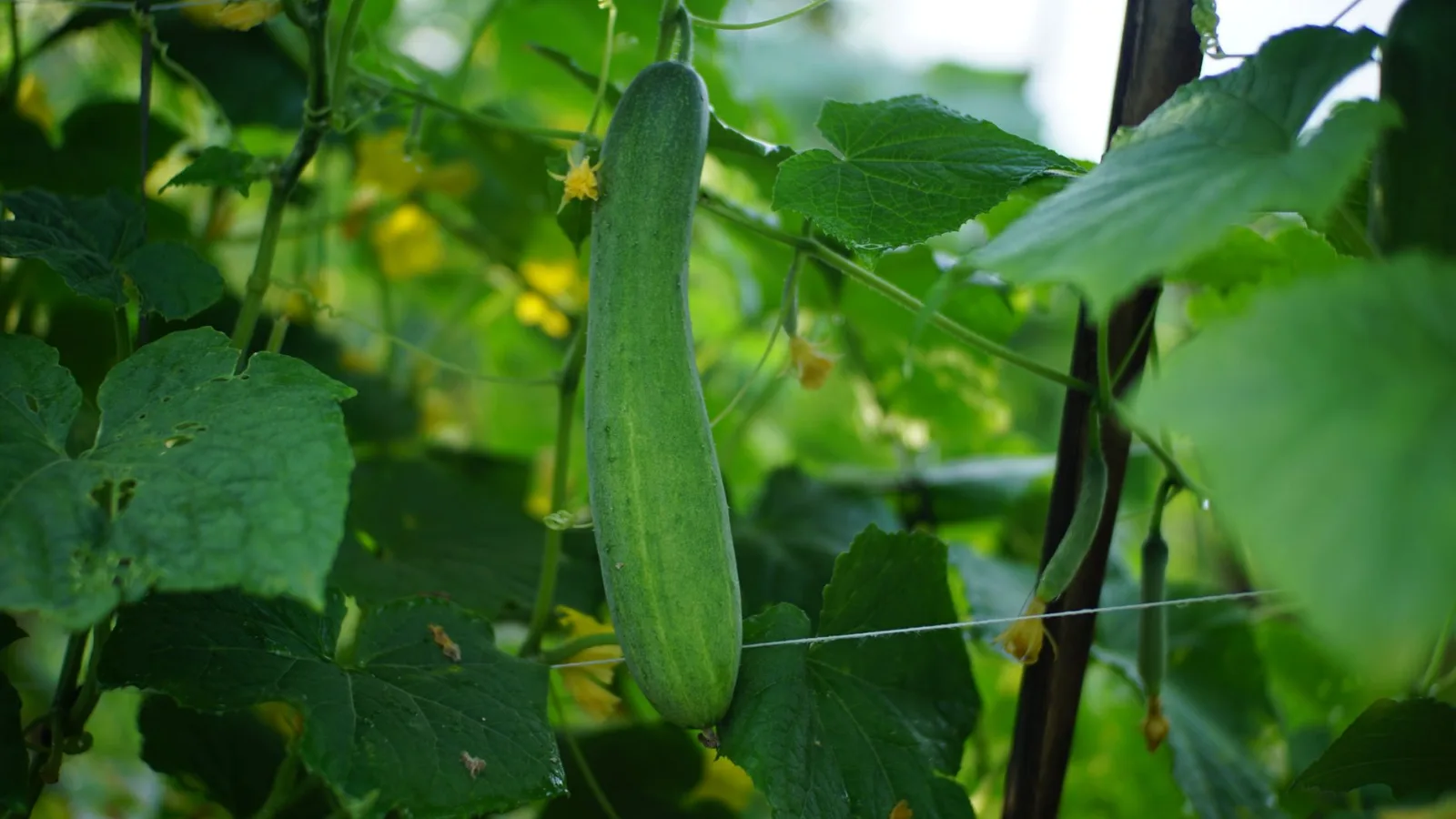
Cucumbers and Health, Through the Eyes of the Donguibogam
The Donguibogam, a 17th-century Korean medical classic, described the cucumber as cold in nature and useful for easing summer heat and thirst. We look at how that old view compares with modern nutrition and share simple ways to enjoy cucumbers from your own garden.
Why Don't We Wipe Our Pruners, Even When We Know Better?
Most of us know we should disinfect our garden tools, and most of us still don't. A review of livestock-farm biosecurity studies suggests more rules won't fix that, but making the right habit easy to reach will.
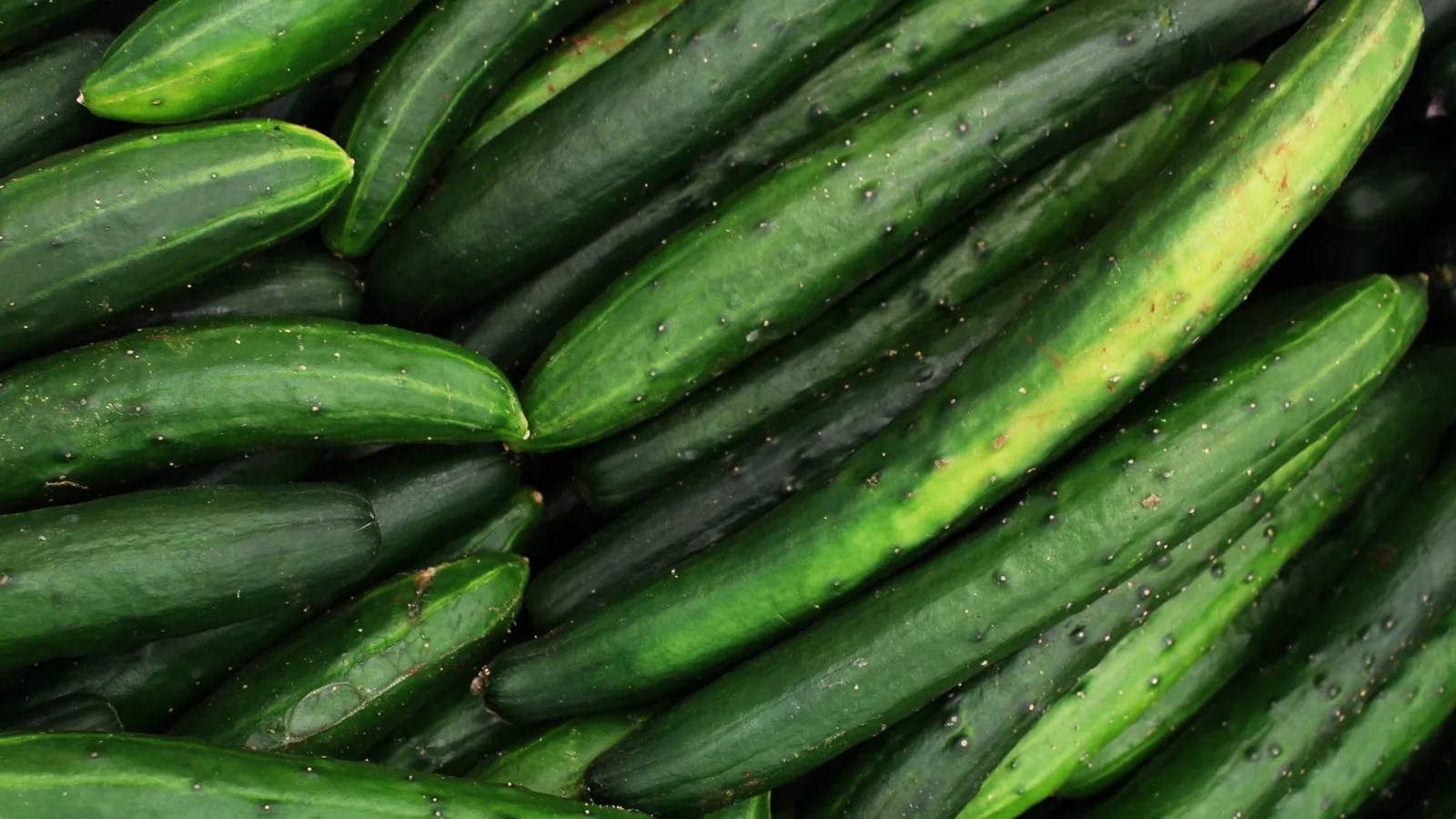
Peak Cucumber Season Is Also a Good Time to Look at Blood Sugar
Vietnam ran the same national health survey on its adults in 2015 and again in 2021, and the share with elevated fasting blood sugar tripled — with risk factors piling up in the same people. Here's what that has to do with a July garden overflowing with cucumbers.

The Season the Pill Packet Thins Out — and What Garden Vegetables Fill In
A year-long study of 200 older adults found that ongoing diet and exercise coaching kept people on their medications — and protected their kidneys. The foods that went up on their plates are the ones already growing in a summer garden.