
Tangaek — Decoctions · Fruits
栗子 Chestnut
 Related Crop · Chestnut →
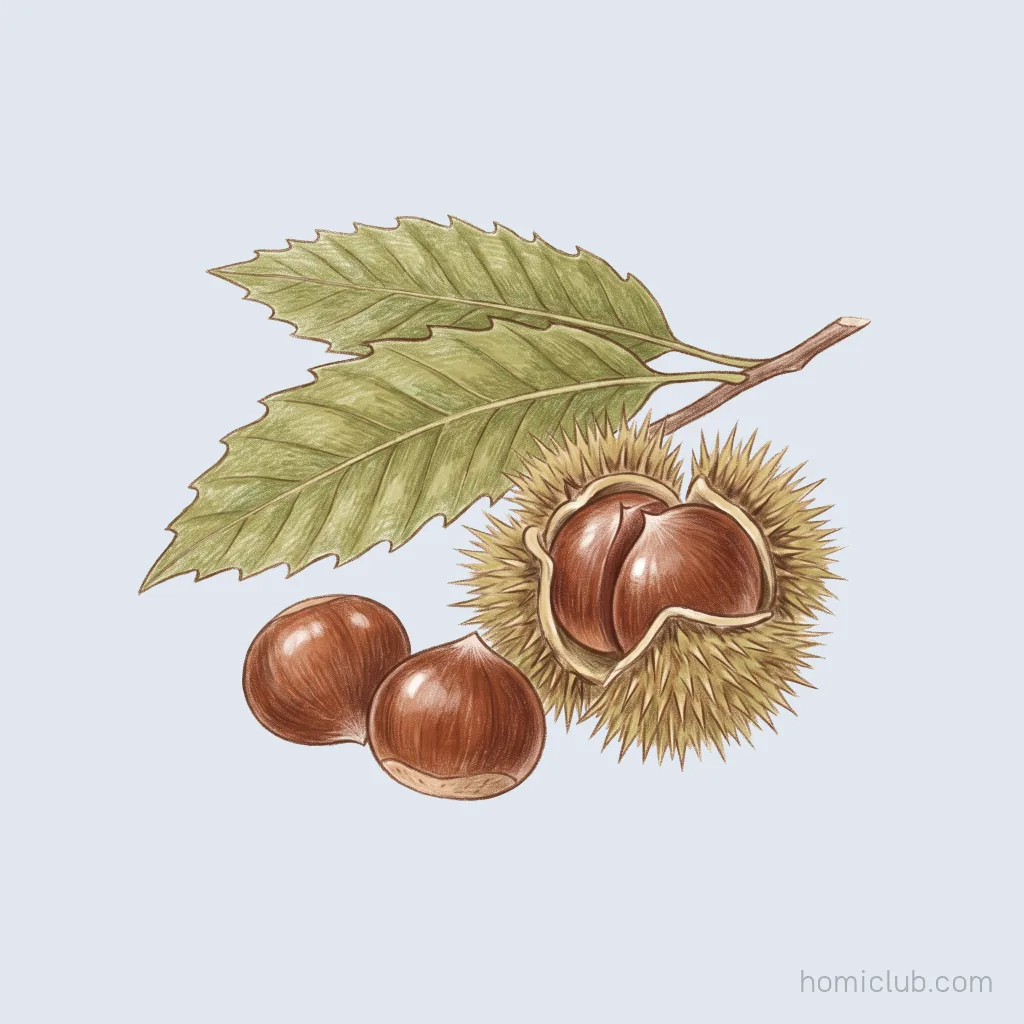
Yulja is the chestnut, the nut of the chestnut tree and the same as the field guide's bam. It turns up roasted from street carts and folded into rice dishes. Donguibogam's fruit section set down how to sun-dry it, how to bury it in damp sand to hold it fresh into spring, and how to roast it in embers.
Original, read line by line 東醫寶鑑 · Tangaek — Decoctions vol. 2
-
性溫, 味醎, 無毒. 益氣, 厚腸胃, 補腎氣, 令人耐飢.
Its nature is warm, its taste salty, and it is non-toxic. It augments qi, thickens the intestines and stomach, supplements singi (腎氣, kidney qi), and lets a person endure hunger.
HomiclubYulja is the chestnut, the nut eaten today. Two or three nuts sit inside a spiny burr, and under the hard outer shell lies a second, astringent inner skin called bonui.
-
處處有之, 九月採.
It is found everywhere and is gathered in the ninth month.
-
果中, 栗最有益. 欲乾莫如暴. 欲生收, 莫如潤沙中藏, 至春末夏初, 尙如初採摘.
Among fruits the chestnut is the most beneficial. For drying, nothing beats spreading it in the sun. For keeping it fresh, nothing beats burying it in moist sand, so that even at the end of spring and the start of summer it is still as it was when first picked.
HomiclubBurying chestnuts in damp sand is still done today. Chestnuts hold a lot of moisture and left in the open they dry out or mold, while cool, damp sand keeps them far longer.
-
生栗, 可於熱灰中, 煨令汁出, 食之良. 不得通熟. 熟則壅氣, 生則發氣, 故火煨, 殺其木氣耳.
Raw chestnuts are good roasted in hot ashes until their juice runs out. They must not be cooked all the way through. Fully cooked they block qi, and raw they stir qi up, so roasting in embers merely kills off their mokgi (木氣, wood qi).
-
有一種栗피뎍뉼, 頂圓末尖, 謂之旋栗, 但形差小耳. 《本草》
There is one kind of chestnut, called pidyeongnyul in Korean, round at the crown and pointed at the tip, that is called seonyul (旋栗); it differs only in being somewhat smaller. 《Boncho (本草)》
Related Crop
Chestnut →
Reading on Chestnut
Fruits — more entries
This is a cultural and historical record from a classical text, not a claim about any food’s effects. Nothing here is a health supplement or intended to prevent or treat disease. Consult a medical professional about health concerns. · Text: Korean Medicine Classics DB · Reading: Homiclub