

- Type
- Tubers & Storage Roots
- Difficulty
- Easy
- Season
- Spring
- Sowing
- Seed potato
Potato
Solanum tuberosum
Vitamin C and potassium - a hearty, filling staple crop
The potato is a dependable staple whose vitamin C, cushioned inside its starch, survives cooking relatively well. It is rich in potassium, and with starch as its main component a single serving goes a long way. It is planted from cut seed potatoes rather than from seed: the spring crop goes in during March for a June-to-July harvest, and the autumn crop goes in during August to be lifted in November. Even a beginner gardener can pull off a big yield with relative ease.
Year-Round Calendar
- 1
- 2
- 3
- 4
- 5
- 6
- 7
- 8
- 9
- 10
- 11
- 12
- 3
- 8
- 6
- 7
- 11
Where It Grows
- Main producer Produces roughly a quarter of the world's crop. The cool northern provinces such as Inner Mongolia and Gansu, along with the southwestern plateaus, are the main growing areas.
-
Main producer
The winter season in Uttar Pradesh and West Bengal accounts for most of the crop. Summers are hot, so planting is done in the cool dry season. Harvest January, February, March
- 1
- 2
- 3
- Major producer The cool summers of the black-earth belt suit the potato, making this one of Europe's leading producing areas.
- Major producer Widely grown throughout central European Russia.
-
Major producer
The irrigated land of Idaho and Washington is the centre of production. Harvest August, September, October
- 8
- 9
- 10
- Major producer The cool northwestern European climate, with rain spread evenly through the year, suits the crop and makes this a major producing area within Europe.
The potato comes from the high Andes of South America, across a range running from southern Peru to the Lake Titicaca basin in Bolivia. Because that range does not fall within a single country, no country-of-origin row has been entered. It reached Europe by way of Spain in the 16th century and took hold in the cool, rainy north, then spread as far as East Asia in the 18th and 19th centuries. The big producing countries today are not the crop's homeland but temperate regions with cool summers. In the tropics it is grown on plateaus rather than in the lowlands.
- Optimum
- 15~20℃
- Range
- 5~30℃
- Hardiness
- Not hardy
- Day length
- Short-day
Potato is a cool-climate crop. Tubers set best at around 20℃ during the day and 12~15℃ at night; above 30℃ they fail to bulk up. A single frost kills the top growth. The plant is naturally short-day, setting tubers as the days shorten, but most varieties grown today have been bred to set under long days as well.
In Korea Nationwide
Two seasons, spring and autumn, are the norm, with summer production taken up by the highlands (cool upland farming) of Gangwon. On Jeju and along the south coast, winters are mild enough to plant in autumn and lift in early winter, or plant in late winter and lift in early summer — a form of overwintering, and where two crops follow one another in a year, double cropping. The highland potatoes of Pyeongchang and Jeongseon in Gangwon and the winter potatoes of Daejeong on Jeju are the best known.
- 1
- 2
- 8
- 9
- 5
- 6
- 11
- 12
- 3
- 4
- 6
- 7
- 4
- 5
- 8
- 9
How to grow
- Light
- Somewhere sunny
- Soil and depth
- 30cm deep or more with good drainage
- Spacing
- 30cm
- Watering
- Moderate. Standing water rots the tubers
- Feeding
- Generous base dressing. Nitrogen later only grows leaves
- Harvest
- After flowering, once the foliage yellows. Lift on a dry day
What makes the difference. Earth up twice as the shoots grow. Tubers that see daylight go green and cannot be eaten
Common problems
- Late blight You will see Dark patches spreading on the leaves, then collapse What to do It comes with the rains. Remove affected leaves
- Chafer grubs You will see Holes bored in the tubers What to do Never use half-rotted compost
This page describes how a crop is grown and used. It does not claim health effects for any food, nor is it intended to prevent or treat disease. Component and study notes are references only and do not mean the same result occurs in people. Consult a medical professional about health concerns.
Health Benefits
The conditions of resistant-starch research. Most clinical studies on resistant starch fed isolated, purified resistant starch as a supplement, a different condition from eating cooked potato as food. What has been confirmed about potato itself is that cooking it and then letting it cool raises its resistant-starch content.
Starch that reaches the large intestine. It is established that resistant starch passes undigested through the small intestine and reaches the large intestine, where it becomes a fermentation substrate for gut microbes. Short-chain fatty acids formed during that fermentation are the extent of what has been observed; it does not mean that eating potato changes any particular illness.
What the cooking method separates. Observational studies of potato intake report that findings diverge by cooking method. That deep-fried potato and boiled or steamed potato cannot be read as one and the same food is a point raised repeatedly.
The limits of what can be said now. Long-term human studies feeding potato itself are scarce, so what can be said today reaches only as far as nutrient composition and the change in starch that comes with cooking and cooling.
Nutrition
- Vitamin C (Well preserved even after cooking) — A water-soluble vitamin
- Potassium (Abundant) — A mineral potato ranks high in among vegetables
- Complex carbohydrates (Main component) — Starch that digests slowly
Carbohydrates (starch) Raw potato holds about 17 g of carbohydrate per 100 g, serving as a main energy source. It is present as starch rather than simple sugar, and how quickly it digests varies greatly with the cooking method and with whether the potato is cooled afterwards.
Resistant starch Cooking potato and then letting it cool raises its resistant-starch content. Resistant starch passes undigested through the small intestine and reaches the large intestine, where it becomes a fermentation substrate for gut microbes. That is why preparations eaten cooled, such as potato salad, hold more resistant starch than freshly cooked potato.
Vitamin C Potato holds about 20 mg of vitamin C per 100 g, which is also why it was once a major source of vitamin C in Europe. The content is not as high as in other vegetables, but because large amounts are eaten as a staple, the cumulative supply is far from small.
Potassium Potato holds about 420 mg of potassium per 100 g, placing it high among vegetables and fruits. Potassium is the mineral nutrition research discusses in connection with sodium excretion, and it is on that basis that potato is mentioned as a food for replacing electrolytes after exercise.
Vitamin B6, folate, magnesium, iron & dietary fiber Vitamin B6 and folate, magnesium and iron, and dietary fiber are all present in balanced amounts. Dietary fiber and minerals are especially concentrated in the skin, so washing thoroughly and eating the potato with its skin raises the nutritional value a step further.
Solanine & chaconine Solanine and chaconine, glycoalkaloids characteristic of the nightshade family, become concentrated in greened areas, sprouts and immature tubers. Normal tubers are safe, but greened parts and sprouts must be cut away without exception, and the leaves, flowers and stems are not a part that is eaten.
Chlorogenic acid & flavonoids Potato contains the polyphenols chlorogenic acid and flavonoids. Purple and yellow potatoes carry additional pigments such as anthocyanins and carotenoids.
Pairings
○ Beef, pork, and chicken — Adding meat to potatoes naturally balances protein with carbohydrates. Traditional dishes like curry, stew, and jjimdak (braised chicken) are prime examples, delivering both nutrition and a satisfying fullness in a single bowl.
○ Onion and carrot — Pairing potatoes with onion and carrot is the basic building block of curry, japchae, and braised potatoes. The natural sweetness of all three vegetables blends into a mellow flavor, while carotenoids and sulfur compounds add to the nutrition. Carrot · Onion
○ Olive oil — Mediterranean-style roasted potatoes are simply potatoes baked in olive oil. The fat in the oil helps the body absorb the potato's polyphenols, and the surface crisps up for deeper flavor.
○ Butter and cheese — Mashed potatoes and gratin are the classic Western way to combine butter and cheese with potatoes. The protein and calcium from the dairy complement the potato's soft texture, making it more than capable of standing on its own as a meal.
○ Rosemary and thyme — Adding rosemary and thyme to roasted potatoes is a staple of Western herb cooking. The bold aroma of both herbs brings out the potato's otherwise plain flavor, and antioxidant polyphenols come along for the ride. Rosemary
○ Gochujang and doenjang — Serving gochujang (fermented red-chili paste) and doenjang (fermented soybean paste) with potato pancakes or braised potatoes is a classic of Korean seasoning. The savory depth of these fermented condiments lifts the potato's mild sweetness, and probiotics are an added bonus. Chili Pepper (Gochu)
△ Frying or heavy butter — French fries or potatoes cooked with lots of butter pile on calories and trans fats. The same potato can land on either side of the line between health food and junk food depending on how it's cooked, so baking or steaming is the safer route.
△ Kidney failure — Potatoes are rich in potassium, so patients with kidney failure should limit them or boil them first to leach out the potassium. When the kidneys can no longer excrete potassium properly, excess intake can lead to a risk of arrhythmia.
△ Green potatoes — Potatoes that have turned green have concentrated solanine and should never be eaten. Even if only part of the potato is green, cut that area away deeply and always remove any sprouts to prevent food poisoning.
Varieties
- Sumi (the standard Korean table potato) (Bulb) — Korea's default spring potato and the easiest seed potato to buy. Suits any dish.
- Daeji (Dejima, the autumn potato) (Bulb) — An autumn-crop potato. The flesh holds its shape in braises and stir-fries.
- Dubaek (a floury chipping potato) (Bulb) — Dry and floury, good fried or roasted, but it breaks up if boiled too long.
- Hongyeong and Jayeong (red- and purple-fleshed lines) (Bulb) — Colour runs right through the flesh. Yields are modest, so one row is plenty.
Source: Rural Development Administration · Food and Nutrition Information
Stories about Potato
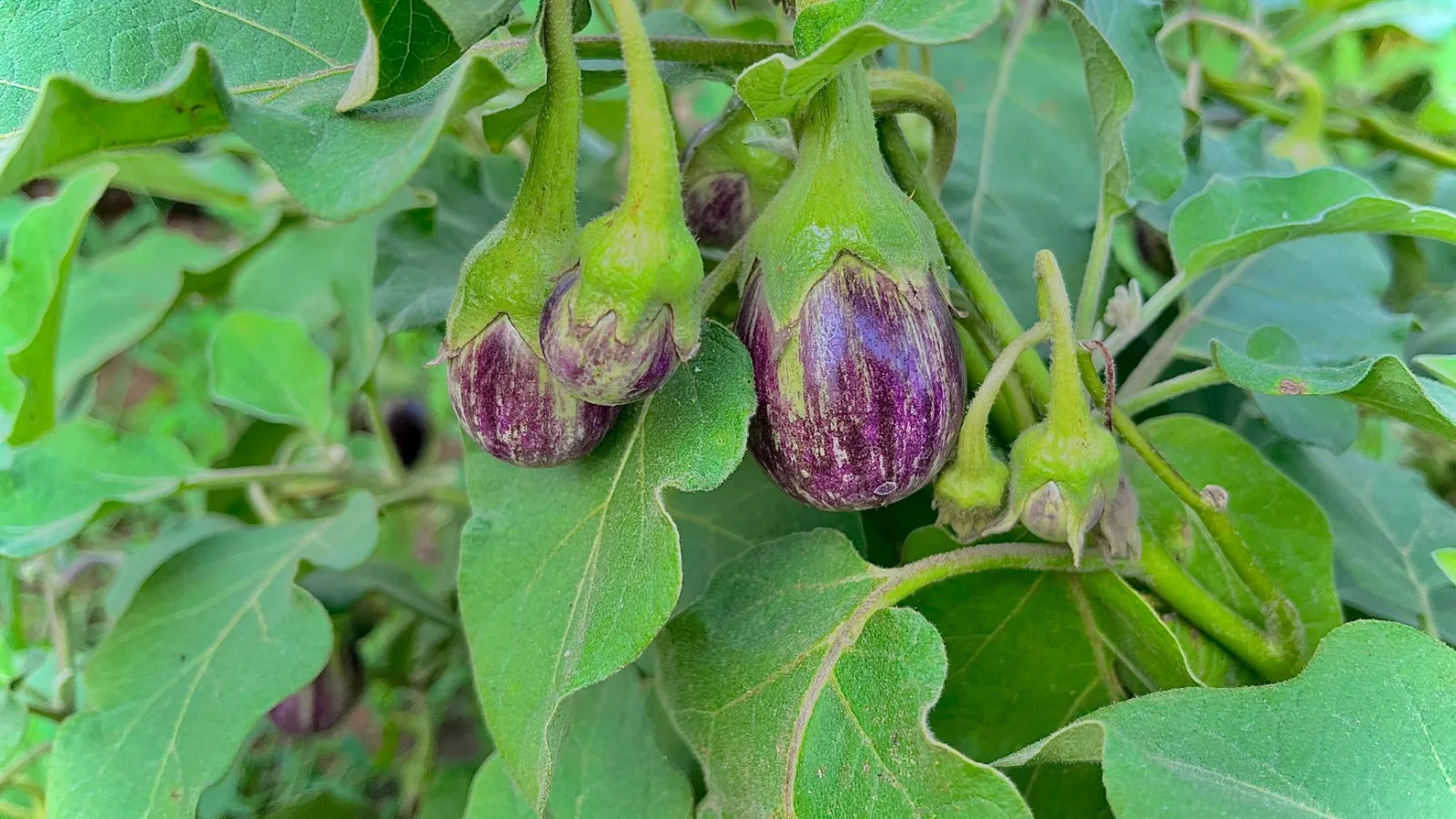
Can Rosemary Ease Full-Body Pain? What a Rat Study Shows
A 2026 animal study found that rosemary extracts made rats with a fibromyalgia-like condition less sensitive to pain. Nobody has tested this in people yet, but rosemary is still a fine herb to grow and cook with.
When Your Fruit-Syrup Jars Keep Turning Slimy: Thyme and Oregano
A new study found that a blend of oregano and thyme essential oils reduced how much yeast stuck to surfaces more than either oil alone. Here is what that means for your kitchen, and why boiling water is still the way to sterilize your jars.
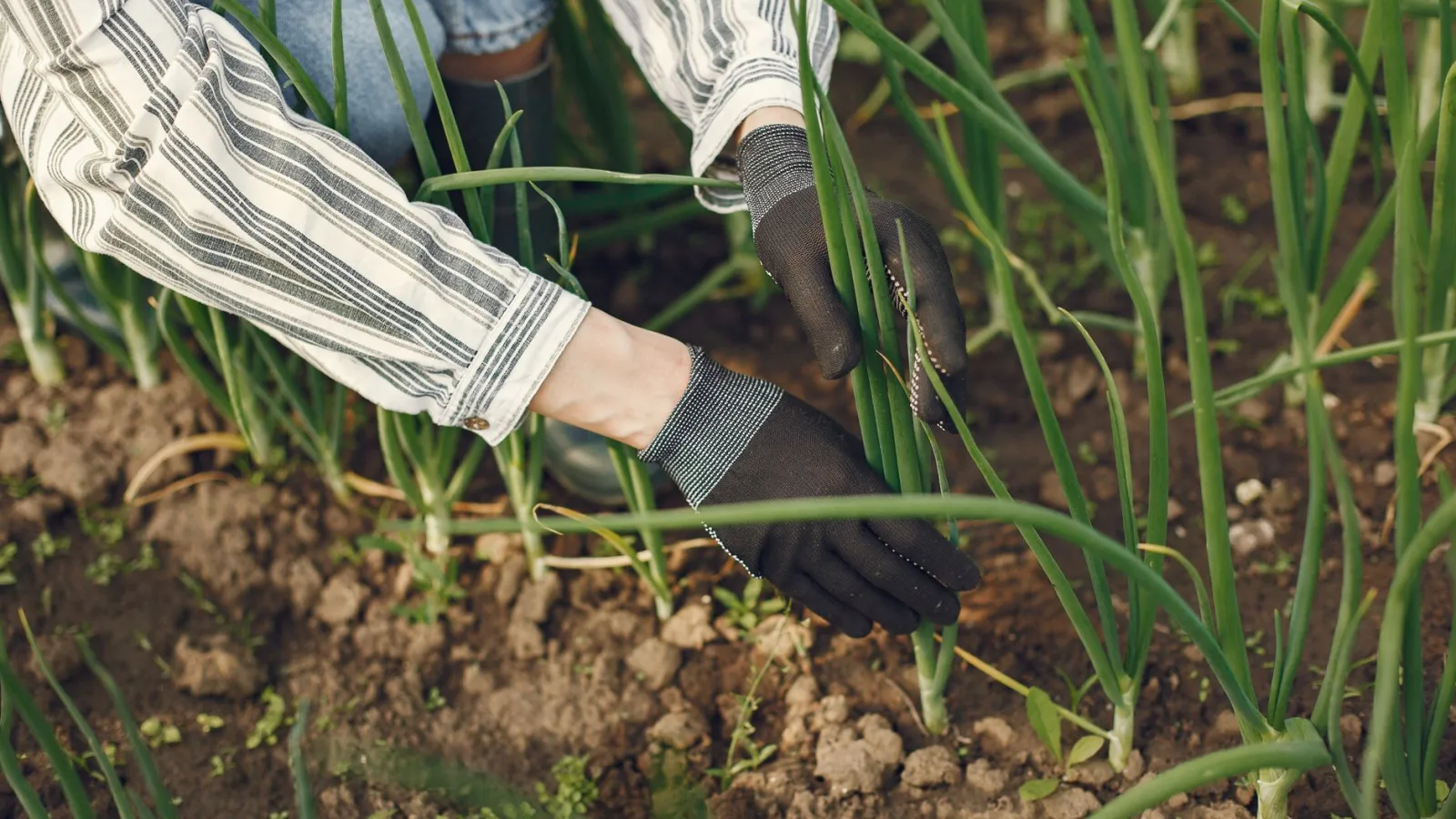
Planted Three Times a Year: What the Soil Held Two Meters Down
A study in India's Terai region sampled soil down to two meters and found that fields cropped three times a year held more than 1.5 times the organic carbon of fields planted only once. The takeaway for a home garden: keep something rooted in the bed.
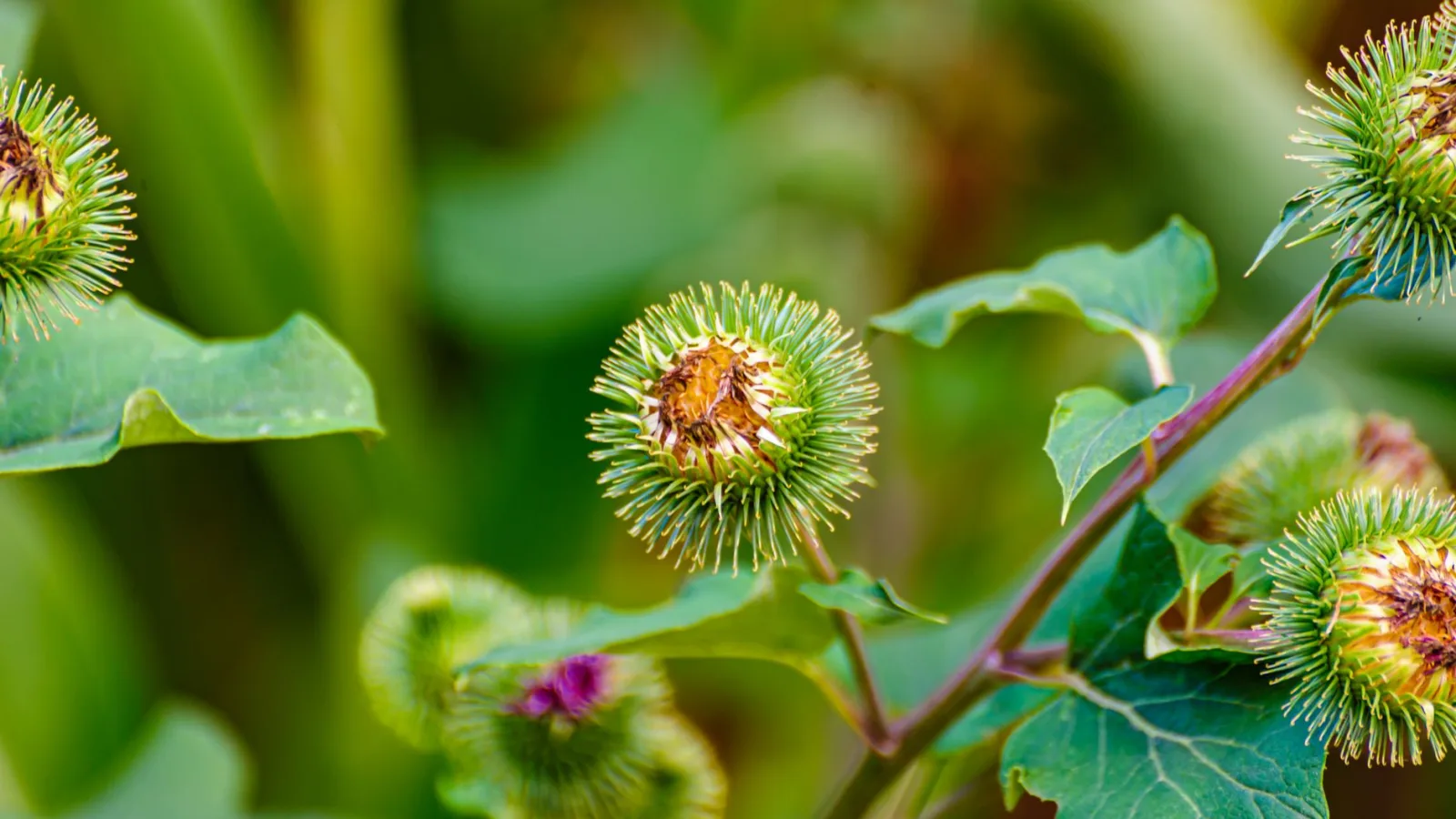
What Sunchokes and Burdock Leave Behind in Your Gut
Sunchokes, burdock, and onions all stockpile inulin, a sugar our enzymes can't break down, so it arrives in the colon intact and gut bacteria ferment it into butyrate. A 2026 mouse study ties that butyrate to a stronger immune attack on tumors — and the summer garden is already growing the raw material.