

- Type
- Roots & Stems
- Difficulty
- Moderate
- Season
- Spring·Fall
- Sowing
- From seed
Carrot
Daucus carota
Beta-carotene, the pigment that colors the root orange
The orange of a carrot comes from a pigment called beta-carotene, which converts to vitamin A in the body. Being fat-soluble, more of it is absorbed when the root is sauteed in a little oil. Carrots are direct-sown in spring and fall, prefer cool weather, and do best in deep soil cleared of stones so the root can run straight. The leaves and seed are edible too, but use only plants you grew yourself: the carrot family includes poison hemlock (Conium maculatum), whose foliage resembles carrot leaf, so foraging for them in the wild is dangerous.
Year-Round Calendar
- 1
- 2
- 3
- 4
- 5
- 6
- 7
- 8
- 9
- 10
- 11
- 12
- 4
- 8
- 7
- 11
Where It Grows
- Main producer It produces nearly half of the world's output. Production centers on the North China Plain, in Shandong, Hebei, and neighboring provinces.
- Major producer Carrots are grown in large volumes across its irrigated farming districts. The country lies within Central Asia, the region credited as the carrot's homeland.
- Major producer Production centers on the irrigated lands of California's Central Valley, which splits the year between winter and summer growing areas to supply carrots year-round.
- Major producer Suited to short, cool summers, carrots are grown throughout European Russia.
- Major producer Summer cultivation in the black-earth belt is the mainstay.
- Origin The foothills of the Hindu Kush are credited as the birthplace of the cultivated carrot. The purple and yellow types branched off from here.
The carrot came out of the mountains of Central Asia, reaching Europe by way of Iran and Türkiye to the west, and entering China to the east during the Yuan dynasty, where the character hu, meaning "foreign," was attached to its name. The orange type so common today took hold in Europe around the 17th century and then spread back out across the world. Because the FAO counts carrots and turnips as a single item, turnips are mixed into the rankings.
- Optimum
- 18~21℃
- Range
- 3~28℃
- Hardiness
- Half-hardy
Carrots are a cool-climate crop. Above 25℃ the roots stop thickening and their color pales, and young seedlings exposed to a long spell of cold will send up flower stalks the following year. On Jeju, where winter lows don't drop very far, the crop stays in the open field through winter, roots and all.
In Korea Nationwide
Spring and fall open-field growing is the baseline, with the Gangwon highlands (cool upland farming) covering midsummer and the overwintering carrots of the Gujwa area on Jeju covering winter. Jeju's overwintering carrots are sown in July–August and dug from November until March of the following year, so sowing and harvest span the turn of the year.
- 7
- 8
- 1
- 2
- 3
- 11
- 12
- 3
- 4
- 7
- 8
- 6
- 7
- 10
- 11
- 4
- 5
- 8
- 9
How to grow
- Light
- Somewhere sunny
- Soil and depth
- 30cm deep, stone-free and loose. A stone in the way and the root forks
- Spacing
- 10cm, reached by thinning
- Watering
- Keep it damp until germination; ordinary after that
- Feeding
- Never use half-rotted manure. It makes the roots fork
- Harvest
- When the shoulder shows above the soil and it is over 3cm across
What makes the difference. Germination takes over ten days and drying out in that window is the usual failure. Cover with fleece or newspaper and it works
Common problems
- Root-knot nematode You will see Lumpy roots covered in fine hairs What to do Do not grow carrots in the same ground year after year
This page describes how a crop is grown and used. It does not claim health effects for any food, nor is it intended to prevent or treat disease. Component and study notes are references only and do not mean the same result occurs in people. Consult a medical professional about health concerns.
Health Benefits
A vitamin A precursor: what is established. That beta-carotene converts to vitamin A in the body is well established, as is the long-observed fact that too little vitamin A leaves vision poor in dim light. It does not follow that someone who already gets enough vitamin A will see better by eating more carrots.
Where lutein and zeaxanthin go. Carrots also carry lutein and zeaxanthin, and it is established that these two pigments accumulate in the macula of the retina. That is not the same as saying this vegetable prevents any particular eye disease.
Cooking with oil. Carotenoids are fat-soluble, and several studies have observed that cooking them with oil raises the amount absorbed. That is a statement about absorption, not a claim that anything else improves by the same measure.
A supplement is not a food. Trials that gave smokers high-dose beta-carotene supplements over long periods have in some cases reported unfavourable outcomes. Those studies were conducted on supplements, whose conditions differ from eating the whole food. Eating carrots at the table and taking a supplement are separate matters.
Nutrition
- Beta-carotene (Abundant) — The pigment that gives the root its orange color
- Dietary fiber (Abundant) — Soluble pectin and insoluble cellulose
Beta-carotene (β-carotene) Beta-carotene is the pigment that creates the orange color of the carrot. It converts to vitamin A in the body, a nutrient used in building the visual pigment of the eye and epithelial tissue. Roots are reported to hold around 8 mg per 100 g, though the figure varies widely with variety and growing conditions.
Alpha-carotene (α-carotene), lutein & zeaxanthin Besides beta-carotene, carotenoids such as alpha-carotene, lutein and zeaxanthin are present together. Part of the alpha-carotene also converts to vitamin A, while lutein and zeaxanthin are pigments established to accumulate in the macula of the retina. For neither of them has it been settled what changes in a person as a result of eating carrots.
Lycopene & anthocyanins: pigments that differ by variety Red-fleshed carrot varieties contain lycopene, the same carotenoid found in tomato, while the color of purple varieties comes not from lycopene but from anthocyanins, a class of polyphenol. Both pigments have their antioxidant activity measured in the laboratory, but whether the same thing happens in the body after eating them is a separate question.
Dietary fiber Soluble pectin and insoluble cellulose are present together. Pectin passes the small intestine unabsorbed and is fermented by microbes in the colon, while cellulose holds water and adds bulk to stool.
Vitamin K, C, B6, folate & potassium Vitamin K, C and B6 along with folate and potassium are present together. None of them is unique to carrots, but the root is bulky and keeps well, which makes it easy to include steadily in a daily diet.
Falcarinol & falcarindiol These are polyacetylene compounds made by plants of the carrot family, including the carrot itself. Cell and animal experiments have reported antiproliferative and anti-inflammatory activity, but nothing establishes that the same happens in a person who eats carrots.
Pairings
○ Olive oil, sesame oil, perilla oil — Because carrot carotene is fat-soluble, cooking it with oil can boost absorption by up to sixfold, a well-known fact. Oil-based preparations such as stir-fried carrots, carrot rapee (a French grated-carrot salad), and carrot cake are nutritionally sound choices.
○ Meat (beef, pork) — Dishes that bring protein, carotene, and iron together, like curry, stew, and gomtang (Korean beef-bone soup), make the most of the carrot's nutrition. Fat from the meat enhances carotenoid absorption, and pairing iron with vitamin C raises absorption further.
○ Cabbage, onion, potato — Pairing carrots with the cabbage, onion, and potato that form the base of curries and stews creates a naturally balanced mix. The fiber and minerals of several vegetables come together in one dish for a satisfying, well-rounded meal. Onion · Potato · Cabbage
○ Apple and ginger — Blended with apple and ginger, a variation on ABC juice, carrots deliver antioxidant synergy and balanced flavor. The sweetness of apple and the warm bite of ginger smooth out the carrot's raw, grassy note and make it easy to drink. Ginger
○ Lemon and vinegar — Marinating carrots in lemon or vinegar, as in carrot rapee, adds vitamin C and lets the acidity balance the flavor. The acidity also helps stabilize the carotenoids, so the color holds longer.
△ Smokers + beta-carotene supplements — Clinical trials (CARET and ATBC) found that smokers who took high-dose beta-carotene supplements actually had an increased risk of lung cancer, making this a recognized medical contraindication. Carrots themselves are safe as a whole food, so getting beta-carotene from the diet alone is recommended.
△ Apiaceae (carrot-family) allergy — People allergic to Apiaceae plants—celery, carrots, parsley, and the like—should avoid carrots due to the possibility of cross-reactivity. Cross-reactions with birch pollen allergy have also been reported.
△ Large amounts of raw carrot on an empty stomach — Eating a lot of raw carrot on an empty stomach can irritate the stomach lining with its coarse fiber. People with weak digestion should eat carrots cooked or in moderation alongside other foods.
Varieties
- Ochon type (five-chon, about 15 cm root) (Seed) — The most common size in home plots. Needs deep, stone-free soil to grow straight.
- Samchon and mini types (Seed) — Roots stay under 10 cm, so they keep their shape in pots or shallow beds and mature earlier.
- Purple carrot (Seed) — Dark purple skin over orange or purple flesh. Color bleeds into boiling water, so use it raw.
- Bolt-resistant type (manchudae) (Seed) — Sends up a flower stalk late. Check the seed packet for this label before sowing in spring.
Source: Rural Development Administration · Food and Nutrition Information
Stories about Carrot
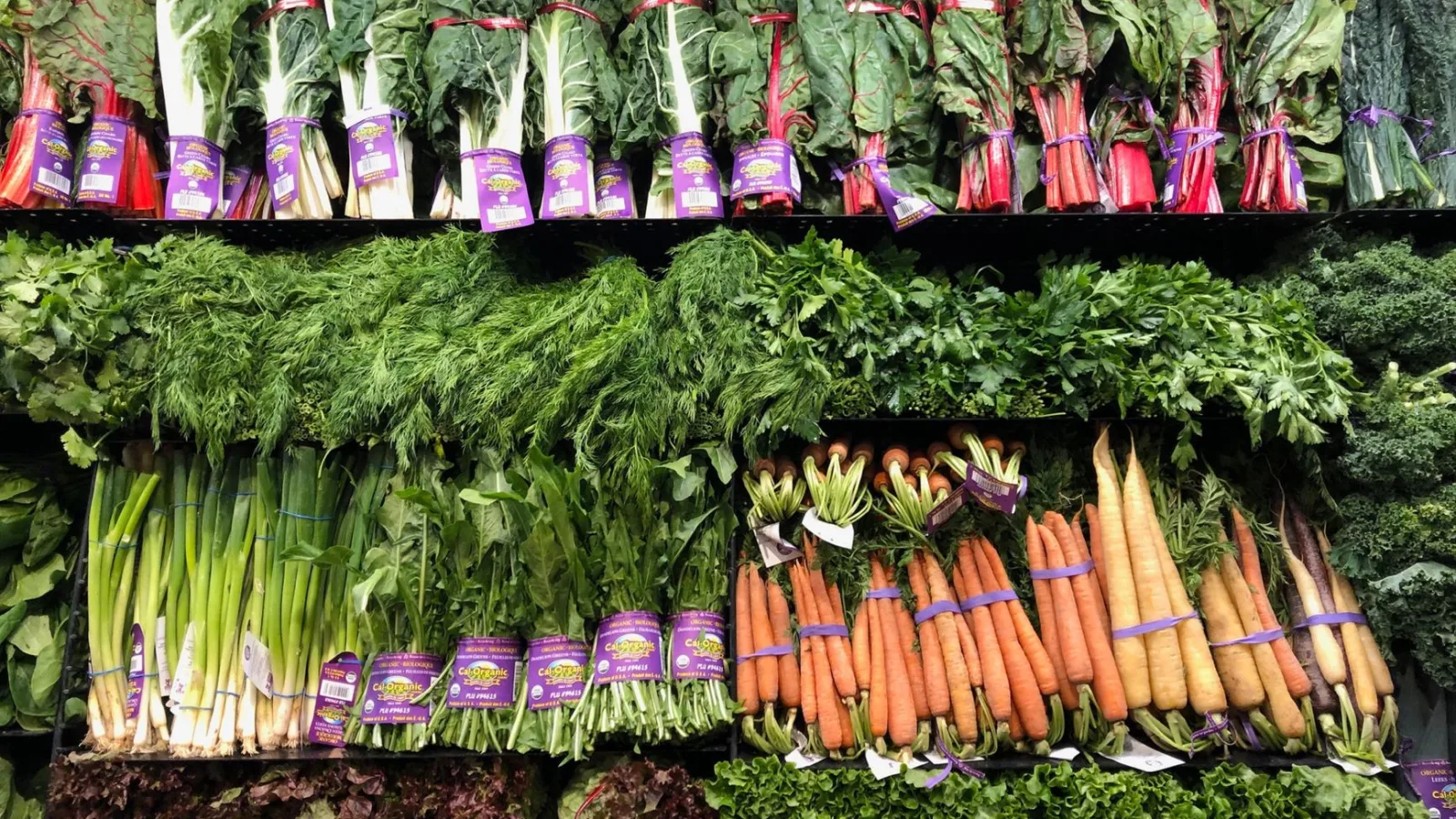
Can a Kale-and-Carrot Milk Tablet Help Lower Cholesterol?
Researchers pressed kale and carrots into a small milk-based tablet and tested it on people with high cholesterol. After six weeks, LDL went down and HDL went up. It's a promising early result, but more rigorous trials are still needed.
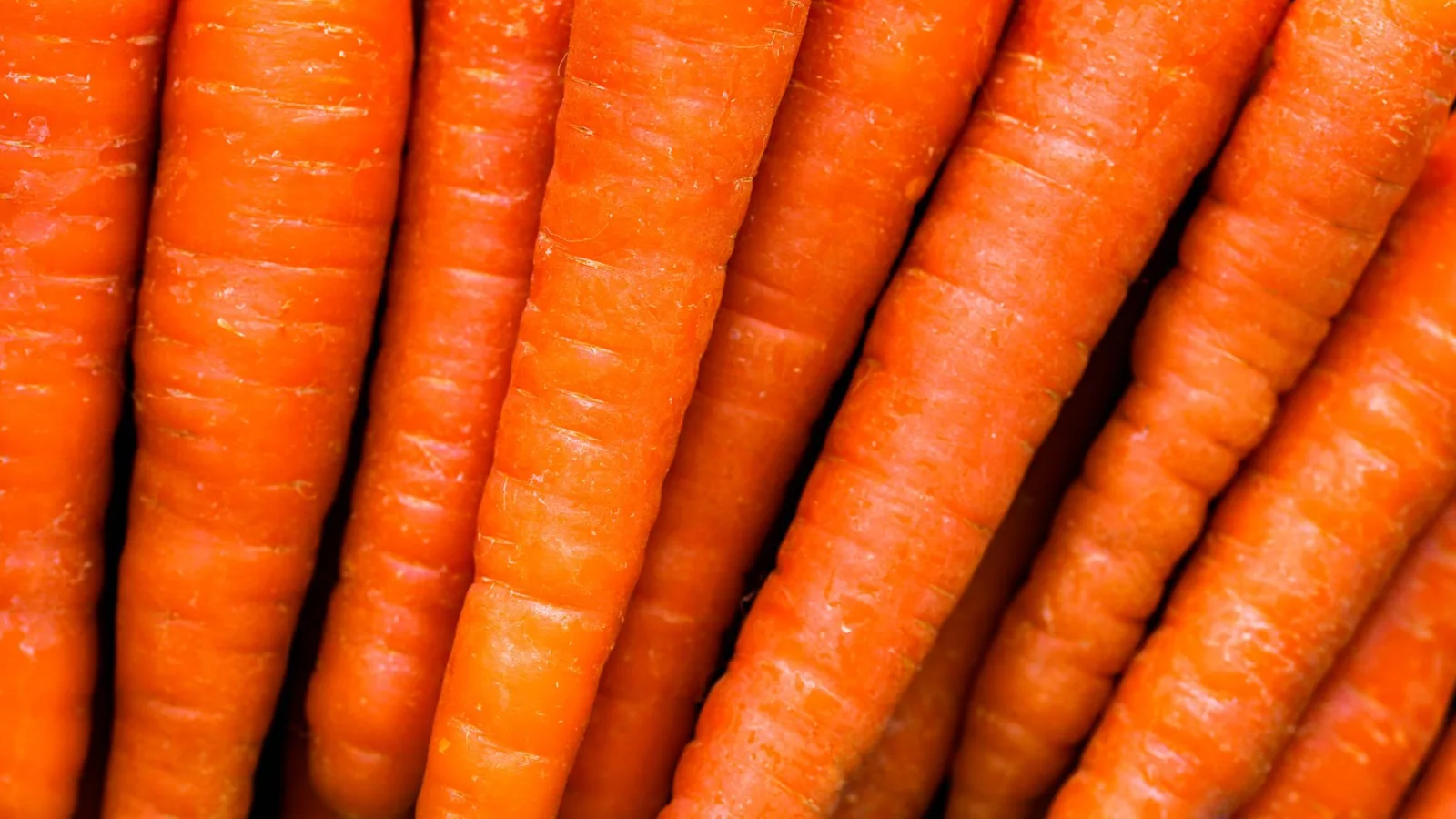
Summer Sun and Carrots: The Antioxidant Story Your Garden Is Telling
A recent chemistry study used oil pressed from carrot seeds as its benchmark for UV protection — a reminder that a common root vegetable is nature's reference point for standing up to sunlight. Here's what that means for how you work your summer beds and what you put on the table.
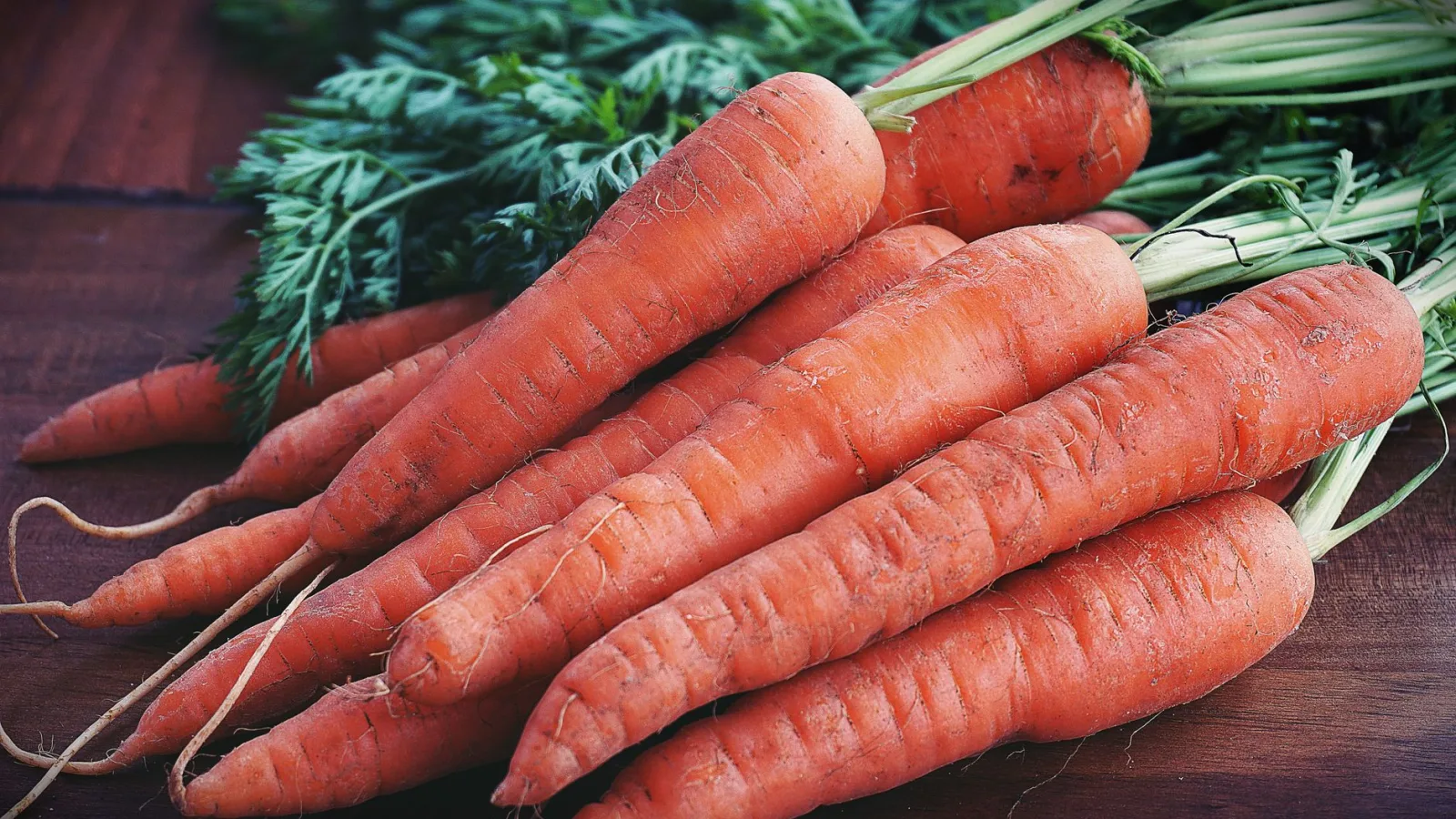
Don't Toss Those Purple Carrot Peels
Purple carrots store most of their anthocyanins and polyphenols in the peel and the layer just beneath it — the part that usually goes in the bin. A 2026 study measured exactly how much is in there, and it suggests a few easy ways to put those peels to work in the kitchen.