

- Type
- Herbs & Aromatics
- Difficulty
- Moderate
- Season
- Year-round
- Sowing
- Transplant
Rosemary
Salvia rosmarinus
Rosmarinic and carnosic acid - a strongly aromatic evergreen herb
Rosemary is an evergreen herb with needle-thin, firm leaves, marked by a strong scent in which phenolic compounds such as rosmarinic and carnosic acid meet the 1,8-cineole and camphor of its essential oil. In the kitchen it tames the gaminess of meat dishes, and the leaves are steeped for tea. It likes sun and sharp drainage, which makes it easy to keep in a pot year-round, and because it is weak against cold it comes indoors for the winter.
Year-Round Calendar
- 1
- 2
- 3
- 4
- 5
- 6
- 7
- 8
- 9
- 10
- 11
- 12
- 4
- 4
- 5
- 6
- 7
- 8
- 9
- 10
Where It Grows
- Main producer Gathered from wild stands on the central plateau and in the foothills of the Atlas Mountains, it supplies more essential oil and dried leaf to the world than anywhere else.
- Main producer Gathered from wild stands on the semi-arid hills of the north. Along with Morocco, it leads the supply of essential oil.
- Major producer It grows widely along the Mediterranean coast and in the limestone scrub of the interior, with cultivation and wild gathering going side by side.
- Major producer The dry limestone hills of Provence are the growing area.
- Major producer Grown in open ground in the coastal scrub of the south and the islands.
Its origin is the Mediterranean coast rather than any one country, so no country-of-origin row has been set up here. Even now, a substantial share of the North African supply is not planted and tended but gathered from wild stands. It will grow in a pot anywhere in the temperate and subtropical zones, but the places where it grows into a large plant in open ground are concentrated in the Mediterranean climate belt, where summers are dry.
- Optimum
- 15~25℃
- Range
- 5~32℃
- Hardiness
- Half-hardy
An evergreen shrub of the Mediterranean climate, where summers are hot and dry and winters are mild and rainy. What it tolerates least is wet roots, so poorly drained soil combined with the summer monsoon rains (jangma) will kill it. If temperatures stay below −7 to −8℃ for any length of time, it freezes and dies.
In Korea Southern Korea
Overwintering outdoors — passing the winter in open ground — works only about as far as the south coast and Jeju; from the central region northward, plants are brought in pot and all and wintered indoors. Excess moisture during the summer monsoon rains (jangma) is a more common cause of failure than winter cold. Leaves are picked from established plants in every season.
How to grow
- Light
- It wants a lot of sun
- Soil and depth
- 25cm deep with very sharp drainage. Mix in grit
- Spacing
- 40cm
- Watering
- Sparingly. Wait until the soil has dried right out. Overwatering is the usual way people kill it
- Feeding
- Barely any. Once in spring is plenty
- Harvest
- Cut a sprig when you need one. All year round
What makes the difference. Most rosemary dies of kindness with the watering can. Better to forget about it. North of the middle of the country, bring it in for winter
Common problems
- Powdery mildew You will see White dust on the leaves What to do It comes with still air. Thin the branches
This page describes how a crop is grown and used. It does not claim health effects for any food, nor is it intended to prevent or treat disease. Component and study notes are references only and do not mean the same result occurs in people. Consult a medical professional about health concerns.
Health Benefits
What the aroma is. Composition analyses confirm that the scent of rosemary comes from volatile compounds such as 1,8-cineole, camphor and borneol. Experiments in which people were asked to smell the oil have been reported more than once, but the groups were small and the results uneven, so what can be stated for now reaches only as far as the make-up of the aroma.
Antioxidant activity and food preservation. It is established that carnosic acid and rosmarinic acid slow oxidation in the test tube, and rosemary extract is listed in the EU as a food antioxidant (E392). That use is about slowing the rate at which food spoils, which is not to say the same thing happens inside the body.
The distance between extract studies and food. Much of the widely quoted rosemary research applies concentrated extracts or essential oil to cells and animals, conditions far removed from the few sprigs of leaf that go into a dish. Trials that put the oil on the skin or have people inhale it also take a different route from eating, so their results cannot be carried over as food benefits.
How much is actually eaten. The leaves hold vitamins and minerals, but the amount used at one time as a seasoning is small, so rosemary's share as a nutrient source is minor. Its value lies on the side of aroma and flavor.
Nutrition
- Rosmarinic acid and carnosic acid (phenolic compounds in the leaf) — The signature compounds identified in rosemary leaves
- Essential oils (aroma) (1,8-cineole, camphor, borneol) — The strong scent released when a leaf is rubbed
Essential oils Rosemary essential oil is a complex of volatile compounds such as 1,8-cineole (eucalyptol), camphor, alpha-pinene and borneol. The scent that rises when a leaf is rubbed or heated comes from these compounds, and the action of each one is handled mostly at the laboratory stage.
Carnosic acid & carnosol These diterpenoid phenols are particular to rosemary and show strong antioxidant activity in the test tube. Rosemary extract carrying them is listed in the EU as a food antioxidant (E392), used to slow rancidity in processed foods.
Rosmarinic acid A polyphenol common to plants of the mint family, it is found in mint, basil and perilla as well as in rosemary. It comes up often whenever mint-family vegetables are discussed together.
Ursolic acid & oleanolic acid These triterpenoids occur in rosemary leaves and are also abundant in apple peel. Research continues at the cell and animal stage, but evidence in people is still thin.
Vitamins A & C, calcium, iron & dietary fiber Rosemary leaves hold these nutrients, but the amount taken at one time as a seasoning is small, so their meaning as a nutrient source is limited. The main use is aroma rather than nutrition.
Pairings
○ Lamb, beef, and pork — Roasting meat seasoned with rosemary is a Mediterranean classic. The herb's aroma cuts through the fat and gaminess of the meat while its antioxidant polyphenols help reduce oxidative damage, boosting both flavor and health benefits at once.
○ Potatoes and root vegetables (carrots, parsnips) — Adding rosemary to roast potatoes is a Western kitchen staple. Its bold fragrance brings dimension to the simple sweetness of potatoes and root vegetables, taking a plain tray of roasted vegetables up a notch. Carrot · Potato
○ Olive oil — Steeping rosemary in olive oil extracts its essential oils and preserves the flavor. Rosemary-infused oil is a versatile Mediterranean staple, great as a salad dressing or a dipping sauce for bread.
○ Garlic, lemon, and olive oil — Garlic, lemon, and olive oil are the holy trinity of Mediterranean seasoning, and adding rosemary completes the mix. Together, the four make an all-purpose marinade that pairs well with virtually any protein. Garlic
○ Bread and focaccia — Rosemary is an essential topping for Italian focaccia. Its bold aroma over the soft warmth of fresh bread turns a simple loaf into a flavorful meal.
○ Honey — Rosemary honey, made by bees in regions where rosemary blooms, is a prized monofloral variety. The herb's distinctive scent comes through subtly in the honey, making it lovely stirred into tea or spread on bread.
△ Concentrated essential oil is not for eating — What goes into a dish or a pot of tea is the leaf. Rosemary essential oil sold as a fragrance is the volatile fraction of the leaf pulled out and concentrated, and it is not handled as the same material. Swallowing camphor-bearing essential oil neat has been reported to cause poisoning, seizures among the effects, which is why the fragrance and aromatherapy trades rule out taking it internally. Small amounts are dangerous to young children in particular, so the bottle belongs out of reach. The leaf itself is not brewed into a strong decoction beyond seasoning amounts either.
Varieties
- Upright type (Seedling transplanting) — Stems grow straight up and the base turns woody over the years, giving plenty of leaves to pick.
- Prostrate (creeping) type (Seedling transplanting) — Stems spread sideways and trail over the pot rim; the low habit suits an indoor windowsill.
Source: Food and Nutrition Information
Stories about Rosemary
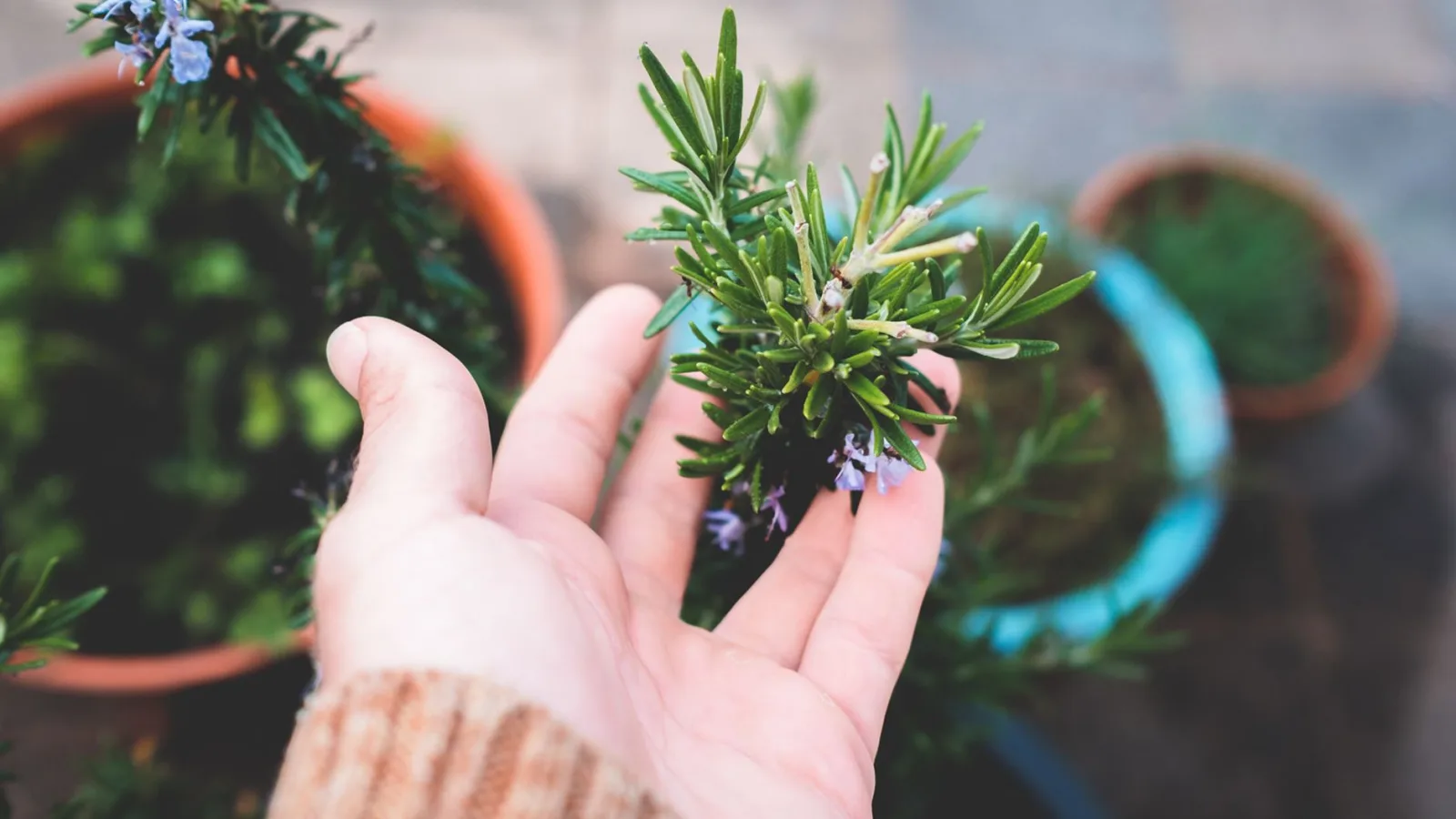
One Rosemary Plant, Now a Subject of Brain Health Research
A 2026 study examined whether extracts of rosemary and apple mint could protect nerve cells, using an intranasal delivery gel in a mouse model of Parkinson's disease. The results are early-stage, but they put a familiar windowsill herb under the microscope in a new way.
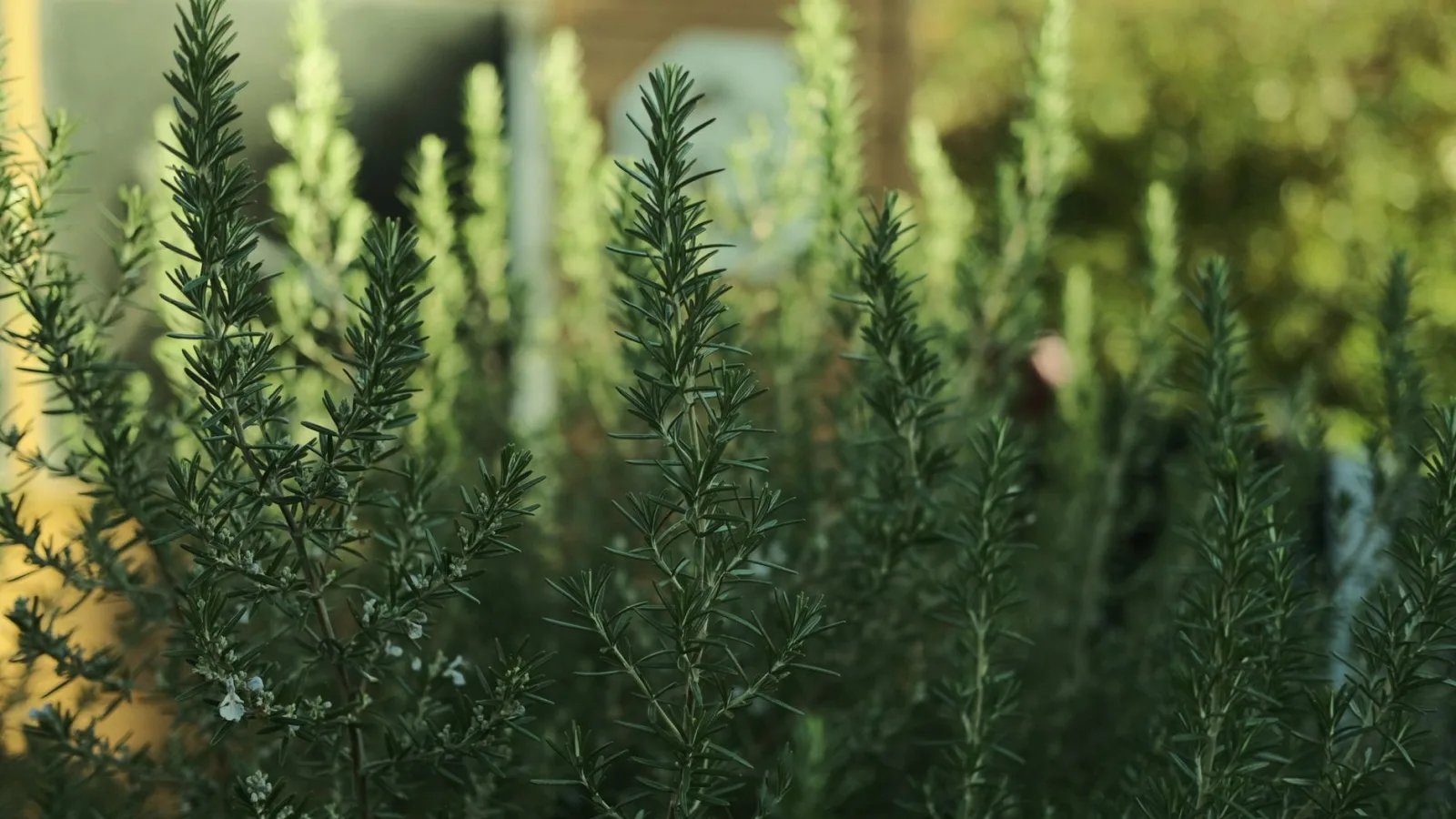
Rosemary and Propolis: Two Everyday Helpers for a Tired Body
Rosemary and propolis are both loaded with antioxidant compounds, and a recent study fed them to ewes in late pregnancy to see how the liver handled the extra energy demand. The findings are promising, though they come from sheep, not people.