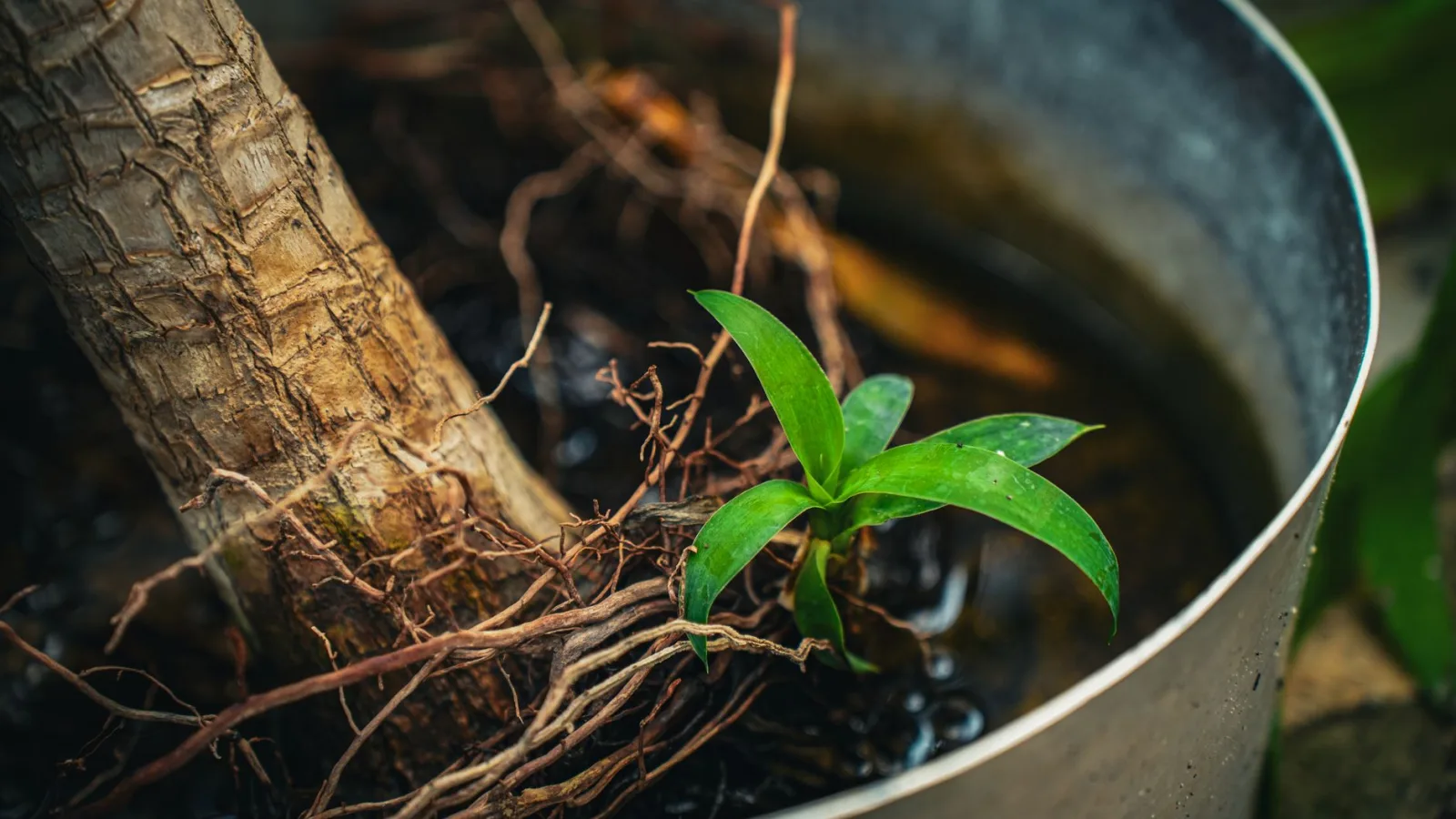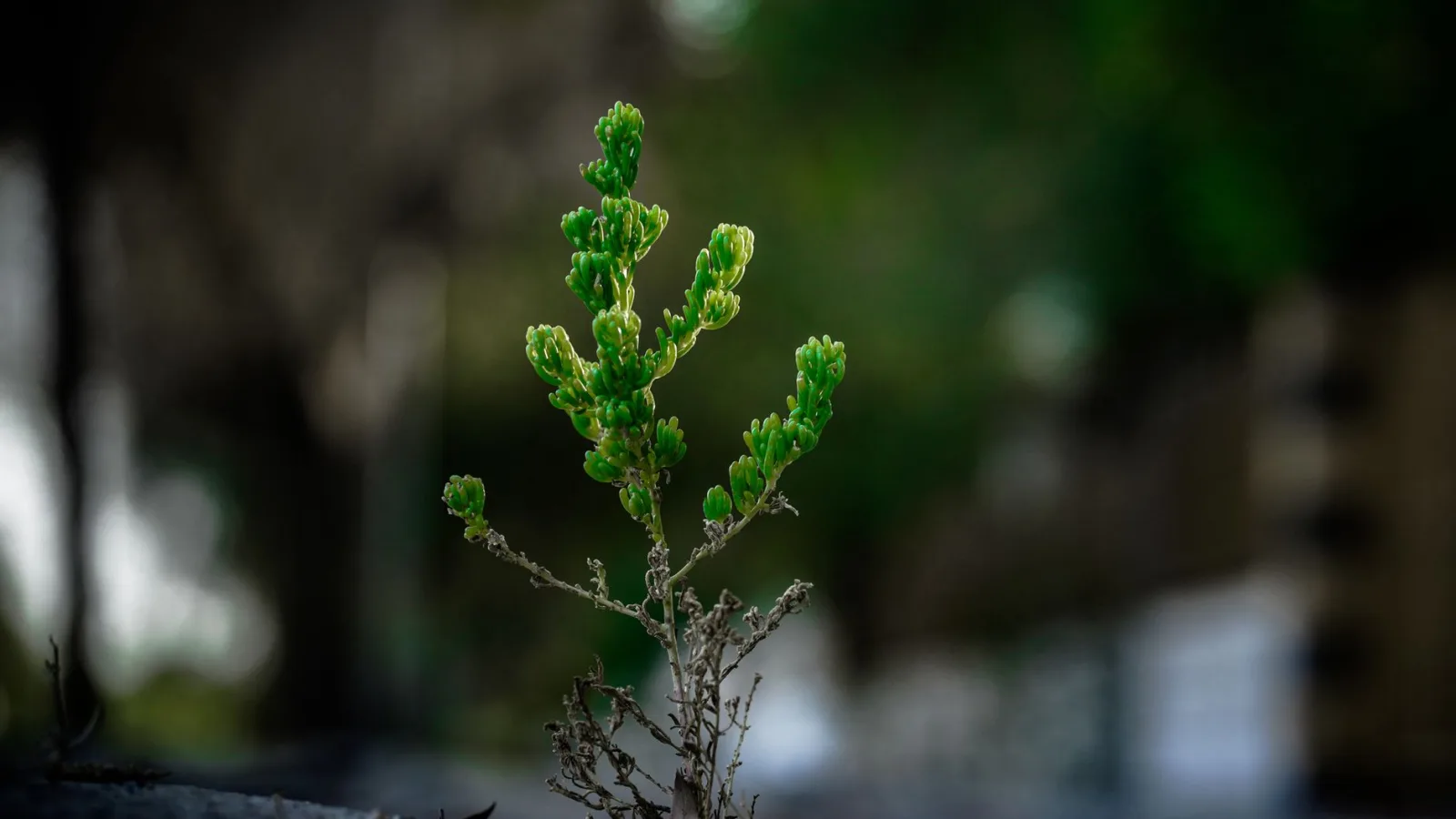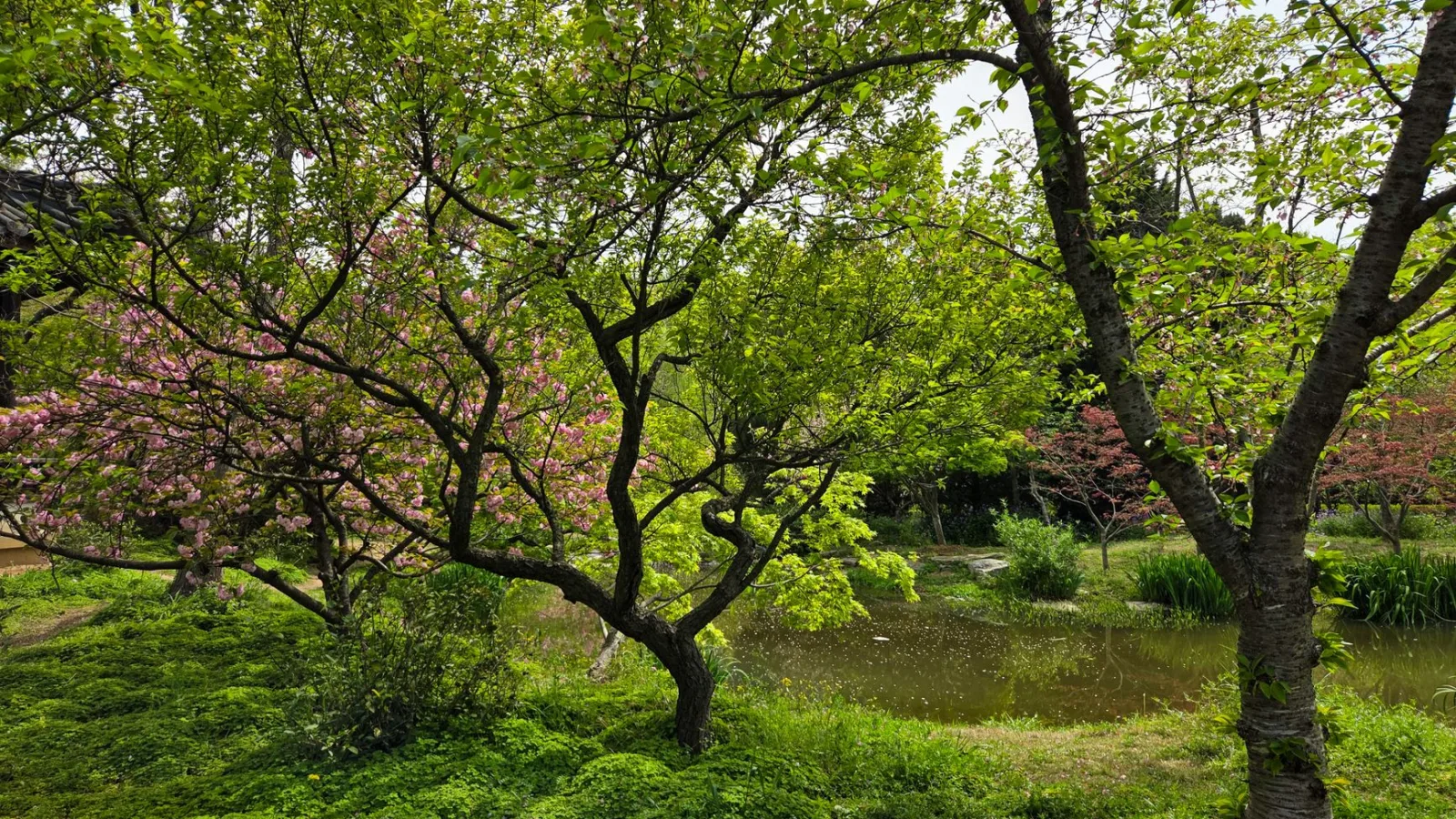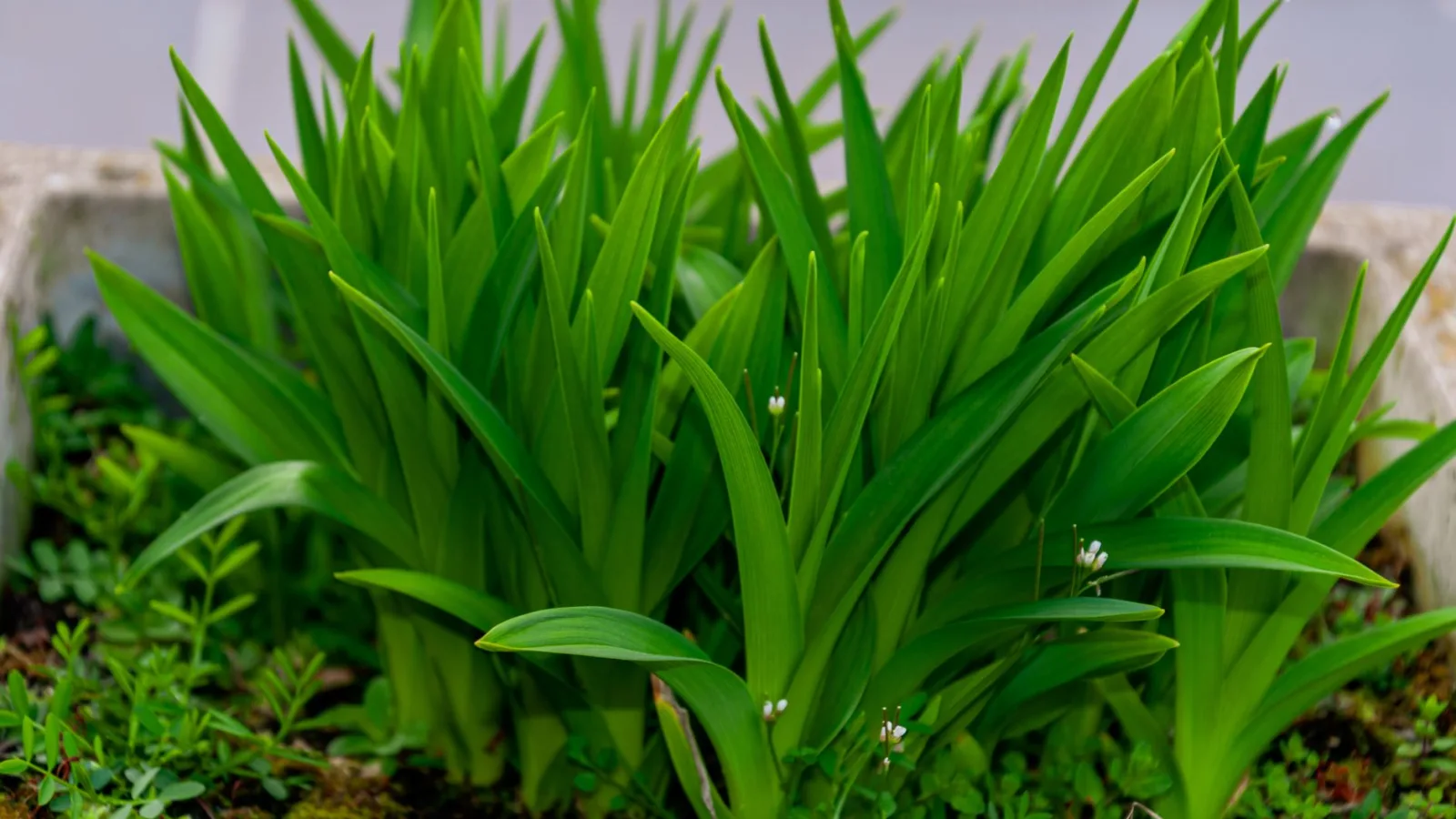
Look under the trees in September and the purple flower spikes that stood straight all through late summer have gone over, leaving only the narrow, strap-like leaves behind. Lilyturf is a perennial that carries those leaves right through the winter. Now is the season to divide the clumps and replant them. In the Northern Hemisphere, division happens in March–April and September–October, and the underground tubers are dug in October–November. It will be a while before a clump you split this year gives you roots, so in the kitchen, start with tubers you've already dried.
Start by Pulling Out the Core
Lilyturf roots swell at intervals along their length into small tubers. Down the middle of each one runs a thin core, and by long tradition it was pulled out before use. The Donguibogam, the seventeenth-century Korean medical compendium, records moistening the roots with water to draw the core out, and counted the thick, solid tubers as the good ones. Why the core came out isn't written down anywhere, but the habit of prepping them this way has carried on. Dried tubers are hard and awkward to handle as they are, so work through it in this order.
- Soak them in lukewarm water until the tubers soften.
- Split one side with a fingernail and pull the core out of the center.
- Shake off the water and put them in the pot.
The Donguibogam gives the digging season as the second and third and the ninth and tenth lunar months, and says the roots are dried in the shade rather than in the sun.
Add Jujubes and Pear
Simmered on their own, the tubers make a broth with almost no sweetness to it — thin drinking if you plan to keep at it. Jujubes and Korean pear give it enough sweetness to go down easily. Cut the pear into big chunks, skin and all. Once the water comes to a boil, turn the heat down and let it go for a long while. Lilyturf contains polysaccharides, and the longer it cooks, the rounder the liquid gets. At a yangnyeongsi, the traditional market for medicinal herbs, you can buy the dried tubers just as they are, and jujubes and pears turn up anywhere, so get all three into one pot.
Ginger at the End, Honey Off the Heat
Slip a few slices of ginger into the finished liquid, let them sit a moment, then lift them out — the aroma comes through clean. Put the ginger in at the start and boil it a long time and the heat pushes out front instead. That's why the ginger goes in last. Honey waits until the pot is off the burner and the steam has settled, and then only a little. If you want it sweeter than that, another piece of pear will do the job.
Brewed Weak, It Becomes Everyday Drinking Water
A strong decoction and a weak infusion are two different things to have around. If you mean to drink it like water, cut back on the tubers, brew it light, and chill it — it lands at just the right strength to sip all day in place of barley tea. The strong version you pour into a cup a little at a time. Either way, once the water comes up to a boil, drop the heat and let it barely bubble.
Check the Name When You Buy
At the market, broadleaf lilyturf (Liriope platyphylla) and dwarf mondo grass (Ophiopogon japonicus) sometimes change hands under the same name. The two belong to different genera, and while some of their constituents overlap, they aren't treated as the same plant. Check the botanical name when you buy. Steroidal saponins of the ophiopogonin group and homoisoflavonoid compounds have been isolated from the tubers of both. That's an analysis of what's in them, nothing more — it has no bearing on preventing or treating any disease.
Lilyturf is widely grown in Korea and China and also grows wild in Japan. It lives in the shade on the floor of temperate deciduous forests. It does best at 15–25°C and tolerates cold down to around −20°C. It will grow under trees where there's little sun, but standing water rots the tubers. The Donguibogam records it as coming from Gyeongsang, Jeolla, and Chungcheong Provinces, growing in rich soil and on the islands.
Today, put a few dried tubers in water to soften and get the cores out. The jujubes and pear can wait — you won't be late for them.
Sources: Donguibogam, Herbs section, Maekmundong · Korea National Arboretum, Korea Biodiversity Information System