On a July morning, before the sun is up, I step out to the garden to pick a few chili peppers and some perilla leaves. Two styrofoam boxes and a few bags of soil: a patch too small to register on any city map. But if a city holds tens of thousands of patches like this one, their combined area does show up. And depending on what we ask of it, land either releases carbon or takes it in.
Can a City Grow Without Giving Up Its Farmland?
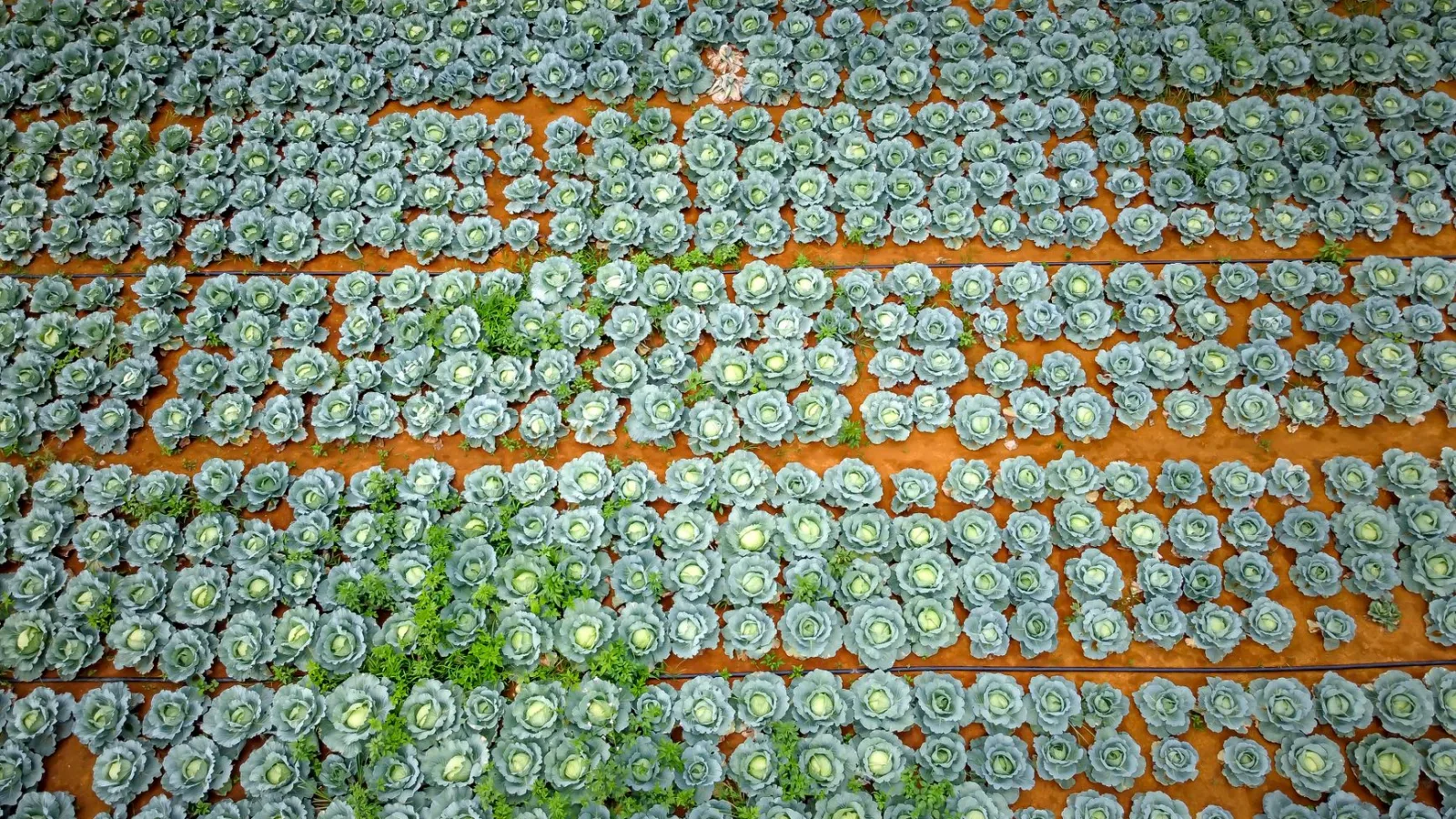
A study recently published in an environmental management journal modeled how land across China's Yangtze River Delta, covering Shanghai, Jiangsu, Zhejiang, and Anhui, might be used through 2060. The researchers weighed carbon uptake, economic output, food production, and land suitability all at once, searching for the arrangement with the least to lose. The answer differed by zone. The best arrangement expanded cropland and grain output in agricultural zones, held forest cover steady in ecological zones, and accepted new development only in urban zones.
The biggest shift came from emptying village homesteads. Consolidating scattered rural settlements freed up roughly 4,500 square kilometers, and as that land turned from a carbon source into a carbon sink, it became the single largest contribution in the plan. Protecting farmland while the city grew did not come from finding new land. It came from putting land that was already sitting idle back to work.
Cutting Emissions Isn't Enough on Its Own
By the model's math, the region's economy grows more than sixfold while its carbon emissions actually fall. Emissions per unit of output drop by 89%. The old link, where emissions rose in step with the economy, is broken.
Yet in the same calculation, the carbon absorbed by the region's forests, farmland, and wetlands still came to less than a tenth of its emissions in 2060. However well you cut, whatever you can't cut stays in the air unless the absorbing side grows too. That is why how much soil and how many trees a city keeps, inside its borders and beyond, remains an open question.
What to Try in Your Garden Today
There is a vast gap between the area this study covers and a box on a balcony. A few square meters of vegetables won't make a visible dent in a city's emissions. But the way you keep carbon in the soil is the same no matter the size of the plot.
- Don't leave soil bare. Cover it with dried grass or fallen leaves. When soil dries out and crumbles, the organic matter in it breaks down quickly and escapes into the air.
- Save your vegetable peels and coffee grounds instead of tossing them, and return them to the soil as compost. Soil rich in organic matter drains better and holds water better at the same time.
- Give one spot to perennials such as garlic chives, water dropwort (minari, a peppery Korean herb), or asparagus. Soil that isn't turned over every year settles and stabilizes.
Field trials have fairly consistently shown that soil loses less organic matter when it is disturbed less and kept covered. How much that changes the carbon balance at the scale of a box garden, though, is still too early to say. Start today by laying a handful of dried grass over the spot where you picked your chilies.
Source: A study on low-carbon land-use optimization in the Yangtze River Delta, published in an environmental management journal