

- Type
- Herbs & Aromatics
- Difficulty
- Easy
- Season
- Year-round
- Sowing
- Transplant
Korean Chive (Buchu / Garlic Chive)
Allium tuberosum
Organosulfur compounds and beta-carotene, with a cut-and-come-again habit
Korean chive (buchu), also known as garlic chive, is a true cut-and-come-again crop: plant it once and it regrows after each cutting, giving harvest after harvest from a single corner of the garden bed. The deep green leaves hold beta-carotene and vitamin C, and the distinctive aroma comes from organosulfur compounds. It belongs to the same genus as garlic and onion, but the precursor behind its scent is different, so what forms is not the allicin of garlic. Older writings preserve the nickname gi-yang-cho, but that belongs to an older way of seeing the plant; what is established today reaches as far as its composition. It is a kitchen workhorse, used in savory pancakes (jeon), seasoned salads, and soups alike. One caution comes with that cut-and-come-again habit: before they flower, daffodil (Narcissus) and Lycoris put up narrow strap leaves that look much like chive, so a cut leaf that gives off no chive smell does not go in the pot.
Year-Round Calendar
- 1
- 2
- 3
- 4
- 5
- 6
- 7
- 8
- 9
- 10
- 11
- 12
- 3
- 4
- 9
- 5
- 6
- 7
- 8
- 9
- 10
Where It Grows
- Main producer The largest producer in the world. Protected cultivation in Shandong, Hebei and Henan is the mainstay, and the crop is also blanched to a pale white by shading it from the light.
-
Major producer
Gimhae and Miryang in South Gyeongsang and Pohang in North Gyeongsang are the known growing areas. Open fields are cut several times from spring through autumn, and winter supply comes from protected cultivation. Harvest May, June, July, August, September, October
- 5
- 6
- 7
- 8
- 9
- 10
- Major producer Tochigi and Kochi are the main areas, with winter supply from protected cultivation.
- Major producer In the Erlin area of Changhua County, the flower stalks are harvested along with the leaves.
Its native range is the temperate belt of East Asia, running from northern China into Mongolia and southern Siberia, so it cannot be pinned to a single country and no country-of-origin row has been set up here. Cultivation and consumption remain almost entirely within East Asia; elsewhere it is grown in small quantities as a vegetable of the overseas Chinese community. FAO statistics do not count Korean chive separately but group it with the onion family, so national production figures cannot easily be compared for this crop alone.
- Optimum
- 18~22℃
- Range
- 5~30℃
- Hardiness
- Hardy
A cool-weather perennial. Leaves grow tender at 18~22℃, but above 25℃ they turn tough and the aroma coarsens. In winter the top growth dies back and the plant survives sub-zero cold in its roots and bulbs, then comes up again in spring.
Harvested 3–4 years after planting. Plant seedlings or divided clumps in spring or autumn: the first year goes into building up the clump, and proper cutting begins the following year. Once established, it is cut three or four times a year and used for three to four years before being ploughed under. The year of sowing and the year of full harvest are not the same.
In Korea Nationwide
It grows anywhere in the country, and winter supply comes from protected cultivation. Gimhae and Miryang in South Gyeongsang, Pohang in North Gyeongsang, and Yesan in South Chungcheong are the known growing areas.
How to grow
- Light
- Sun is good; it tolerates part shade
- Soil and depth
- 20cm deep. It stays put for years, so the soil has to be decent
- Spacing
- 15cm between clumps
- Watering
- When the surface dries
- Feeding
- A feed after every cut. Stop feeding and the blades go thin
- Harvest
- Cut leaving 3cm of base. Three or four cuts a year
What makes the difference. Plant once and it runs three or four years. Take only two cuts the first year and the roots will thank you
Common problems
- Onion maggot You will see The base rots and softens What to do Never use half-rotted compost
This page describes how a crop is grown and used. It does not claim health effects for any food, nor is it intended to prevent or treat disease. Component and study notes are references only and do not mean the same result occurs in people. Consult a medical professional about health concerns.
Health Benefits
The old record: gu and gi-yang-cho. The Donguibogam lists Korean chive in its vegetable section, and older writings preserve the nickname gi-yang-cho, roughly the plant that raises the yang. The name carries an old idea of the plant as one that warms the body. This is a record from an old medical text and an old name, not a judgment that holds today.
Today's view: as far as composition. Several analyses confirm that organosulfur compounds and flavonoids such as quercetin can be detected in Korean chive. The antioxidant and antimicrobial activity of those compounds, however, has mostly been measured on extracts in the laboratory, conditions that differ from eating the food. Whether the same occurs in a person eating chive at the table has not been established.
Studies on the genus, and this one species. Observational studies covering Allium vegetables in general, garlic and onion included, are numerous, but their results diverge from study to study. Those conclusions cannot be transferred wholesale to this one species, and no settled human evidence exists for Korean chive on its own.
Nutrition
- Organosulfur compounds (thiosulfinates) (aroma compounds) — The source of the distinctive aroma and pungency
- Beta-carotene and vitamin C (abundant) — The pigment and vitamin held in the deep green leaves
Organosulfur compounds Korean chive holds organosulfur compounds shared across the Allium genus, but the precursor behind them differs from garlic's. Garlic forms allicin from alliin, whereas the main precursor in Korean chive is methiin, so the thiosulfinates that form are of a different kind and analyses report only small amounts of allicin. Onion runs on yet another precursor, isoalliin, and yields virtually no allicin. These compounds form through an enzyme reaction when cells are broken by cutting or chewing, and long heating reduces them.
Flavonoids Polyphenols including quercetin and kaempferol are detected in Korean chive. Their antioxidant activity is measured in the laboratory; what happens in the body after eating them is a separate question.
Saponins Saponins from Allium plants have been reported in a number of analyses. They foam when dissolved in water, and in the laboratory they are observed to bind bile acids. It has not been established that eating chive changes blood lipids in a person.
Vitamins A, C & K, folate & dietary fiber Korean chive holds vitamin A (as beta-carotene), C and K along with folate and dietary fiber. Vitamin K is a nutrient plentiful in leafy greens and is used in blood clotting; the usual advice for anyone on anticoagulants is to watch that intake of vitamin K-rich vegetables does not swing sharply up and down.
Beta-carotene Beta-carotene is held in the deep green leaves. It is a pigment that converts to vitamin A in the body, and weight for weight the content runs higher than in pale-colored vegetables.
Pairings
○ Pork and beef — Eating buchu pancakes (jeon) or a quick buchu salad (geotjeori) alongside meat creates synergy: it aids protein digestion and cuts the gamey smell of the meat. The allicin in Korean chive binds with vitamin B1 to form allithiamine, which is absorbed more readily, so it pairs especially well with pork, a food rich in B1.
○ Egg — Buchu pancakes or buchu egg custard (gyeranjjim) balance protein, minerals, and organosulfur compounds nicely. The complete protein of egg complements the fiber and vitamins of the chive, so a single dish covers a broad nutritional base.
○ Oysters and shellfish — In Korean tradition, Korean chive is a established partner for oysters and clams because it tames their fishy smell and aids mineral absorption. Oyster-buchu pancake (gul-buchujeon) is the classic example, where the distinctive aroma of the chive heightens the briny sweetness of the seafood.
○ Garlic and ginger — Korean chive, garlic, and ginger are all considered warming, so using them together reinforces their effects. Traditionally, all three are combined in remedies for the chills of a cold or for back pain brought on by exposure to cold. Garlic · Ginger
○ Salted shrimp (saeujeot) — Salted shrimp (saeujeot, a Korean fermented shrimp condiment) is the go-to seasoning for buchu pancakes. Its salty umami lifts the aroma of the chive a notch, while the protein in the salted shrimp gently rounds off the chive's pungency.
△ Mistaken for daffodil or Lycoris — no chive smell at the cut, no eating — Korean chive stays in one place for years and spends long stretches as leaves alone, with no flower stalk. Daffodil (Narcissus) and Lycoris, which belong to the same family, also put up nothing but narrow strap leaves before they flower, and at that stage they look much like chive. The leaves and bulbs of both carry lycorine and related alkaloids, and eating them brings on nausea, vomiting, diarrhoea and abdominal pain. The mix-up is easiest in a garden where daffodils sit in a border beside the vegetable bed. Smell is the test: a cut chive leaf gives off a sharp garlic-and-onion scent, and daffodil or Lycoris leaves give off nothing of the kind. If a cut leaf does not smell of chive, it is not eaten. The base differs too — chive builds a clump of flat leaves, while daffodil and Lycoris send their leaves up from a thick, layered bulb. At the least doubt, neither cut it nor eat it.
△ Honey — Old herbal writing counsels against eating large amounts of Korean chives and honey at the same sitting. The traditional reasoning is that the pungency of the chives combined with the sweetness of honey burdens the stomach; it is not a claim established by modern evidence.
△ Large amounts with beef (traditional claim) — Some old herbal texts treat chives and beef as an incompatible pairing, but at everyday dietary levels it is perfectly fine. Traditional dishes that combine the two, such as chive salad (buchu muchim) and chive japchae, are well established in Korean cooking.
△ Patients on anticoagulants — Korean chives are high in vitamin K, so people taking anticoagulants like warfarin should keep their intake steady. Suddenly eating much more or much less can throw off the medication's effect, so watch for changes in your diet.
Varieties
- Native fine-leaf type (Sol-buchu) (Seed) — Narrow leaves with a strong scent; slow to bulk up, but the clump thickens with every cutting.
- Broad-leaf type (Ho-buchu) (Seedling transplant) — Wide, thick leaves give a larger cut at once; milder scent, used in kimchi and savoury pancakes.
- Fine tender type (sold as yeongyang-buchu) (Seedling transplant) — Very thin, tender leaves eaten raw in salads; cut often or they turn tough within days.
Source: Food and Nutrition Information
Stories about Korean Chive (Buchu / Garlic Chive)
Same Sweetness, Less Satisfying: Why Fructose Doesn't Fill You Up
Nutrition labels list fructose and glucose together as "sugars," but new research suggests the brain treats them differently. Here's why whole fruit from your garden is still a better choice than a sugary drink.
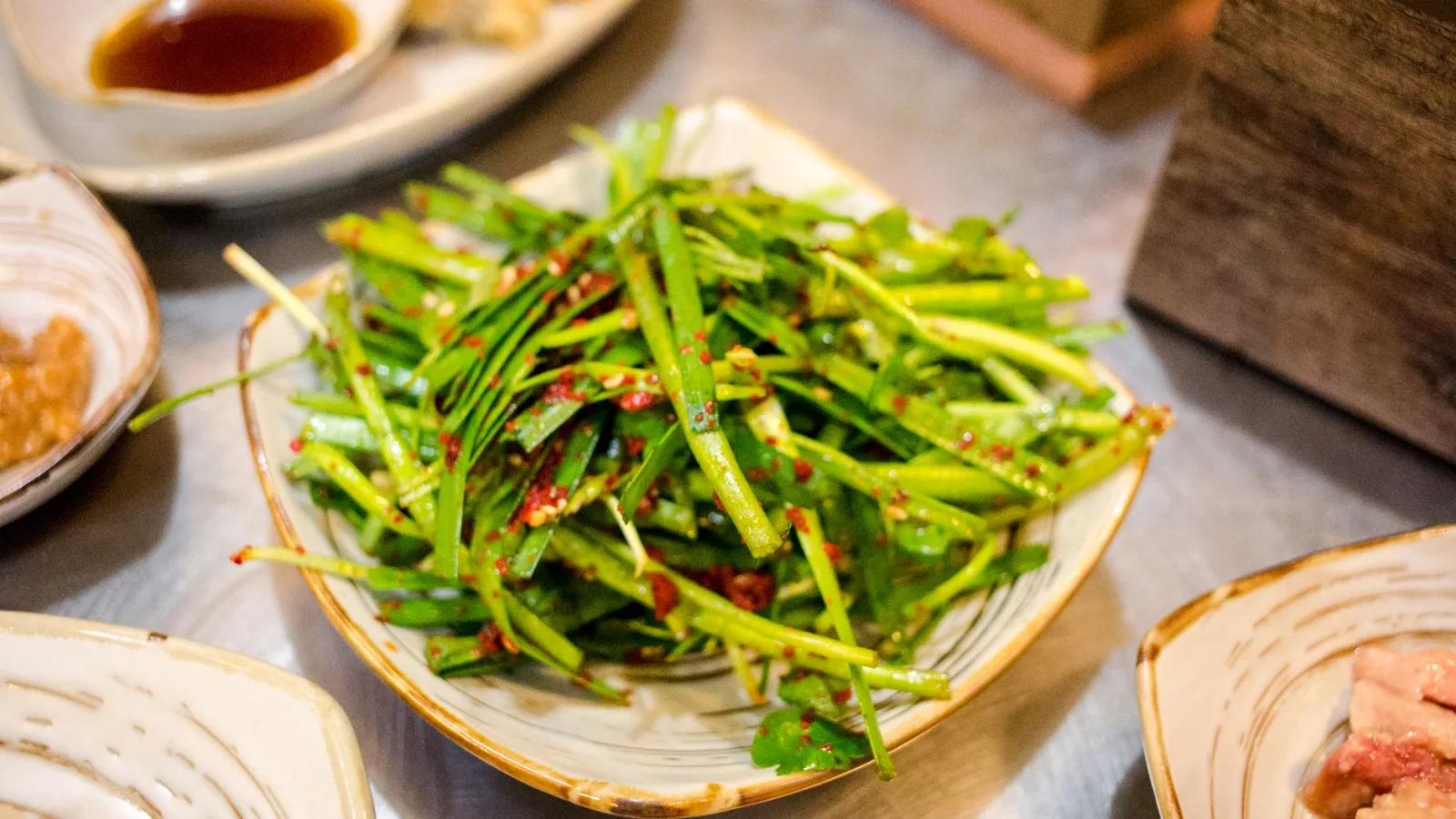
Garlic Chives, Through the Eyes of the Dongui Bogam
Garlic chives keep growing back however often you cut them, and the Dongui Bogam called them the warmest and most beneficial of all vegetables. Here's what the old text said, how it compares with modern nutrition, and how to bring them from the garden to your table.
You Side-Dress Today, It Rains Tomorrow — Where Does That Water Go?
Fertilizer spread the day before a storm doesn't stay in the garden — it runs down the furrows and out toward the nearest stream. An eleven-year plankton record from a river in southern China shows how aquatic life shifts closer to the city, and what a home gardener can do about their own runoff.
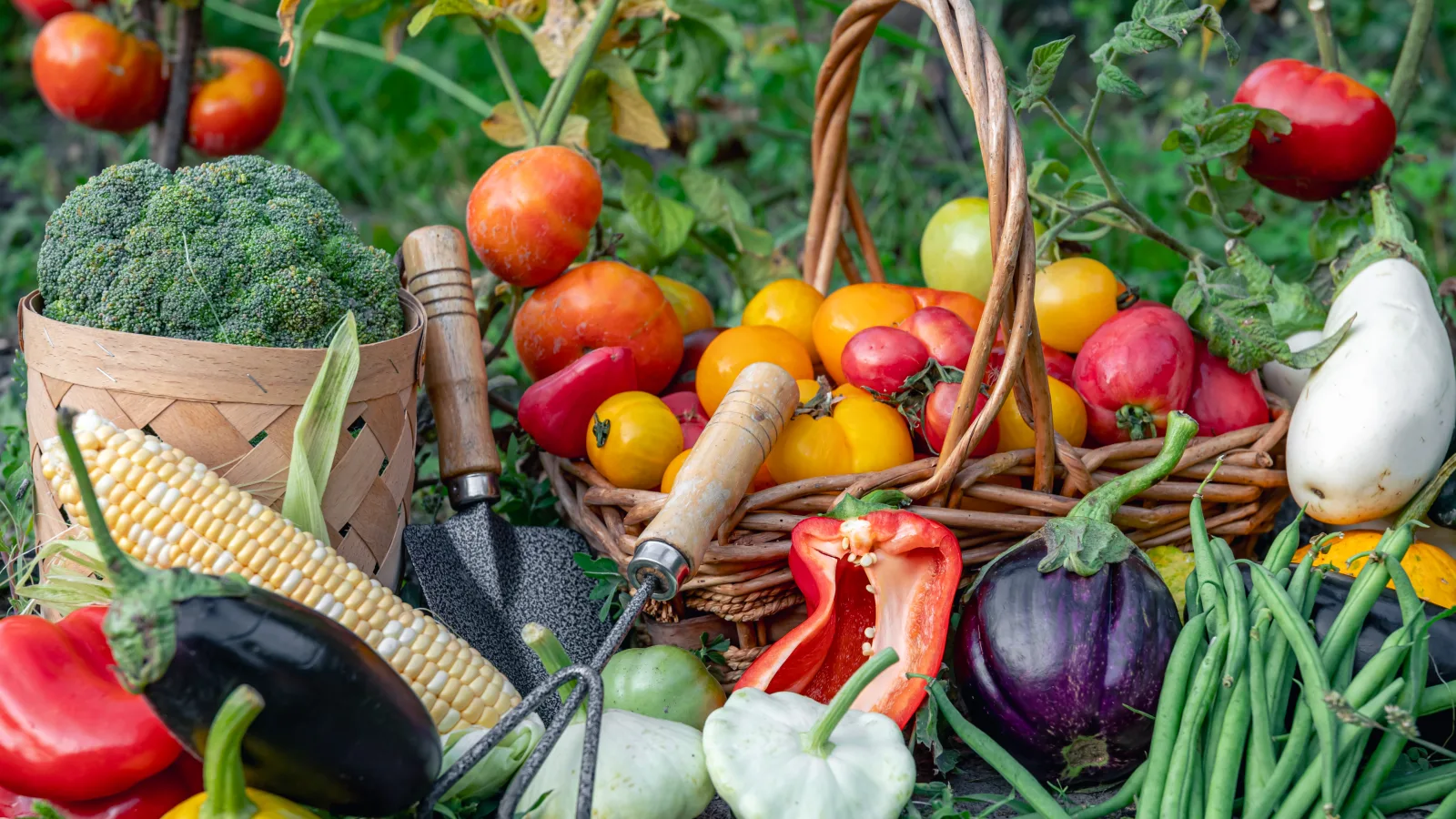
Can a Plate of Summer Vegetables Lower Your Dementia Risk?
A Swedish study that tracked 1,865 adults over 60 for up to 15 years found that a diet low in inflammation-driving foods was linked to about 30% lower dementia risk — and unlike other healthy-eating patterns, it still mattered for people whose brain biomarkers had already shifted. Most of the foods that earn points are already growing in a July garden.