Early Spring: A Scent Caught on the Hoe
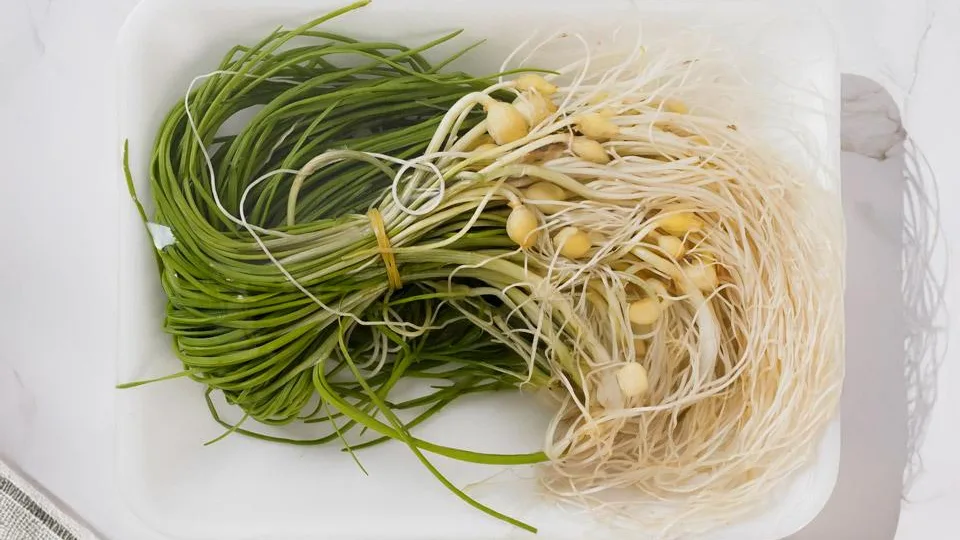
Fellow gardener, if you've ever turned over a patch of soil that sat bare all winter, you may have noticed something pulling free along with the dirt — slender green leaves attached to small, round bulbs. That first whiff catches you off guard: sharp and heady, somewhere between garlic and green onion. What you've found is Korean wild chive (달래, dalrae). Ease your garden hoe under the surface and a whole cluster of those little bulbs comes tumbling up together, and there's something quietly satisfying about it. Toss a handful with soy sauce and lay it over a bowl of freshly steamed rice, and spring arrives at your table before it's even fully settled outside. This is the kind of green that feels more at home in a kitchen garden or a grassy field than on a supermarket shelf — for the urban grower, it's practically a seasonal calendar in plant form.
How did the old medical texts regard this small, pungent green? Korean wild chive has shared our table for a very long time, and it has its place in the Dongui Bogam — the landmark Korean encyclopedia of medicine compiled in 1613. Seasoning a spring green is one thing; borrowing the perspective of people who thought carefully about what that green did for the body is another pleasure the garden quietly offers.
What the Dongui Bogam Had to Say
The Dongui Bogam classified Korean wild chive under the name so-san (小蒜), meaning "small garlic," while ordinary garlic was listed separately as dae-san (大蒜), "large garlic." Even within the same family of pungent alliums, the text distinguished them by size and purpose — a small but telling detail that suggests our ancestors treated wild chive as a friendlier, more approachable cousin of garlic. The text describes its flavor as pungent and slightly bitter, and its nature as warm. Assigning a warm nature to a pungent plant follows the same logic the text applies to green onions and garlic.
In terms of use, the Dongui Bogam saw it as a vegetable that warms the interior and supports digestion. There are also notes on its use for cold-induced stomachache and diarrhea — the idea being that when the digestive system is sluggish or uncomfortable from cold, a warm-natured food can help restore the flow. That principle — using warmth to counter cold discomfort — runs throughout Dongui Bogam's approach to food and medicine, and wild chive fits neatly into that tradition.
Varieties found growing wild in fields and along roadsides were called ya-san (野蒜), and the text considered their effects essentially the same as the cultivated kind. So if you've been digging up wild chives along the edge of your plot or at the foot of a garden bank, the old texts would have drawn no meaningful distinction between those and what you'd grow deliberately.
Compared to Today's Nutritional Science
From a modern perspective, that sharp, familiar scent comes from sulfur compounds — the same class of chemicals found in garlic and green onions, which are frequently cited in research on antimicrobial properties and circulation. In that sense, Dongui Bogam's notion of a warming vegetable and today's focus on pungent sulfur compounds aren't as far apart as they might seem. Two ways of looking at the same plant, centuries apart, arriving at fairly similar conclusions — that's worth a moment's notice.
One thing worth keeping in mind, though: human clinical evidence remains limited. Rather than treating wild chive as a remedy for any specific condition, it's probably wiser to appreciate it the way earlier generations did — as a warming, pleasantly sharp green they were glad to have on hand. The pleasure of holding Dongui Bogam's perspective alongside today's nutritional understanding is itself a reasonable reward for a spring vegetable.
From the Garden to the Table
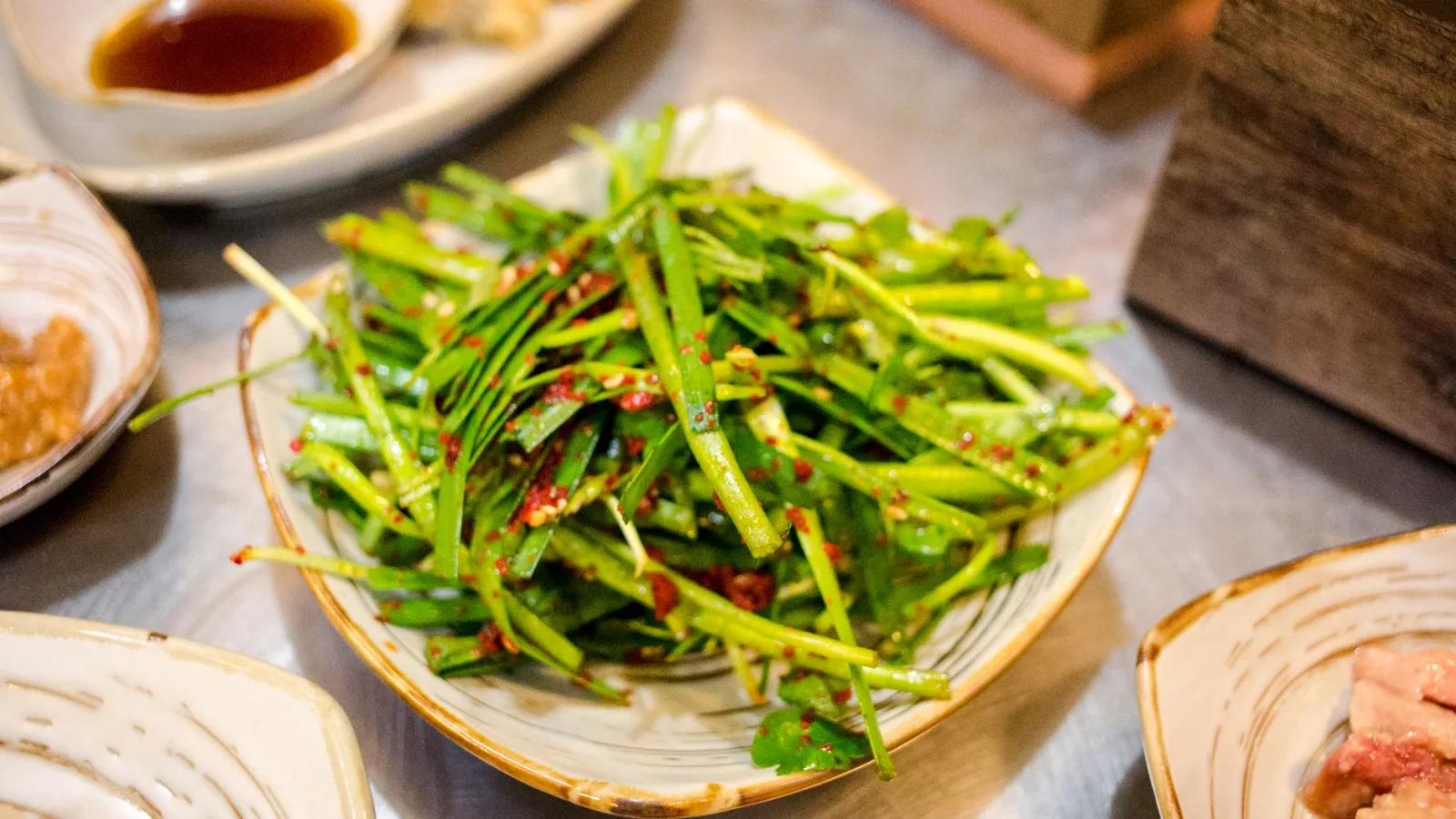
Korean wild chive asks very little of you in the kitchen. Shake the dirt off the bulbs gently, peel away the thin outer skin, and rinse under cold running water — that's really all the prep it needs. The most common preparation is a seasoned soy sauce toss (yangnyeom ganjang): chop the chives, mix them with soy sauce, gochugaru (Korean red pepper flakes), and a few drops of sesame oil, and you have a side dish that works beautifully alongside steamed rice or stirred into bibimbap (Korean mixed rice bowl).
Add a handful to doenjang jjigae (fermented soybean paste stew) just before serving and the aroma blooms right back to life. Beaten into egg and pan-fried, it becomes a simple but satisfying pancake. It's also good folded into a cold tofu salad or scattered through savory vegetable pancakes. Since Dongui Bogam considered it a warming food, pairing it with hot broth dishes makes intuitive sense — and in practice, it works.
That said, the pungency is real, so on days when your stomach feels a little off, it's worth pulling back on the amount. Cooking it down rather than eating it raw is an easy middle ground for anyone who's sensitive. And because the flavor is concentrated, even a modest handful goes a long way — one decent haul from the garden can season several meals. When the day comes this spring that your hoe turns up a tangle of those little bulbs, take a moment with them. There's more history in that handful than you might expect.