
Tangaek — Decoctions · Vegetables
白冬瓜 Winter melon (wax gourd)
 Related Crop · Winter melon (wax gourd) →
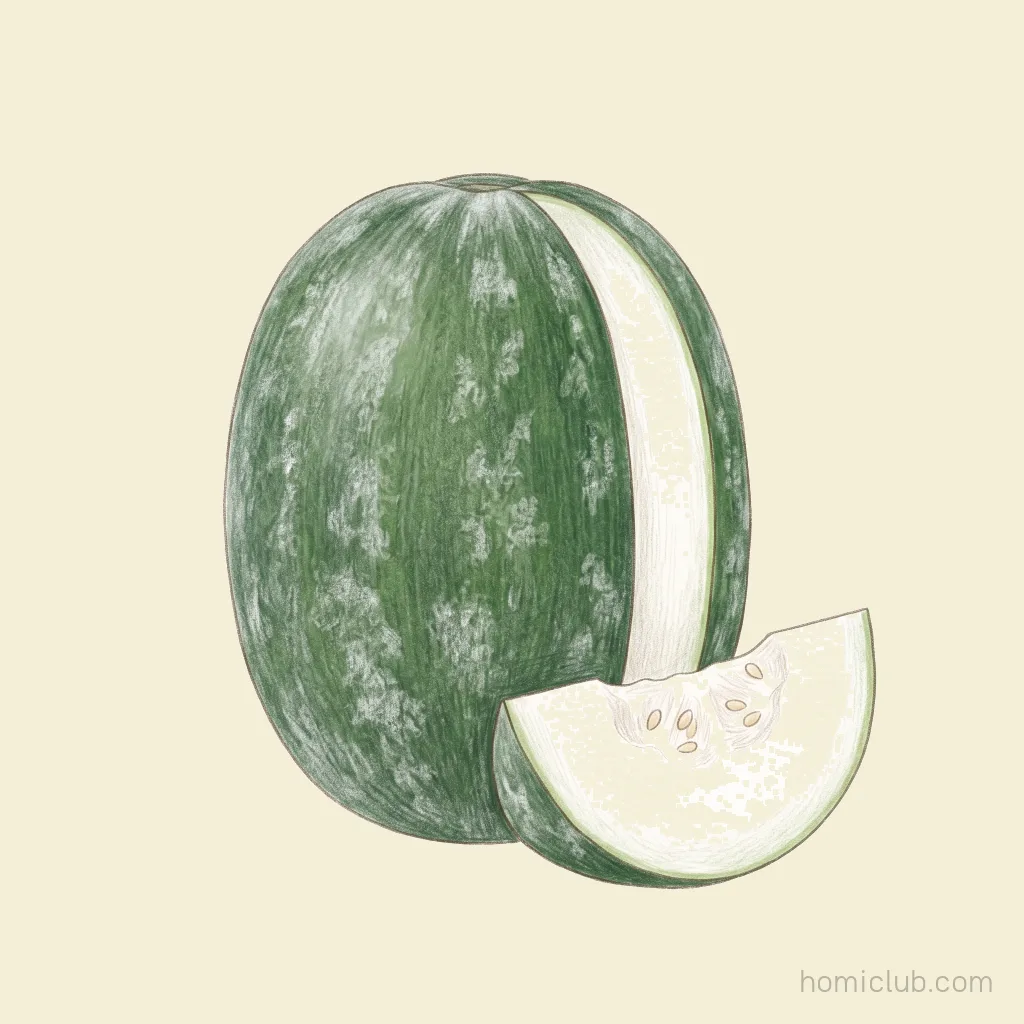
Baekdonggwa is the large fruit of a gourd vine, the same donga as in the crop guide, still dropped into soup or candied, and able to keep whole through a winter. The name means white winter melon: after a frost the rind takes on a waxy bloom that looks like a dusting of powder.
Original, read line by line 東醫寶鑑 · Tangaek — Decoctions vol. 3
-
性微寒一云冷, 味甘, 無毒.
Its nature is slightly cold, though one account calls it cold; its taste is sweet, and it is non-toxic.
HomiclubBaekdonggwa is donga (wax gourd), the large fruit of an annual cucurbit vine. Fully grown it can take both arms to carry, and it keeps whole through the winter.
-
主三消渴疾. 解積熱, 利大小腸, 壓丹石毒, 除水脹, 止心煩.
It governs the samso (三消, three wasting-thirst patterns) and thirst disorders. It resolves accumulated heat, benefits the large and small intestines, curbs the toxicity of danseok (丹石, mineral elixirs), removes water swelling, and settles vexation of the heart.
-
一名地芝. 蔓生. 結實初則靑綠色, 經霜則皮上白如塗粉, 故云白冬瓜.
It is also called jiji (地芝). It grows as a vine. The fruit is blue-green when it first sets, but after frost the skin turns white as if dusted with powder, and so it is called baekdonggwa (白冬瓜, white winter melon).
HomiclubThe powdery white bloom on the skin is a wax layer the fruit produces itself. It seals moisture in and lets the gourd keep for months, which is also the source of its English name, wax gourd.
-
熱者食之佳, 冷者食之瘦人. 《本草》
One with heat does well to eat it, while one with cold grows thin from eating it. 《Boncho (本草)》
-
久病與陰虛者, 不可食. 《丹心》
Those long ill and those with eum (陰, yin) deficiency must not eat it. 《Dansim (丹心)》
Related Crop
Winter melon (wax gourd) →
Vegetables — more entries
This is a cultural and historical record from a classical text, not a claim about any food’s effects. Nothing here is a health supplement or intended to prevent or treat disease. Consult a medical professional about health concerns. · Text: Korean Medicine Classics DB · Reading: Homiclub