
Tangaek — Decoctions · Vegetables
水芹 Water Dropwort (Minari)
 Related Crop · Water Dropwort (Minari) →
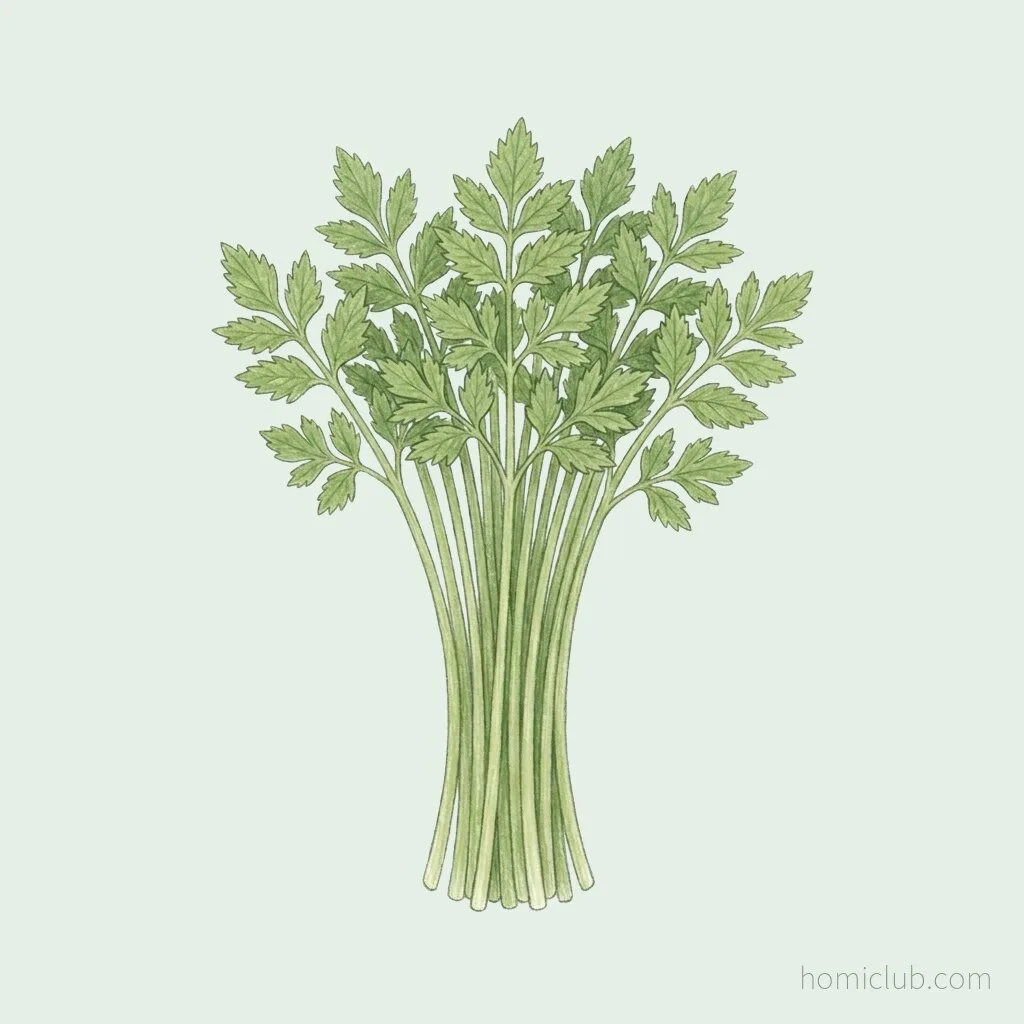
Sugeun is minari, Korean water dropwort, the same herb as in the crop guide. The text has it growing in water, with leaves like cnidium, white flowers that set no fruit, and white roots. It was pickled, boiled or eaten raw then, much as it turns up in namul and spicy stews now.
Original, read line by line 東醫寶鑑 · Tangaek — Decoctions vol. 2
-
性平一云寒, 味甘, 無毒.
Its nature is neutral, though one account calls it cold; its taste is sweet and it is non-toxic.
HomiclubSugeun is the water dropwort, a perennial in the carrot family that grows where water stands, as in paddies and ditches, and its stem is hollow. Koreans add it to spicy fish stews and serve it dressed as a salad.
-
止煩渴, 養神益精, 令人肥健.
It stops vexing thirst, nourishes the spirit, augments the jeong (精, essence), and makes a person stout and sturdy.
-
治酒後熱毒, 利大小腸. 療女子崩中帶下, 小兒暴熱.
It treats heat toxin after drinking and benefits the large and small intestines. It treats bungjung (崩中, flooding) and daeha (帶下, vaginal discharge) in women, and sudden fever in children.
-
一名水英, 生水中. 葉似芎藭, 花白色而無實, 根亦白色.
It is also called suyeong (水英) and grows in water. Its leaf resembles gunggungi (芎藭, Sichuan lovage), its flower is white and sets no fruit, and its root too is white.
HomiclubThe resemblance to Sichuan lovage comes from the finely divided leaves shared across the carrot family. Lifting water dropwort brings up the white roots and the runners that spread through the water with it.
-
可作虀葅及煮食, 幷得生啖, 亦佳. 亦治五種黃疸. 《本草》
It can be made into pickle or boiled and eaten, and it may also be eaten raw, which is fine as well. It also treats the five kinds of jaundice. 《Boncho (本草)》
Related Crop
Water Dropwort (Minari) →
Reading on Water Dropwort (Minari)
Vegetables — more entries
This is a cultural and historical record from a classical text, not a claim about any food’s effects. Nothing here is a health supplement or intended to prevent or treat disease. Consult a medical professional about health concerns. · Text: Korean Medicine Classics DB · Reading: Homiclub