
Tangaek — Decoctions · Vegetables
馬齒莧 Purslane
 Related Crop · Purslane →
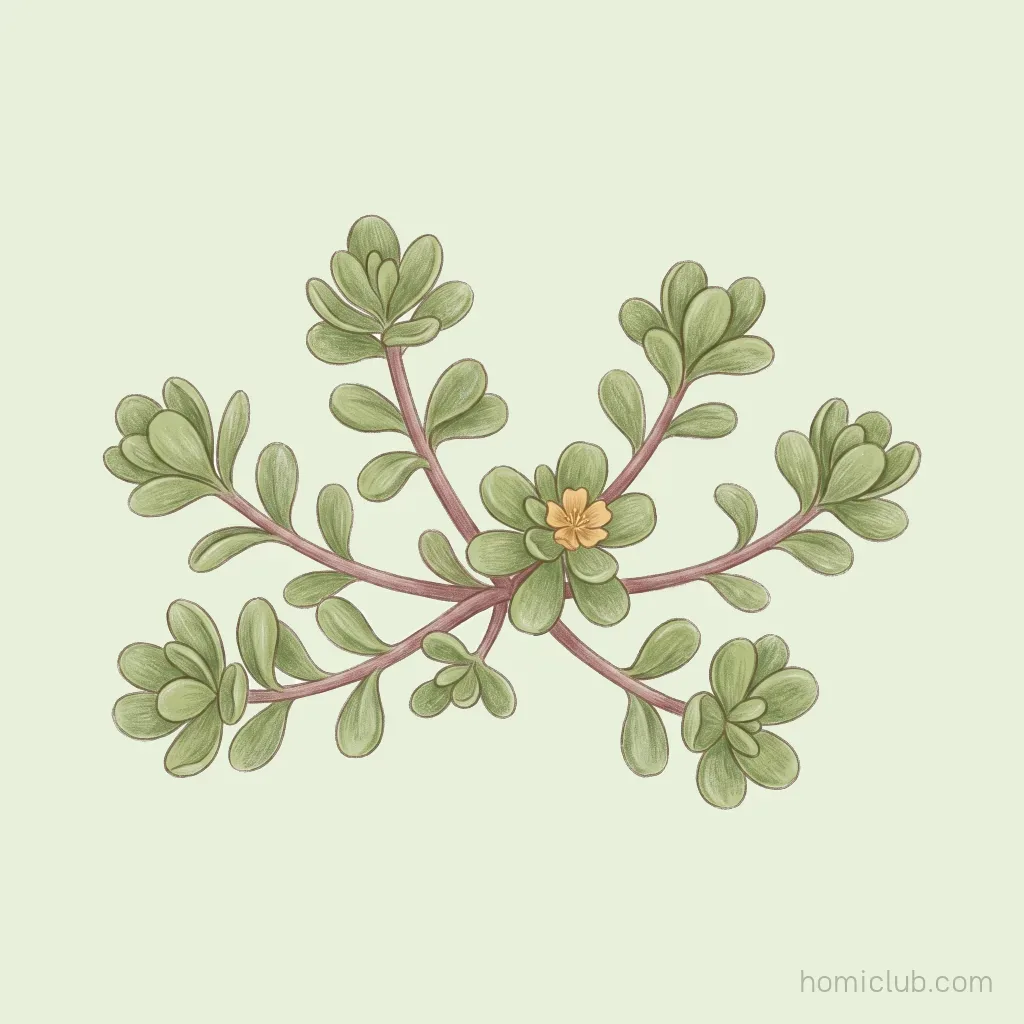
Machihyeon is purslane, the same plant as the purslane in the crop guide — a fleshy wayside green that sprawls along field edges. Its name comes from leaves shaped like a horse's teeth, and it was also called ohaengcho because green leaf, red stem, yellow flower, white root and black seed cover all five colours.
Original, read line by line 東醫寶鑑 · Tangaek — Decoctions vol. 2
-
性寒, 味酸, 無毒.
Its nature is cold, its taste sour, and it is non-toxic.
HomiclubMachihyeon is soebireum (purslane). It is a succulent annual that mats over field edges, roadsides, and even cracks in pavement, recognized by its red stems and thick spoon-shaped leaves.
-
主諸腫惡瘡. 利大小便, 破癥結. 療金瘡內漏, 止渴, 殺諸蟲.
It governs all swellings and akchang (惡瘡, malignant sores). It promotes stool and urine and breaks up jinggyeol (癥結, hardened masses). It treats internal bleeding from metal wounds, quenches thirst, and kills various worms.
-
處處有之. 有二種, 葉大者不堪用, 葉小者節葉間有水銀者入藥.
It is found everywhere. There are two kinds: the large-leaved one is not fit for use, while the small-leaved one, which holds something like quicksilver between its nodes and leaves, is used in medicine.
-
性至難燥, 當以槐木槌碎之, 向日東作架, 曬三兩日卽乾. 入藥去莖節, 只取葉用.
It is extremely hard to dry, so it should be pounded with a pagoda-tree mallet, laid on a rack facing east toward the sun, and sunned two or three days until dry. For medicinal use, discard the stem and nodes and take only the leaves.
HomiclubIts resistance to drying follows from purslane being a succulent that stores water in leaf and stem. Pulled plants tossed on the soil can revive without roots, which is why it counts among the harder weeds to clear.
-
雖名莧, 與人莧都不相似, 又名五行草, 以其葉靑莖赤花黃根白子黑也. 《本草》
Though it bears the name hyeon (莧), it is nothing like inhyeon (人莧); it is also called ohaengcho (五行草, five-phase herb) because its leaf is green, stem red, flower yellow, root white, and seed black. 《Boncho (本草)》
-
葉形如馬齒, 故以名之. 《入門》
The shape of its leaf is like a horse's tooth, and so it was named. 《Immun (入門)》
Related Crop
Purslane →
Vegetables — more entries
This is a cultural and historical record from a classical text, not a claim about any food’s effects. Nothing here is a health supplement or intended to prevent or treat disease. Consult a medical professional about health concerns. · Text: Korean Medicine Classics DB · Reading: Homiclub