
Tangaek — Decoctions · Herbs
酸漿 Chinese Lantern
 Related Crop · Chinese Lantern →
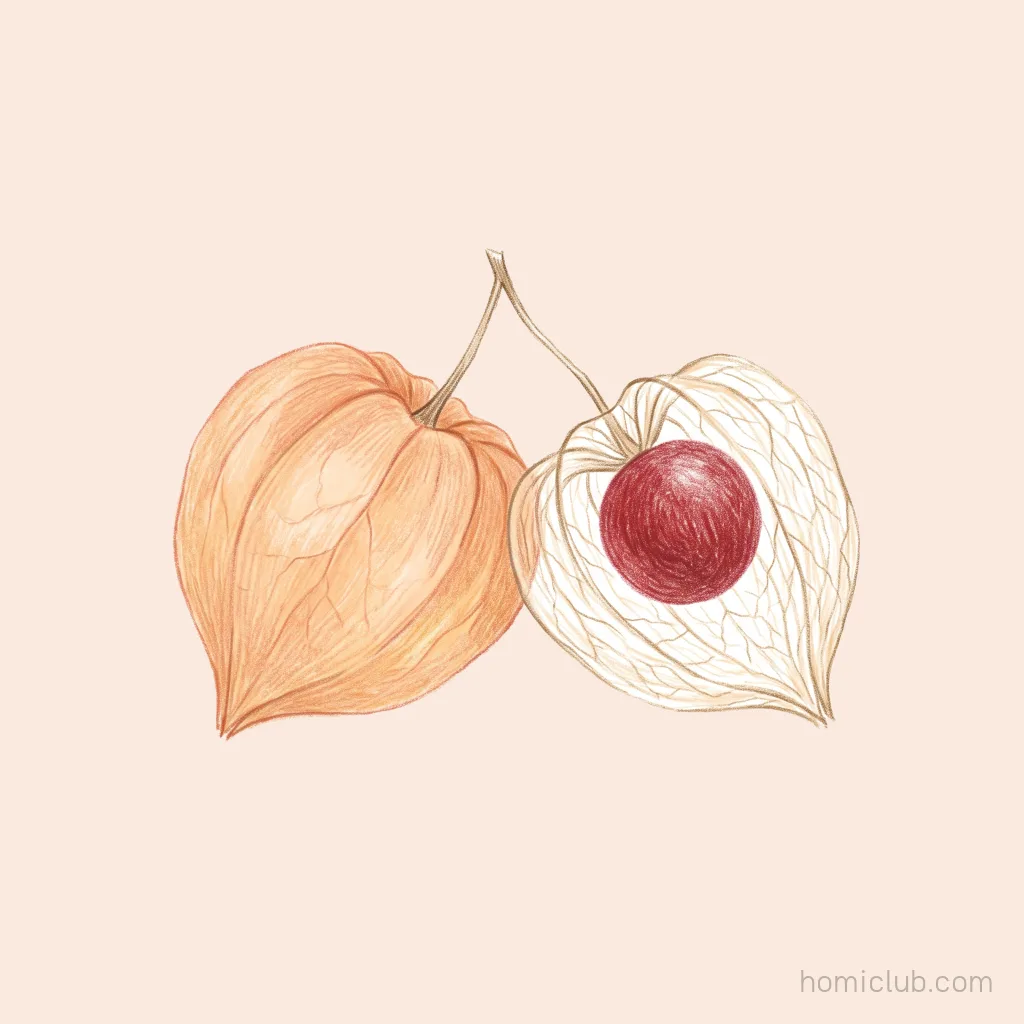
Sanjang is the old name for the Chinese lantern plant, the same as the field guide's kkwari. A red berry sits inside a papery calyx swollen like a lantern; today it is grown in gardens and the dried husks go into arrangements. The berry's sour taste, likened to soured gruel, gave it its name.
Original, read line by line 東醫寶鑑 · Tangaek — Decoctions vol. 3
-
性平寒, 味酸 無毒.
Its nature is neutral to cold, its taste sour, and it has no toxicity — a gentle herb that cools heat without taxing the body.
-
主熱煩滿.
It treats the stifling, oppressive sensation that comes from internal heat, calming a chest that feels feverish and full.
-
利水道, 治産難, 療喉痺.
It eases urination, relieves difficult childbirth, and cures throat blockage — a single herb reaching across the urinary, obstetric, and throat realms.
-
處處有之.
It grows everywhere — a familiar plant you meet along field edges and around the home.
-
實作房如囊, 囊中有子如梅李大, 赤黃色, 味如酸漿, 故以爲名.
The fruit sits inside a pouch-like husk, holding a berry the size of a plum or apricot, ripening to red-orange, with a taste like sour rice-water — hence the name suanjiang, the sour broth plant, known in Korea as kkwari.
-
根如菹芹, 白色, 味絶苦, 治黃病. 《本草》
The root resembles pickling celery, white in color and intensely bitter, used to treat jaundice according to the Bencao — reflecting the old reading that bitter roots drain heat from a stagnant liver.
Related Crop
Chinese Lantern →
Reading on Chinese Lantern
Herbs — more entries
This is a cultural and historical record from a classical text, not a claim about any food’s effects. Nothing here is a health supplement or intended to prevent or treat disease. Consult a medical professional about health concerns. · Text: Korean Medicine Classics DB · Reading: Homiclub