
Tangaek — Decoctions · Vegetables
荏子 Perilla (Deulkkae)
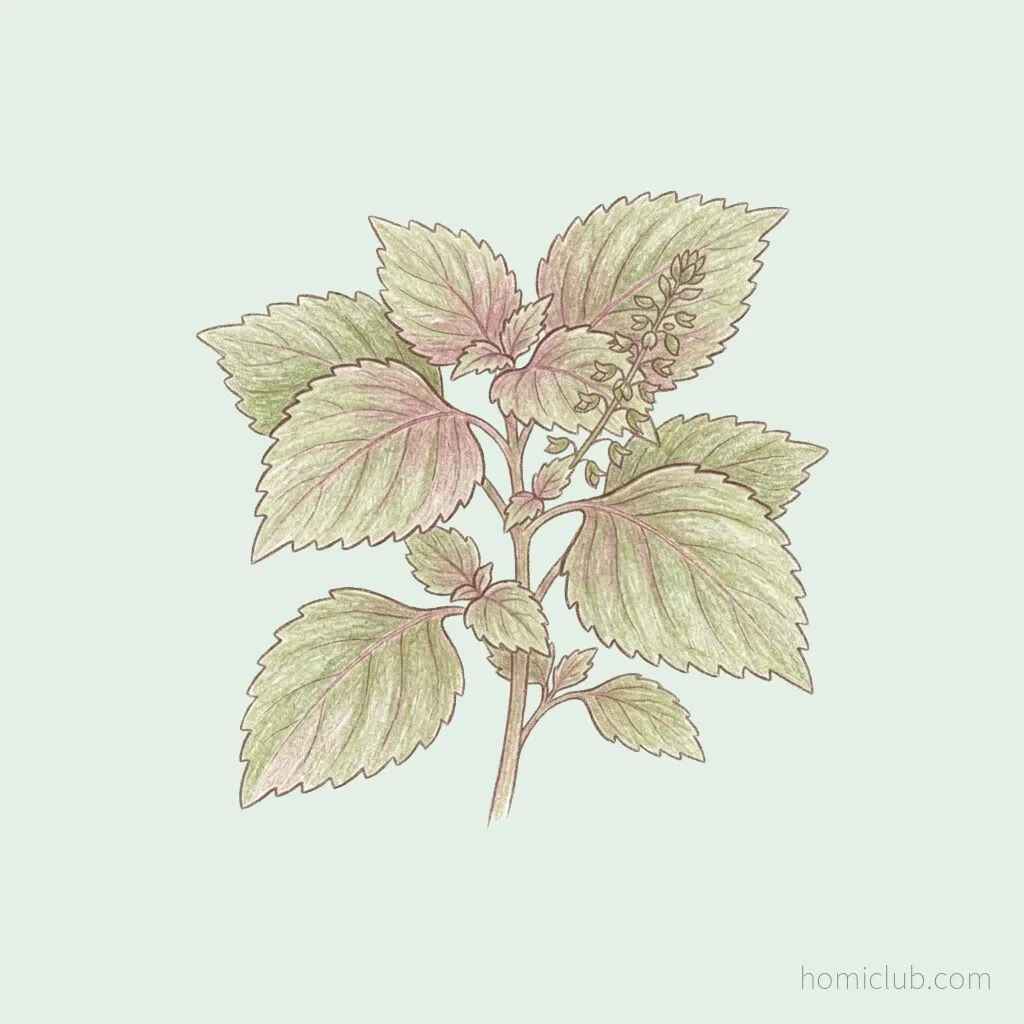 Related Crop · Perilla (Deulkkae) →
Imja is the perilla seed, the same plant as the deulkkae in the crop guide. It was ground and cooked into rice porridge, or pressed for the deep-flavoured oil Koreans still cook with. The Donguibogam notes the same oil, boiled down in the sun, went into oiled cloth and lacquer work.
Original, read line by line 東醫寶鑑 · Tangaek — Decoctions vol. 2
-
性溫, 味辛, 無毒.
Its nature is warm, its taste is pungent, and it is non-toxic.
HomiclubImja is the seed of deulkkae, Korean perilla, an annual of the mint family whose leaves are eaten as kkaennip and whose seed is pressed for perilla oil. Despite the similar name it belongs to a different group from sesame.
-
下氣, 止嗽, 止渴, 潤肺, 補中, 塡精髓.
It sends qi downward, stops cough, quenches thirst, moistens the lung, supplements the center, and fills the essence-marrow (精髓).
-
人多種之, 取子硏之, 雜米作糜食之. 甚肥美, 下氣, 補益人.
People plant it widely, gather the seed, grind it, and mix it with rice to make gruel. It is very rich and tasty, sends qi downward, and supplements and benefits a person.
-
笮取油, 日煎之, 卽今油帛及和漆所用者.
The oil is pressed out and heated in the sun; this is what is used for oiled cloth and for mixing with lacquer.
HomiclubPerilla oil hardens as it dries, so cloth treated with it sheds water, and mixed into lacquer it lets the coat spread thin. It is easy to think of it only as a cooking oil, but the old record preserves its use as a material as well.
-
荏子欲熟, 採其角食之, 甚香美. 속소리《本草》
When the perilla is about to ripen, its pods are picked and eaten, and they are very fragrant and tasty. Soksori 《Boncho (本草)》
Homiclub'Soksori' is an old Korean word for the still-unripe perilla pod. It is one of the places where a Korean name was slipped into the Chinese text.
Related Crop
Perilla (Deulkkae) →
Reading on Perilla (Deulkkae)
Vegetables — more entries
This is a cultural and historical record from a classical text, not a claim about any food’s effects. Nothing here is a health supplement or intended to prevent or treat disease. Consult a medical professional about health concerns. · Text: Korean Medicine Classics DB · Reading: Homiclub