
Tangaek — Decoctions · Vegetables
薺苨 Gyerogi (Korean lady bell)
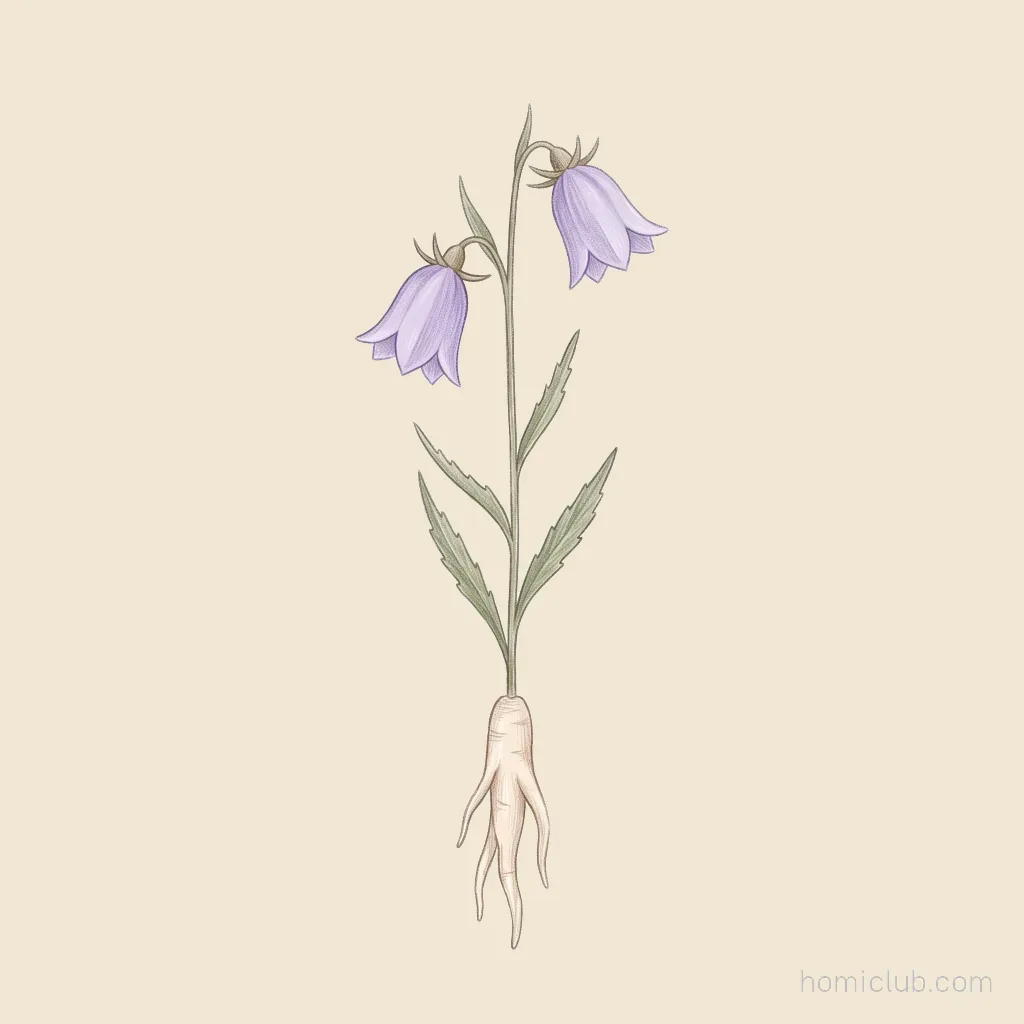 Related Crop · Gyerogi (Korean lady bell) →
Jeonye is the root of a wild bellflower relative that grows in the mountains, the same gyerogi in the crop guide. It resembles ginseng but with slightly different leaves, and the root looks like balloon flower except that it has no woody core. Shoots were boiled as greens and roots dried into strips the text calls delicious.
Original, read line by line 東醫寶鑑 · Tangaek — Decoctions vol. 2
-
性寒, 味甘, 無毒.
Its nature is cold, its taste sweet, and it is not toxic.
-
解百藥毒, 殺蠱毒.
It resolves the toxins of all the medicines and kills godok (蠱毒, poisoning ascribed to venomous creatures).
-
治蛇蟲咬, 罯毒箭傷.
It treats snake and insect bites, and is laid over wounds from poisoned arrows as a poultice.
-
似人參而葉少異.
It resembles insam (人參, ginseng), but the leaves differ slightly.
-
根似桔梗, 但無心爲異.
The root resembles that of the balloon flower, differing only in that it has no core.
HomiclubIt belongs to the same bellflower family as doraji. The passage takes as its distinguishing mark the absence of the hard central core that a split doraji root shows.
-
二月八月採根, 暴乾.
In the second and eighth months the root is dug and dried in the sun.
-
處處有之, 生山中.
It is found everywhere, growing in the mountains.
-
今人採收以爲果菜.
People today gather it and treat it as fruit and vegetable.
-
取苗煮食, 採根作脯, 味甚美. 《本草》
The sprouts are picked and boiled to eat, and the roots are dug and made into dried slices; the taste is very fine. 《Boncho》
HomiclubThe young shoots are picked as a spring green and the roots are dried for keeping. Depending on the region it goes by names such as gyerogi or mosidae.
Related Crop
Gyerogi (Korean lady bell) →
Vegetables — more entries
This is a cultural and historical record from a classical text, not a claim about any food’s effects. Nothing here is a health supplement or intended to prevent or treat disease. Consult a medical professional about health concerns. · Text: Korean Medicine Classics DB · Reading: Homiclub