
Tangaek — Decoctions · Vegetables
木耳 Wood ear mushroom
 Related Crop · Wood ear mushroom →
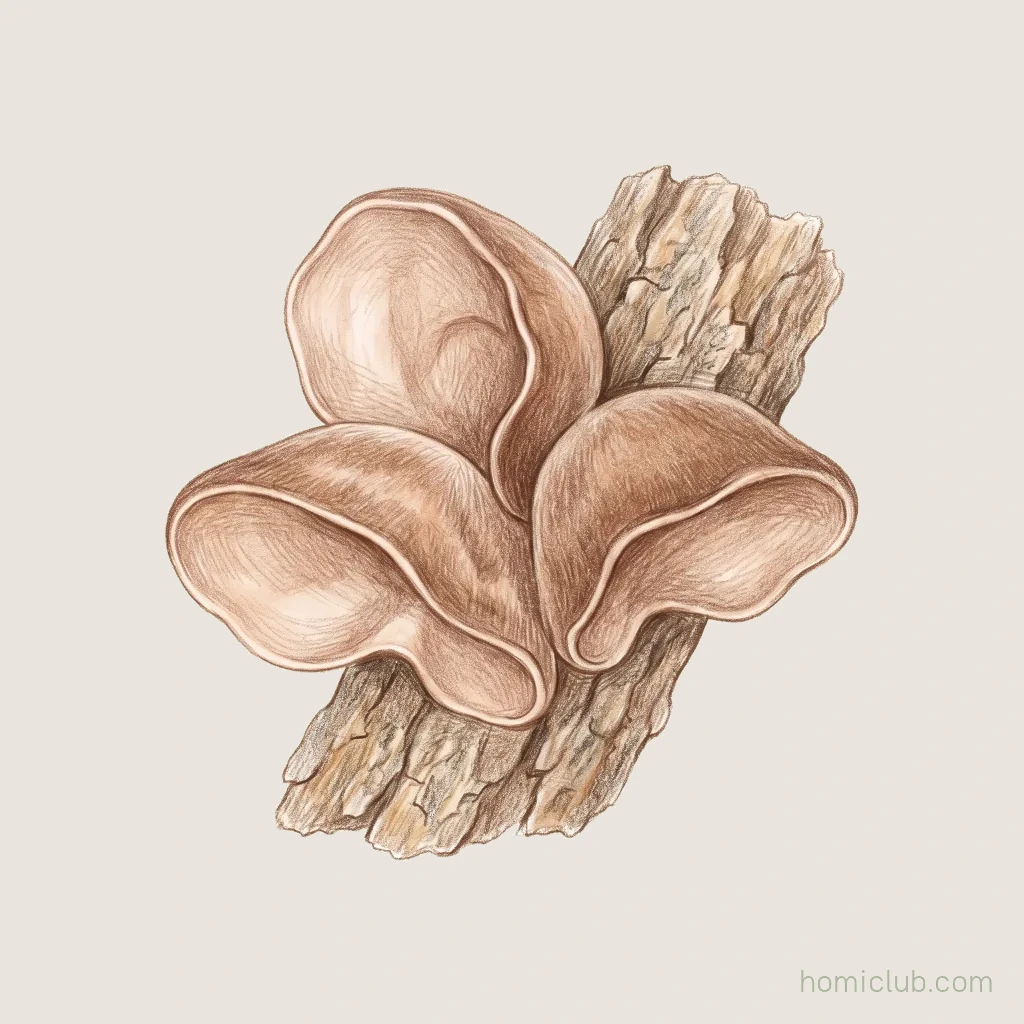
Mogi is the ear-shaped fungus that sprouts on wood; the old Korean gloss reads simply 'the mushroom that grew on a tree.' It is the same wood ear as in the crop guide, now farmed on inoculated oak logs and folded into japchae and tangsuyuk. The text grouped the fungi of elm, willow, mulberry, pagoda tree and paper mulberry as the five wood ears.
Original, read line by line 東醫寶鑑 · Tangaek — Decoctions vol. 2
-
性寒一云平, 味甘, 無毒.
Its nature is cold, though one account calls it neutral; its taste is sweet, and it is non-toxic.
HomiclubMogi is the ear-shaped fungus that sprouts on tree stumps. Dried it is black and hard, but soaked in water it opens out soft, becoming the black mushroom that goes into japchae and sweet-and-sour pork.
-
利五藏, 宣腸胃壅毒氣, 凉血, 止腸澼下血, 益氣輕身. 《本草》
It benefits the five viscera (五藏), frees toxic qi blocked in the intestines and stomach, cools the blood, stops bleeding from jangbyeok (腸澼, dysenteric disorder), boosts qi, and lightens the body. 《Boncho (本草)》
-
地生名菌, 木生名檽音軟, 又名蕈音甚.
What grows from the ground is called gyun (菌); what grows on wood is called yeon (檽, pronounced as 軟), and also sim (蕈, pronounced as 甚).
-
有天花蕈ㆍ蘑菰蕈ㆍ香蕈ㆍ肉蕈, 皆因濕氣熏蒸而成. 生山中僻處, 多毒, 殺人. 《日用》
There are cheonhwasim (天花蕈), magosim (蘑菰蕈), hyangsim (香蕈), and yuksim (肉蕈), all formed by damp qi steaming upward. Those growing in remote places deep in the mountains are often poisonous and kill people. 《Ilyong (日用)》
-
蕈性平一云微溫, 味醎甘, 有小毒. 主心痛, 溫中, 去諸蟲.
Sim (蕈) is neutral in nature, though one account calls it slightly warm; its taste is salty and sweet, and it is slightly toxic. It governs heart pain (心痛), warms the center, and removes various worms.
-
今世所通用者, 此物多有毒, 宜切以薑及投飯粒試之. 如黑則有毒, 否則無害. 《日用》
It is in general use in the present age, but this thing is often poisonous, so it should be tested by slicing ginger into it or dropping in grains of cooked rice. If they turn black there is poison; if not, it is harmless. 《Ilyong (日用)》
HomiclubThis test with ginger or rice grains is not held to work. Poisonous mushrooms cannot be sorted out by color or by the juice they turn, so the only rule is to leave alone any mushroom that cannot be identified.
-
有木生者, 有地生者, 皆濕熱相感而成, 多食發濕熱. 春初無毒, 夏秋有毒, 爲蛇蟲過也. 《入門》
Some grow on wood and some from the ground, all formed where dampness and heat meet, so eating much of them stirs damp-heat (濕熱). In early spring they are free of poison, while in summer and autumn they are poisonous, because snakes and insects have passed over them. 《Immun (入門)》
-
楡ㆍ柳ㆍ桑ㆍ槐ㆍ楮, 此爲五木茸.
Elm, willow, mulberry, pagoda tree, and paper mulberry — these are the omogyong (五木茸, five tree fungi).
-
煮漿粥, 安木上, 以草覆之, 卽生茸, 軟者採以作葅, 幷堪啖. 《本草》
Boil a thin gruel, set it on the wood, and cover it with grass, and fungi soon appear; the tender ones are gathered and made into jeo (葅, salted pickle), and they are all fit to eat. 《Boncho (本草)》
HomiclubPouring gruel over wood and covering it with grass to raise fungi is one of the earliest cultivation methods recorded in Korea. Today the spawn is inoculated into oak logs or sawdust substrate instead.
Related Crop
Wood ear mushroom →
Vegetables — more entries
This is a cultural and historical record from a classical text, not a claim about any food’s effects. Nothing here is a health supplement or intended to prevent or treat disease. Consult a medical professional about health concerns. · Text: Korean Medicine Classics DB · Reading: Homiclub