
Tangaek — Decoctions · Vegetables
龍葵 Black Nightshade
 Related Crop · Black Nightshade →
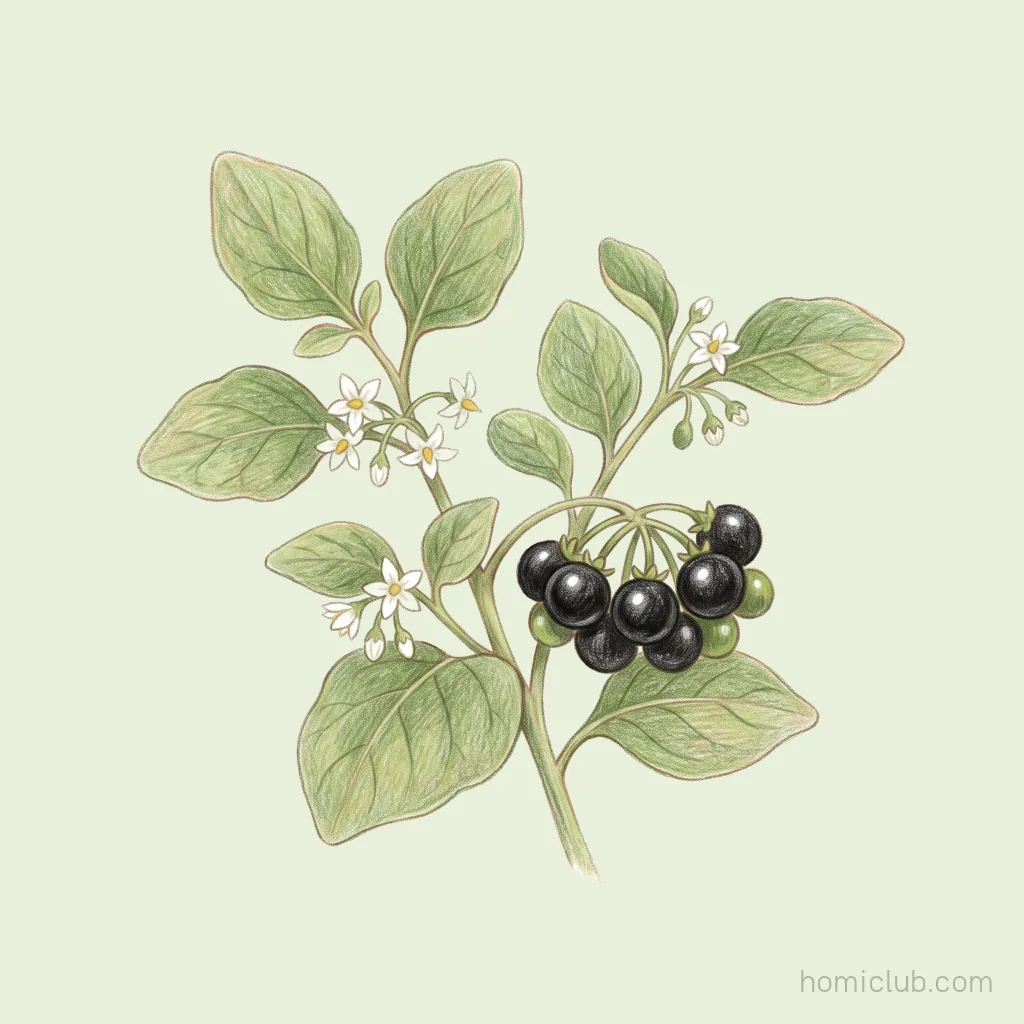
Yonggyu is the plant Koreans now call kkamajung, black nightshade, and the Donguibogam gives its older name as 'gamajoi.' It has rounded leaves, white flowers, and berries that turn black as they ripen. The text says it is worth boiling but should not be eaten raw.
Original, read line by line 東醫寶鑑 · Tangaek — Decoctions vol. 2
-
性寒, 味苦, 無毒.
Its nature is cold, its taste is bitter, and it is non-toxic.
HomiclubYonggyu is kkamajung, black nightshade, an annual of the nightshade family. It is common on field edges and roadsides, and in summer bears a few white flowers that nod downward.
-
解勞, 少睡, 去熱腫.
It relieves fatigue, lessens sleep, and removes hot swellings.
-
處處有之. 葉圓花白. 子若牛李子, 生靑熟黑.
It is found everywhere. Its leaves are round and its flowers white. Its fruit is like that of urija (牛李子, buckthorn), green when unripe and black when ripe.
HomiclubThe ripened black berries are smaller than a bean and glossy. Green unripe berries were traditionally left alone, and only the fully blackened ones were stripped off.
-
但堪煮食, 不宜生啖. 《本草》
It is fit only to be boiled and eaten; it is not suited to being eaten raw. 《Boncho (本草)》
Related Crop
Black Nightshade →
Reading on Black Nightshade
Vegetables — more entries
This is a cultural and historical record from a classical text, not a claim about any food’s effects. Nothing here is a health supplement or intended to prevent or treat disease. Consult a medical professional about health concerns. · Text: Korean Medicine Classics DB · Reading: Homiclub