
Tangaek — Decoctions · Vegetables
竹笋 Bamboo Shoot
 Related Crop · Bamboo Shoot →
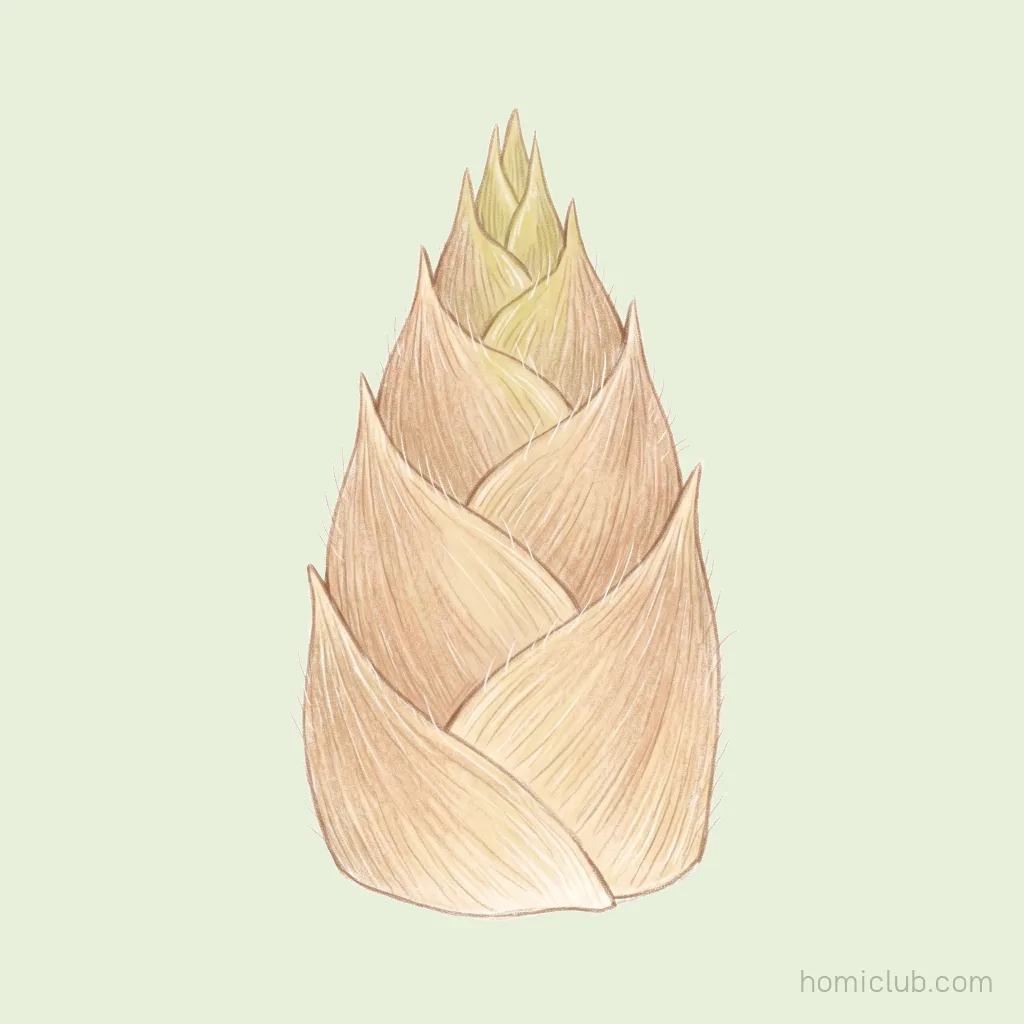
Juksun is the young shoot a bamboo pushes up in spring, the same shoot in the crop guide. It comes from the bamboo groves of the south and is steamed or boiled. The old text notes the many varieties and their crisp taste, then adds that the shoot is cold by nature, so one should eat only a little.
Original, read line by line 東醫寶鑑 · Tangaek — Decoctions vol. 2
-
性寒, 味甘, 無毒.
Its nature is cold, its taste sweet, and it is not toxic.
-
止消渴, 利水道, 除煩熱, 益氣.
It stops sogal (消渴, wasting thirst), frees the water passages, clears beonyeol (煩熱, vexing heat), and boosts qi.
-
生南方竹林中, 發冷動氣, 不可多食. 《本草》
It comes up in the bamboo groves of the south. It raises cold and stirs qi, so it must not be eaten in quantity. 《Boncho》
-
消痰利水, 爽胃氣, 取蒸煮食之. 《入門》
It disperses phlegm, frees water, and refreshes stomach qi; it is taken steamed and boiled. 《Ipmun》
HomiclubRaw bamboo shoots are strongly acrid, so they are boiled in rice-washing water and steeped before being cooked.
-
笋類甚多, 滋味甚爽, 人喜食之.
There are a great many kinds of shoot, and the flavour is very refreshing, so people are fond of eating them.
HomiclubA bamboo shoot is the young sprout pushed up by the plant's underground rhizome. In Korea moso bamboo shoots come up in April and giant timber bamboo shoots in May and June.
-
然性冷難化, 不益脾胃, 宜少食之. 《食物》
Yet their nature is cold and hard to digest, and they do not benefit the spleen and stomach, so it is fitting to eat only a little. 《Sikmul》
Related Crop
Bamboo Shoot →
Vegetables — more entries
This is a cultural and historical record from a classical text, not a claim about any food’s effects. Nothing here is a health supplement or intended to prevent or treat disease. Consult a medical professional about health concerns. · Text: Korean Medicine Classics DB · Reading: Homiclub