
Tangaek — Decoctions · Vegetables
莧實 Amaranth seed
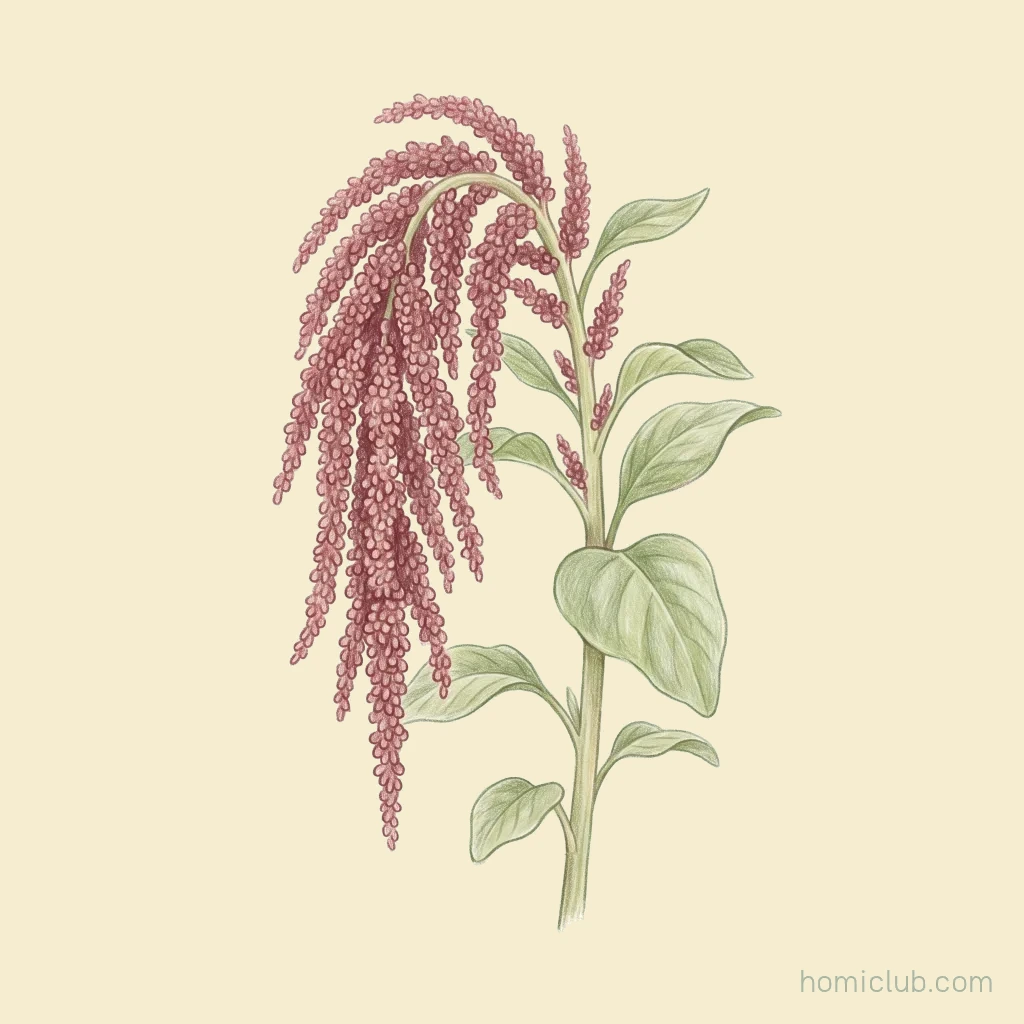 Related Crop · Amaranth seed →
Hyeonsil is the seed of amaranth, the same bireumssi shown in the crop guide. The seeds ripen only after the first frost, small and black, gathered in the ninth or tenth month. The grain sold today as amaranth comes from the same genus, and the leaves are still dressed as bireum-namul.
Original, read line by line 東醫寶鑑 · Tangaek — Decoctions vol. 2
-
性寒, 味甘, 無毒.
Its nature is cold, its taste sweet, and it is non-toxic.
HomiclubHyeonsil is the seed of bireum (amaranth). Amaranth is a common annual of field edges and roadsides; the grain sold today as amaranth belongs to the same genus, and its leaves are dressed as a namul side dish.
-
主靑盲白瞖, 明目. 除邪, 利大小便, 殺蛔蟲.
It governs cheongmaeng (靑盲, blue blindness) and baegye (白瞖, white corneal opacity) and brightens the eyes. It removes sa (邪, pathogenic qi), promotes both stool and urine, and kills roundworms.
-
主肝風客熱, 瞖目黑花.
It governs ganpung (肝風, liver wind) and gaekyeol (客熱, visiting heat), and eyes clouded by opacity with dark floaters.
-
處處有之. 其子霜後方熟, 實細而黑, 九十月採之. 《本草》
It is found everywhere. Its seed ripens only after the frost; the grains are fine and black, and they are gathered in the ninth and tenth months. 《Boncho (本草)》
HomiclubThe note that the seed ripens only after frost matches amaranth's late-setting habit. A single plant can shed tens of thousands of seeds, which is why it also ranks among the more troublesome field weeds.
Related Crop
Amaranth seed →
Vegetables — more entries
This is a cultural and historical record from a classical text, not a claim about any food’s effects. Nothing here is a health supplement or intended to prevent or treat disease. Consult a medical professional about health concerns. · Text: Korean Medicine Classics DB · Reading: Homiclub