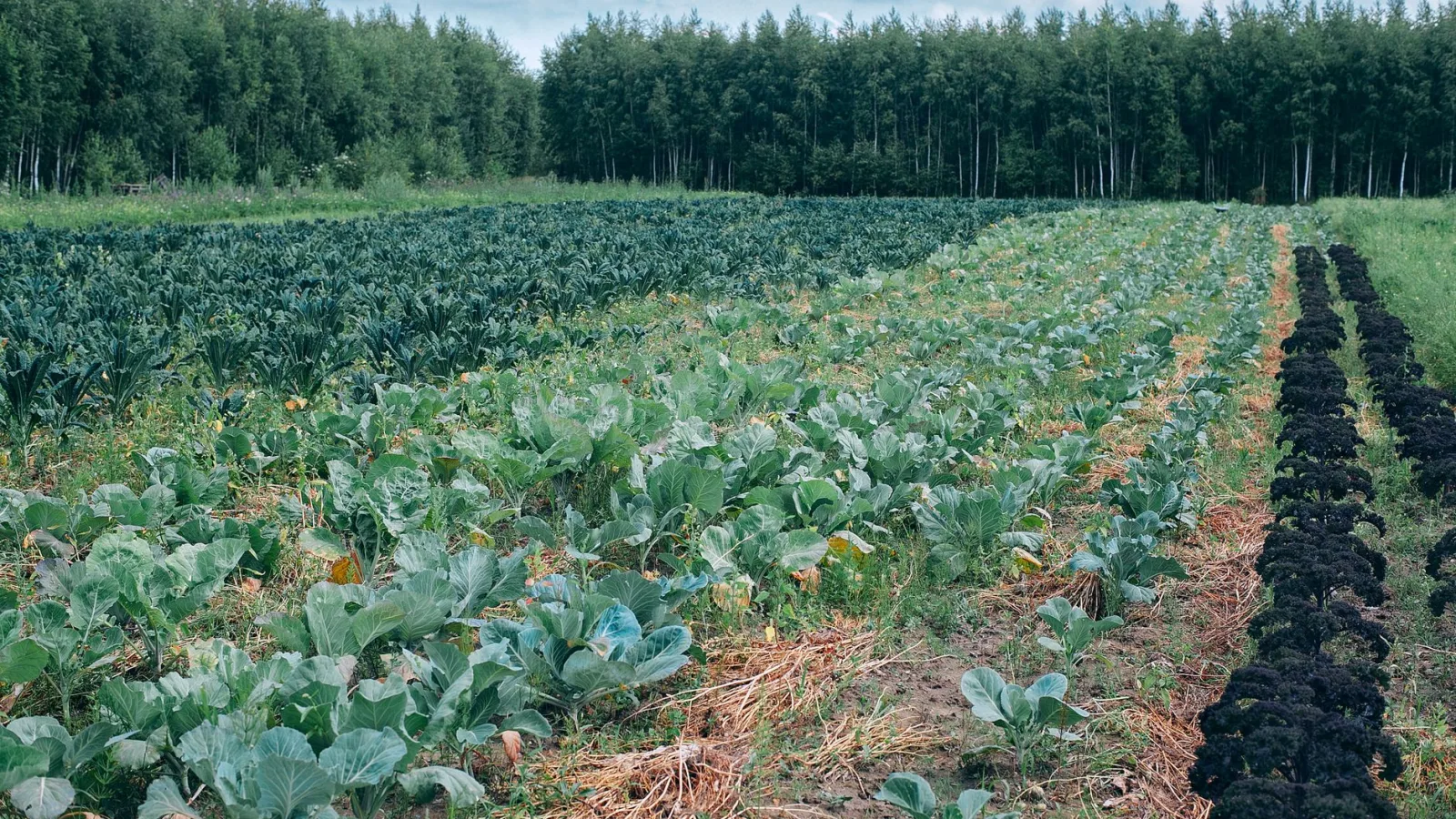
In late September in the Northern Hemisphere, fall napa cabbage is adding leaves one by one and starting to fill out its heads. Cabbage likes cool weather, so it goes in the ground in late summer and comes out in late fall. If you spot a plant around now whose newest leaves alone have faded to a pale yellow-green, it is worth checking for a sulfur shortage. Nitrogen deficiency yellows the lower leaves first, but when sulfur runs short, the new growth is where the color drains away.
How Does Cabbage Use the Sulfur in Soil?
Plants take up sulfur through their roots mostly as sulfate. But much of the sulfur in soil is locked inside organic matter such as fallen leaves and compost, or sits in forms that have not yet become sulfate, so roots cannot use it right away. The job of converting that sulfur into sulfate falls largely to soil bacteria.
Brassicas like napa cabbage, radish, and broccoli use more sulfur than most other vegetables. Sulfur is a building block of protein, and it is also the raw material for glucosinolates, the compounds behind the slightly bitter, peppery bite these vegetables are known for.
What a Bacterium From Rapeseed Roots Did
A research team sequenced the genome, meaning the complete set of genetic information, of a bacterium called Burkholderia gladioli YNK-FB0053, isolated from the soil around rapeseed roots. In it they found several genes that appear to be involved in converting sulfur to sulfate and in using the sulfur held in organic matter. They also turned up genes that could plausibly convert nitrogen and phosphorus into forms plants can use more easily, gather iron, and produce indole-3-acetic acid (IAA), a plant growth hormone.
A list of genes alone cannot tell you whether a bacterium actually does any of that. So the team grew the bacterium and watched. Within a day it had formed a wrinkled, sticky film known as a biofilm, and three days after being introduced to roots, its numbers had climbed to roughly 3.8 billion cells per gram of root. In other words, it can cling to roots and stay there for the long haul.
When the team planted napa cabbage in greenhouse pots and added the bacterium, the plants came out 15 to 31 percent ahead of untreated pots in height, weight, and the amount of chlorophyll (the green pigment) in their leaves. The researchers also found that nutrient levels rose both inside the cabbage and in the soil around its roots.
How Much Should We Trust This?
The most solid part of this study is the observation that cabbage grew better in greenhouse pots. The other abilities, such as nitrogen conversion, iron uptake, and hormone production, are still inferences drawn from the genes alone, and the researchers themselves note that separate biochemical testing is needed. Whether the same effect holds up in an open field has not yet been confirmed.
Safety questions remain, too. The species Burkholderia gladioli includes strains known to cause disease in onions and rice, and there are rare reports of infections in people with weakened immune systems. This strain also carries genes linked to antibiotic resistance, and the researchers say it would need a safety evaluation before any use in the field. It is far too early to track down this bacterium and spread it on your garden.
What to Try in the Garden and the Kitchen
You do not need to buy a particular microbe. Your soil already hosts many kinds of sulfur-converting bacteria, and they are generally thought to be most active in moist, well-aerated soil. Spread a thin layer of well-rotted compost between your fall cabbage plants, and raise your beds enough that water does not pool. The sulfur in that compost will pass through these bacteria and slowly become sulfate.
In the kitchen, make the most of cabbage's sulfur compounds. Glucosinolates turn into isothiocyanates when the leaves are cut or chewed. A number of cell and animal studies report that these compounds support the body's detoxifying enzymes, though evidence in humans is still thin. The enzyme that does the converting is sensitive to heat, so it helps to include some no-cook preparations alongside your cooked dishes: geotjeori, a fresh, unfermented quick kimchi; kimchi itself, salted cabbage tossed with seasonings and fermented; or ssam, raw leaves wrapped around a bite of rice and a dab of doenjang, fermented soybean paste. When making soup, chop the cabbage, let it sit for a few minutes, and add it at the very end.
Today, head out to the garden and start by checking the color of your cabbage's newest leaves. Then press your fingers into the soil between the plants to feel whether it has packed down hard.
Reference: Frontiers in Microbiology, "Genomic Analysis of Burkholderia gladioli YNK-FB0053 and Its Plant Growth-Promoting Potential," 2026